China will offer firm support for "patriotic pro-reunification forces" in Taiwan and strike hard against "separatists", the top Chinese official in charge of policy towards the democratically-governed island said on Tuesday (10 February).
China views Taiwan as its own territory despite objections from the government in Taipei, and it has stepped up military and political pressure on the island as Beijing seeks to assert its sovereignty claims.
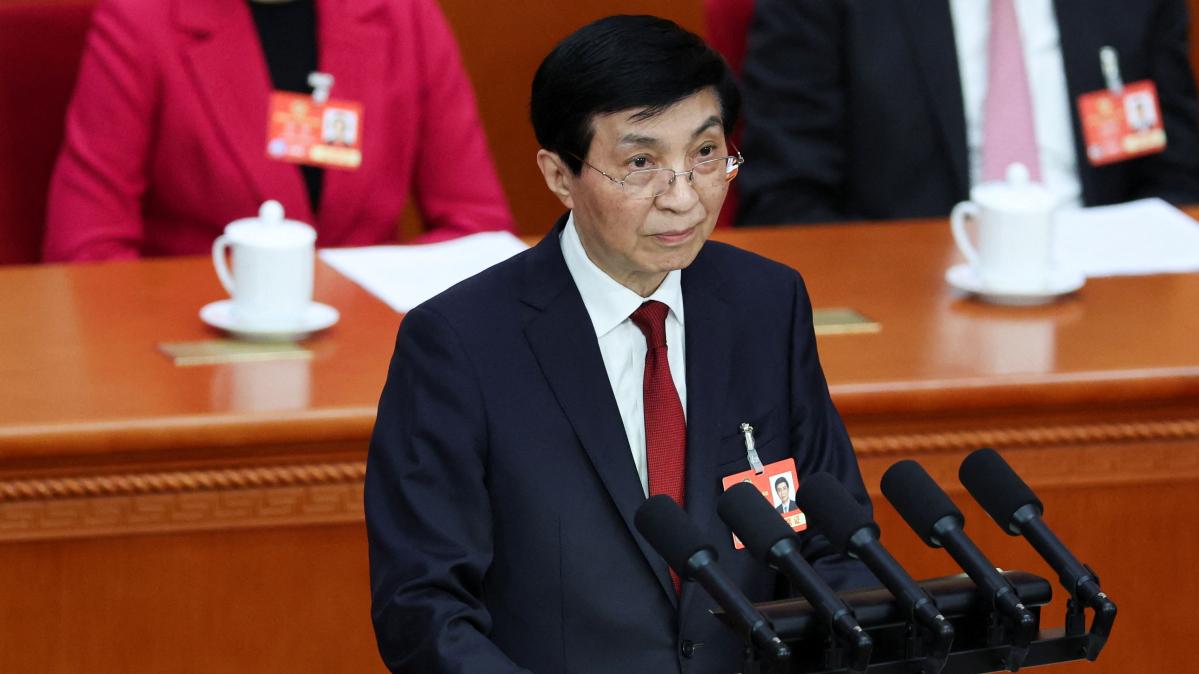
Addressing this year’s annual 'Taiwan Work Conference', China's ruling Communist Party’s fourth-ranked leader Wang Huning said officials must advance the “great cause of national reunification,” state-run Xinhua reported. The conference was held in Beijing on Monday and Tuesday.
It is necessary to “firmly support the patriotic pro-unification forces on the island, resolutely strike against ‘Taiwan independence’ separatist forces, Wang said, according to Xinhua.
While the report made no mention of the use of force, China has never renounced using military means to bring Taiwan under its control. However, the Chinese defence ministry struck a stronger note commenting on Taiwanese military deployments.
"If the 'Taiwan independence' armed forces dare to provoke a conflict, they will inevitably be wiped out," ministry spokesperson Jiang Bin said on Tuesday in Beijing.
'One country, two systems'
China has long offered Taiwan a Hong Kong-style "one country, two systems" model of autonomy, though no major Taiwanese political party supports that.
Taiwan's government says Beijing's rule in the former British colony has only brought repression, with Taiwan President Lai Ching-te on Tuesday citing the sentencing of Hong Kong tycoon Jimmy Lai to 20 years prison the previous day.
"Jimmy Lai's sentencing exposes the Hong Kong national security law for what it is - a tool of political persecution under China's 'one country, two systems' that tramples human rights & freedom of press," Lai wrote on X.
There was no immediate response to Wang Huning's comments from Taiwan's government, which says only the island's people can decide their future.
Wang also said Beijing would facilitate and enhance people-to-people and grassroots exchanges across the Taiwan Strait, signalling an effort to pair political pressure with engagement aimed at Taiwanese society.
Warnings to other countries
Beijing has repeatedly warned other countries including the U.S. against meddling in the Taiwan issue, which it said is its internal affair.
In a call with U.S. President Donald Trump last week, China's President Xi Jinping said the Taiwan issue is the most important issue in China-U.S. relations and Washington must handle the issue of arms sales to Taiwan with prudence.
The Trump administration announced in December the largest-ever U.S. weapons package for Taiwan, valued at $11.1 billion.
China refuses to speak to Taiwan's president and has rebuffed his repeated offers of talks, saying he is a "separatist" who must accept that Taiwan is part of China.
Wang was speaking just a week after meeting a delegation from Taiwan's largest opposition party, the Kuomintang (KMT), who were in Beijing for a meeting of party think-tanks.
KMT Vice Chairman Hsiao Hsu-tsen spoke to reporters early on Tuesday in Taipei before he led the delegation to Beijing and said there had been no discussion of political issues when they met Wang, as the trip there was to discuss topics such as tourism and artificial intelligence (AI).
Opposition contacts
Wang’s comments came a week after he met a delegation from Taiwan’s largest opposition party, the Kuomintang (KMT), which travelled to Beijing for talks between party-linked think tanks.
Speaking to reporters in Taipei, KMT Vice Chairman Hsiao Hsu-tsen said political issues were not discussed during the visit, adding that talks focused instead on areas such as tourism and artificial intelligence.
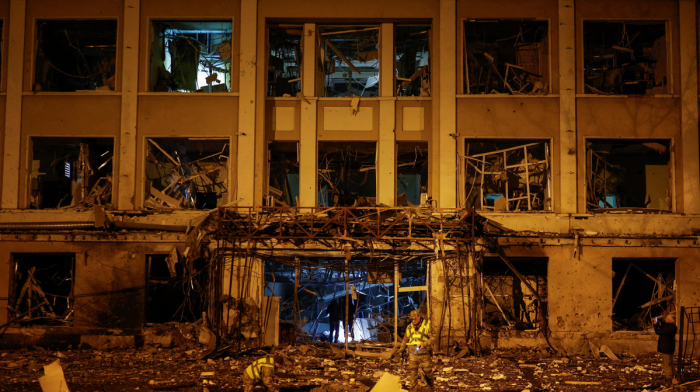
U.S. President Donald Trump has criticised Ukrainian President Volodymyr Zelenskyy for continuing to target Russia's energy infrastructure, while Russian strikes on Kyiv overnight killed at least one person and damaged a metro station.
The day after waiving sanctions and tariffs related to Russian exports, U.S. President Donald Trump said on Saturday he has yet to announce a final decision on the matter as Secretary of State Marco Rubio said officials want more time to evaluate the situation.
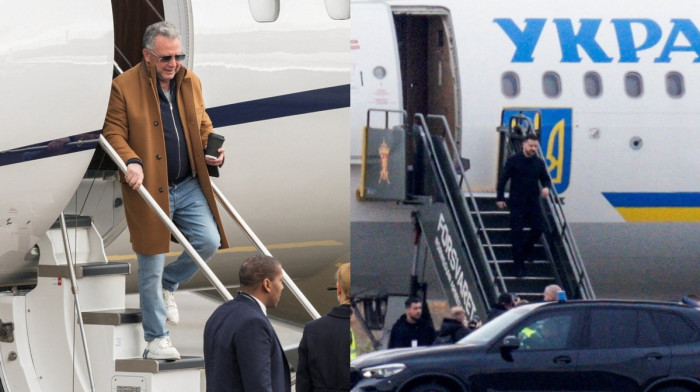
Ukrainian President Volodymyr Zelenskyy has arrived in Norway for talks about the Russia-Ukraine war. He is expected to meet with U.S. President Donald Trump's Special Envoy Steve Witkoff, who arrived in Oslo earlier. Witkoff will also meet European officials.
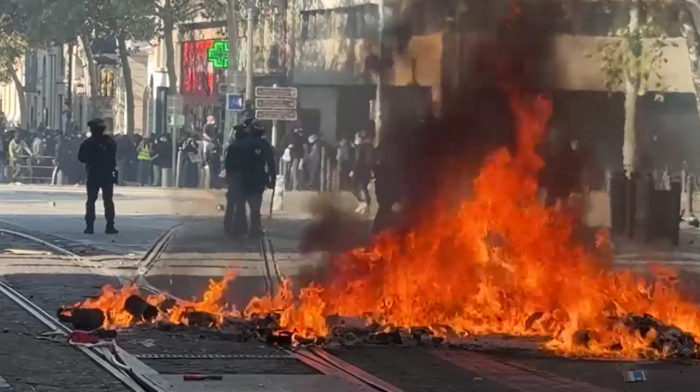
French President Emmanuel Macron has condemned the violence, looting and vandalism that erupted during cost-of-living protests across France. Prime Minister Sébastien Lecornu held crisis talks on Monday, calling for partial curfews and raising the possibility of a state of emergency.
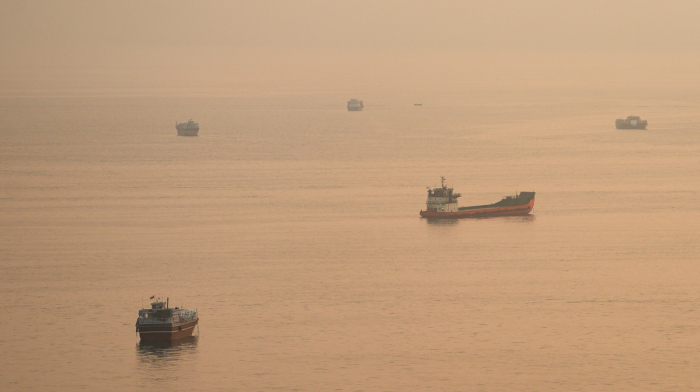
An oil tanker caught fire after striking a naval mine in the southern part of the Strait of Hormuz, Iran’s Islamic Revolutionary Guard Corps (IRGC) Navy said late Sunday.
Ukrainian President Volodymyr Zelenskyy has arrived in Norway for talks about the Russia-Ukraine war. He is expected to meet with U.S. President Donald Trump's Special Envoy Steve Witkoff, who arrived in Oslo earlier. Witkoff will also meet European officials.
Tensions are mounting across Asia, with North Korea warning of war, China clashing with the U.S. and the Philippines, and protests gathering pace in Indonesia and India. Military threats, diplomatic disputes and political unrest are fuelling uncertainty across the region.
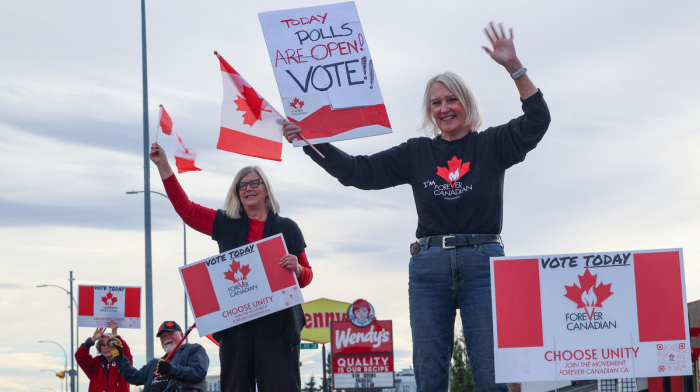
Canada’s oil-rich province of Alberta voted to remain part of the country in a non-binding referendum on Monday, 19 October, CBC News reports, delivering a much-needed victory for Prime Minister Mark Carney amid an ongoing trade war with the United States.
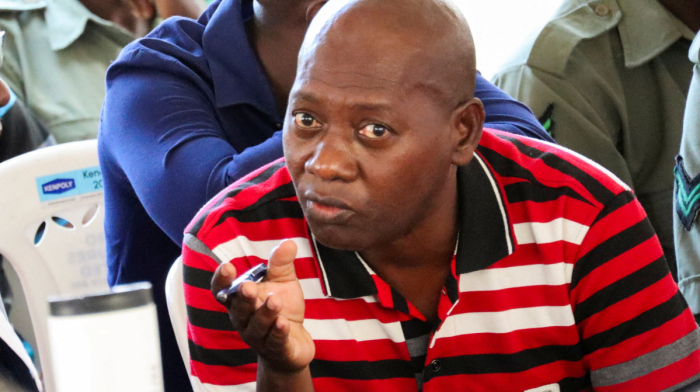
A Kenyan court has convicted cult leader Paul Mackenzie and 28 co-defendants of murder over the deaths of 191 people, including 190 children, in a case that shocked the world and exposed one of the deadliest cult-related tragedies in recent memory.
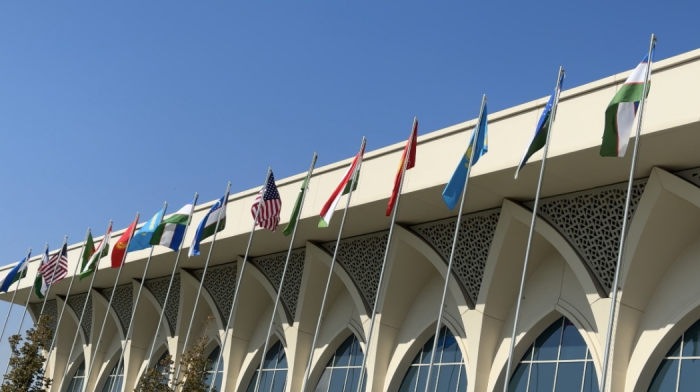
The U.S. and five Central Asian nations have held high-level talks in Samarkand, focusing on trade, investment and regional security as Washington seeks to strengthen its presence in the strategically important region.
Download the AnewZ app
You can download the AnewZ application from Play Store and the App Store.











What is your opinion on this topic?
Leave the first comment