South Korean President Lee Jae Myung said on Wednesday (7 January), that significant progress has been made in restoring trust with China. He also reiterated that relations with Japan are equally important for Seoul’s diplomacy amid shifting regional dynamics.
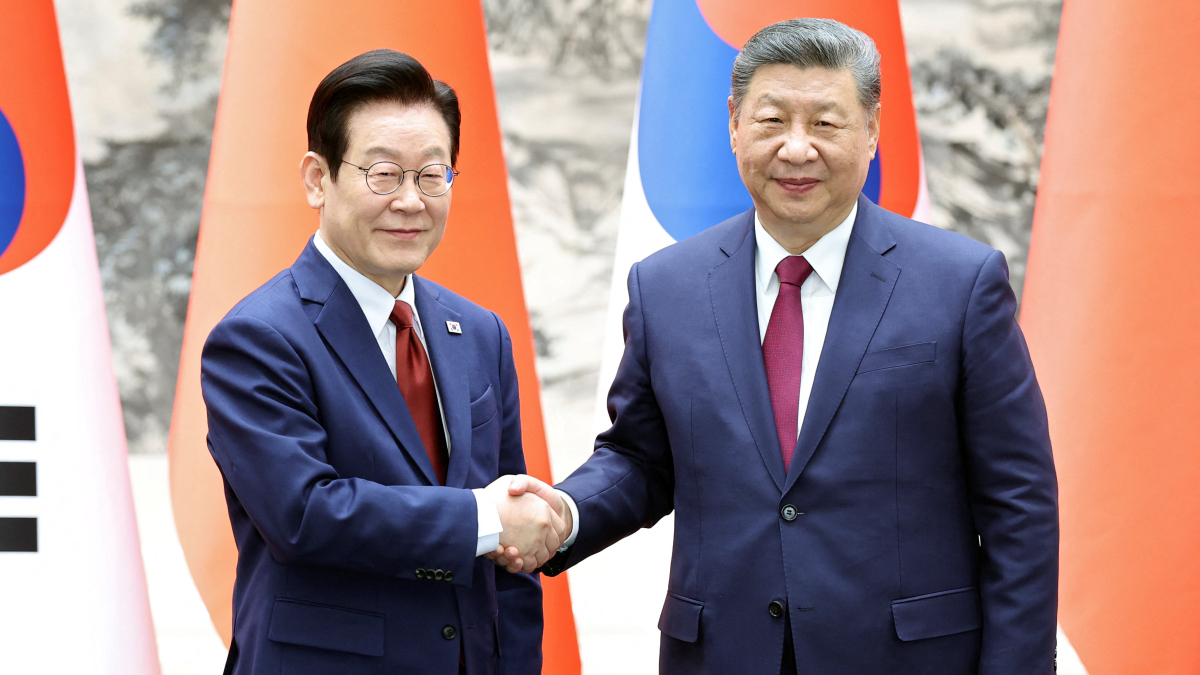
Lee spoke to media representatives in Shanghai, with his remarks broadcast live, following a series of high‑level meetings this week with Chinese President Xi Jinping in Beijing. The talks were aimed at rebuilding bilateral ties that had cooled in recent years.
His current visit, his first state trip to China since taking office in June, comes just two months after Xi visited Seoul.
Chinese official statements following the talks highlighted mutual respect and repeated high‑level engagement as central to restoring a “strategic cooperative partnership”. The sides vowed a continued dialogue and cooperation to benefit both nations and regional peace.
Beijing and Seoul also agreed to resume and expand cultural exchanges, including working‑level discussions on films, television dramas and other cultural content.
Both sides have described 2026 as a potential “year of full restoration” for China-South Korea relations, with multiple memoranda of understanding expected across technology, transport and trade sectors.
Lee also underlined that Japan remains a vital partner for South Korea.
This is a reflection of Seoul’s broader strategy of balancing relations among its major neighbours amid rising geopolitical tensions, particularly over issues such as Taiwan and regional security.
Analysts say this tightrope approach reflects Seoul’s position at the intersection of U.S. security alliances and China’s economic weight.
North Korea and regional security
President Lee’s remarks came against the backdrop of ongoing regional security challenges.
North Korea recently launched a series of ballistic missiles ahead of the summit, an action condemned by Seoul and Tokyo and seen as a reminder of Pyongyang’s advancing nuclear and missile programmes.
China’s influence over North Korea has become more complex, with Beijing recently shifting its rhetoric on Pyongyang’s nuclear ambitions.
Official statements and policy documents now emphasise peace and stability on the Korean Peninsula rather than explicitly calling for denuclearisation, a departure noted by analysts at the Wall Street Journal and LiveMint.
Experts cited by the South China Morning Post observed that China has largely dropped the phrase “denuclearisation of the Korean Peninsula” in public statements, signalling a more neutral stance towards North Korea’s nuclear programme.
Observers suggest this shift reflects Beijing’s strategic recalibration, balancing its regional influence with growing U.S.-China competition.
At the same time, South Korea's Lee has sought to strike a careful balance between China and other key partners. Ahead of his China visit, he also reaffirmed Seoul’s commitment to the One‑China policy.

















What is your opinion on this topic?
Leave the first comment