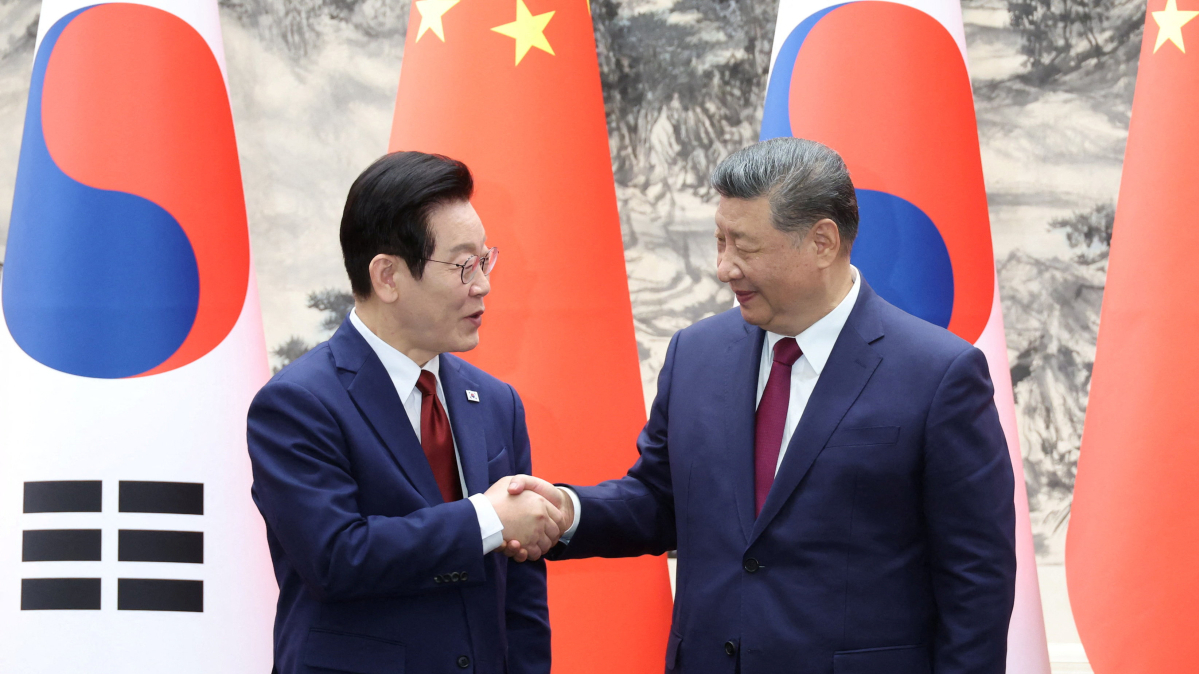
South Korean President Lee Jae Myung arrived in China this week for a four-day state visit, seeking to reset and deepen ties with Beijing at a time of heightened regional tensions and growing economic uncertainty.
The trip marks Lee’s first official visit to China since taking office last year and the first by a South Korean president in more than six years, highlighting Seoul’s renewed focus on its relationship with its largest trading partner.
Lee is accompanied by a large delegation of senior government officials and more than 200 business leaders, including executives from major South Korean conglomerates in electronics, automobiles, shipbuilding, and technology. Their presence highlights the central role economic cooperation plays in the visit, as both countries look to stabilise supply chains, expand investment, and explore collaboration in emerging industries such as artificial intelligence, clean energy, and advanced manufacturing.
At the heart of the visit is a summit with Chinese President Xi Jinping, their second meeting following the APEC Summit recently. Officials from both sides have described the talks as part of an effort to place bilateral relations back on a stable and predictable footing after years of strain. Relations cooled notably in the late 2010s over security disagreements and later suffered from the combined impact of the pandemic, trade frictions, and broader geopolitical rivalry between China and the United States.
The visit comes against a tense regional backdrop. Just ahead of Lee’s departure, North Korea conducted a series of ballistic missile launches, reinforcing the persistent security risks on the Korean Peninsula. Seoul has repeatedly emphasized China’s influence over Pyongyang and sees Beijing as a key player in preventing further escalation and reviving dialogue aimed at denuclearisation and long-term stability.
Regional dynamics beyond the peninsula also weigh heavily on the talks. Rising friction between China and U.S. allies in East Asia, particularly over maritime security, has complicated South Korea’s diplomatic balancing act. Lee has sought to position his government as firmly aligned with the United States on security while maintaining constructive and pragmatic relations with China, stressing that cooperation with one side need not come at the expense of the other.
During his stay, Lee is also expected to address long-standing economic concerns, including market access for South Korean firms in China and lingering restrictions on cultural exchanges that have affected South Korea’s entertainment and tourism sectors. Officials have signalled that progress may be gradual but say both governments are committed to rebuilding trust through step-by-step cooperation.
In meetings with South Korean expatriates in China, Lee described the visit as an opportunity to shape the direction of bilateral relations for the coming decades. He emphasised people-to-people exchanges, youth engagement, and cultural cooperation as essential foundations for a more resilient partnership, alongside trade and diplomacy.
As the visit continues, attention will focus on whether the talks produce tangible agreements and clearer signals of alignment on regional security issues. For Seoul, the trip shows an active effort to navigate an increasingly polarized international environment while safeguarding economic interests and reducing the risk of instability in Northeast Asia.


















What is your opinion on this topic?
Leave the first comment