Iran open to compromises to reach a nuclear deal with the U.S.
Iran is pursuing a nuclear agreement with the U.S. that delivers economic benefits for both sides, an Iranian diplomat was reported as saying on Sunda...
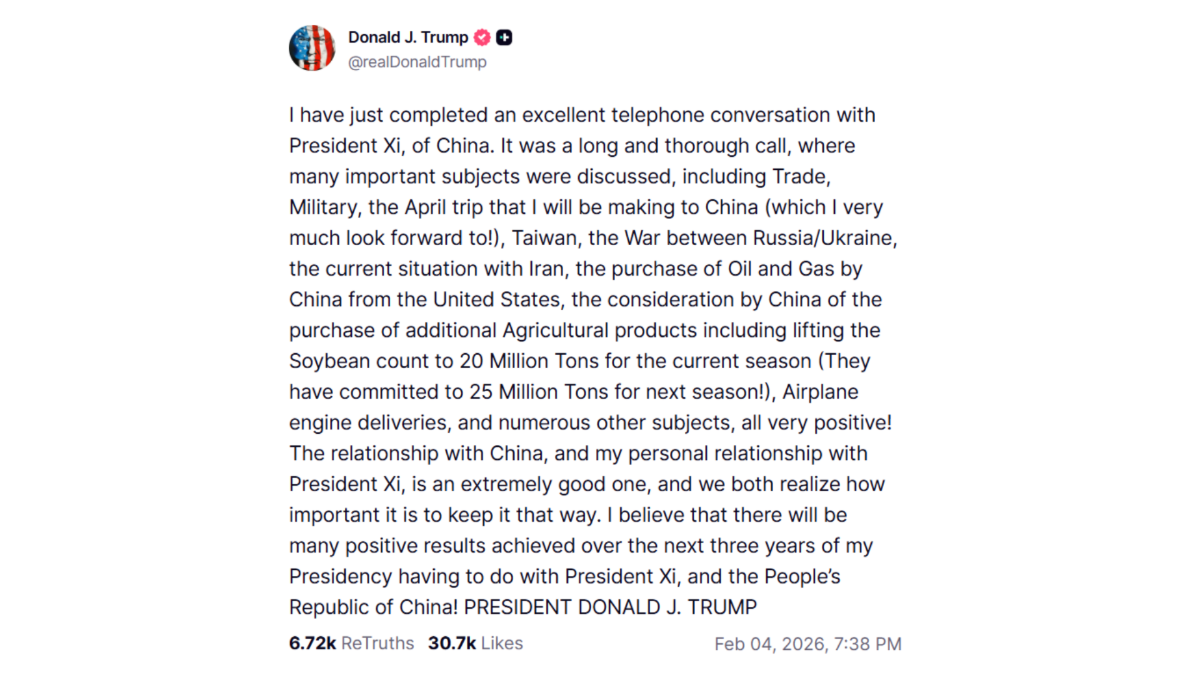
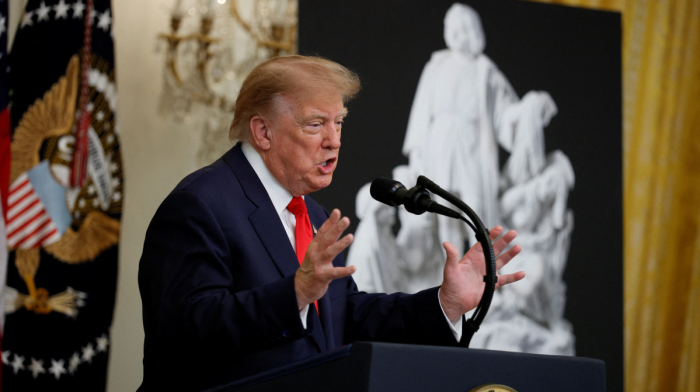
U.S. President Donald Trump held an “excellent” phone call with Chinese President Xi Jinping on Wednesday, (4 February), to discuss trade, energy, Taiwan, Iran, and Russia’s war in Ukraine, ahead of Trump’s planned visit to Beijing in April.
The call came hours after Xi spoke with Russian President Vladimir Putin, during which the two leaders pledged to strengthen bilateral ties amid a “turbulent” international environment.
Trump described his discussion with Xi as “very positive” and emphasised that both leaders valued maintaining strong personal and diplomatic relations.
During the call, Trump highlighted commercial ties between the U.S. and China, including energy purchases, agricultural products, and aircraft deliveries. He said China had agreed to increase its purchase of U.S. soybeans from 12 million tonnes to 20 million tonnes in the current season, with a commitment to 25 million tonnes next season.
Both sides did not comment on ongoing tensions over rare earth minerals or China’s role in Venezuela.
Xi, meanwhile, stressed that Taiwan remains the most important issue in China–U.S. relations, urging the U.S. to handle arms sales to the self-governing island with “great prudence” and reaffirming China’s position that Taiwan is part of its territory.
The U.S. approved an $11 billion arms package for Taiwan in December, one of its largest ever, to strengthen the island’s defences.
Trump also raised the situation in Iran, which has been experiencing unrest and a harsh crackdown on protestors, and Russia’s war in Ukraine, calling for Beijing’s cooperation in addressing these global flashpoints.

The Chinese readout framed the discussion in measured terms, noting that both sides had concerns but solutions could be found if approached with “reciprocity.”
Analysts expect Trump and Xi to finalise agreements on Boeing aircraft deliveries and other commercial deals during the April visit, potentially easing some tariffs on Chinese exports.
Trump has previously mentioned his personal relationship with Xi as a tool to advance U.S. strategic and economic interests, even as tensions continue over Taiwan, trade disputes, and competing geopolitical ambitions.

U.S. Ambassador to NATO Matthew Whitaker said China has the power to bring an end to Russia’s war in Ukraine, arguing that Beijing is enabling Moscow’s military campaign.
American figure skating star Ilia Malinin endured a dramatic collapse in the men’s free skate on Friday night, falling twice and tumbling out of medal contention at the Milan Cortina Winter Olympics as Kazakhstan’s Mikhail Shaidorov surged to a surprise gold medal.
“Respected and feared globally,” U.S. President Donald Trump told troops at Fort Bragg on Friday (13 February), framing America’s renewed strength against to mounting pressure on Iran amid stalled nuclear talks.
Speaking at Munich Security Conference, Ukrainian foreign minister Andrii Sybiha calls for decisive steps ahead of expected Geneva talks
Thousands of fans packed River Plate’s Monumental Stadium in Buenos Aires on Friday for the first of three sold-out concerts by Puerto Rican reggaeton star Bad Bunny, as part of his “Debí Tirar Más Fotos” World Tour.
U.S. Secretary of State Marco Rubio on Sunday (15 February) called it “troubling” a report by five European allies blaming Russia for killing late Kremlin critic Alexei Navalny using a toxin from poison dart frogs.
Former U.S. President Barack Obama has criticised a video shared by President Donald Trump depicting him and former first lady Michelle Obama as apes, describing it as “deeply troubling”.
U.S. Secretary of State Marco Rubio will begin a two-day visit to Slovakia and Hungary on Sunday (15 February), aimed at strengthening ties with the two Central European nations, whose leaders have maintained close relations with President Donald Trump.
The Munich Security Conference concludes on Sunday (15 February) with discussions centred on Europe’s role in an increasingly unstable global landscape, including security coordination, economic competitiveness and the protection of democratic values.
Start your day informed with AnewZ Morning Brief: here are the top news stories for the 15th of February, covering the latest developments you need to know.
You can download the AnewZ application from Play Store and the App Store.
What is your opinion on this topic?
Leave the first comment