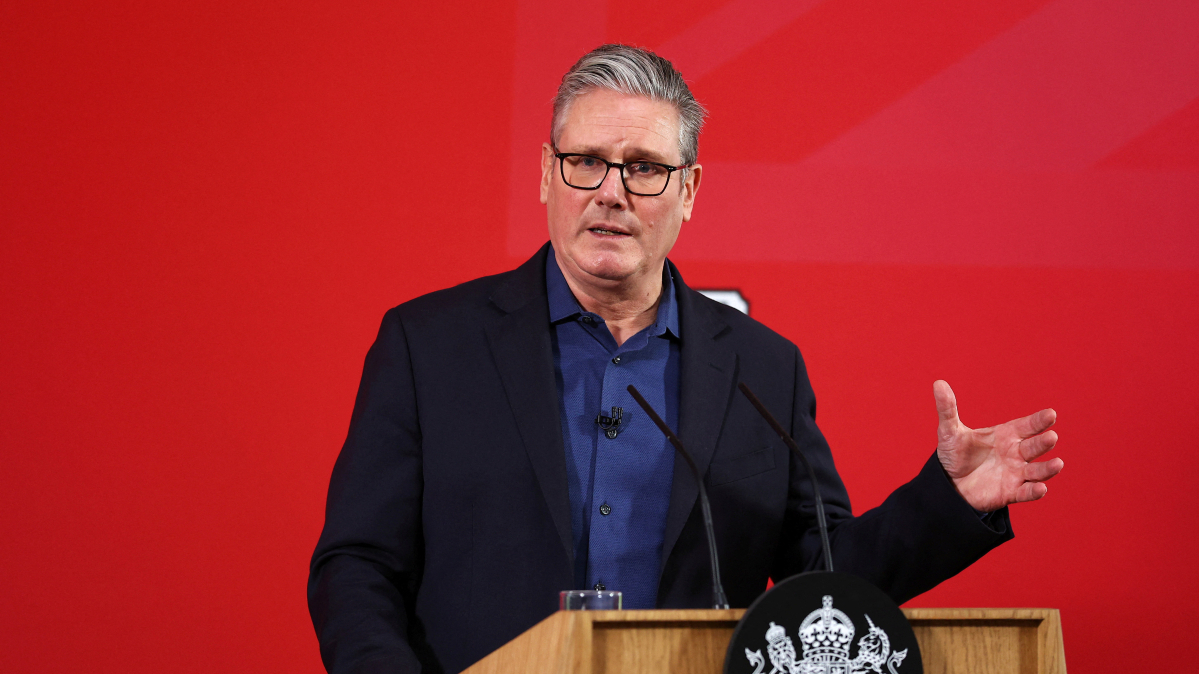
Pressure is mounting on UK Prime Minister Keir Starmer amid resignations and a row over Peter Mandelson, a powerful figure in the ruling Labour Party. The episode has raised doubts about Starmer’s authority and how firmly his own party continues to back him.
Speaking to AnewZ, political commentator Andy Preston said recent public statements of backing from cabinet members may reflect coordinated efforts from Downing Street rather than genuine confidence.
“I think that’s a symptom of the fact that clearly Number 10 has been rallying around, calling every cabinet member and urging them to show support,” he said, adding that it remains difficult for ministers to break ranks publicly.
However, he argued that this unity could prove fragile if dissent begins to emerge lower down the ministerial ranks.
“One of them will break, or a junior minister will break, and when that happens that’s the beginning of the dam,” he said, describing the current political moment as increasingly unstable for the prime minister.
A promise of ‘change’ that voters now question
Preston also reflected on the political message that helped Labour win office, arguing that expectations set during the campaign have not been met.
He said the party’s manifesto was framed primarily around a pledge to transform political standards.
“The manifesto that Keir Starmer and the ruling Labour Party published to win the electorate’s confidence here was all about change,” he said, noting that it contained limited detailed policy commitments. According to Preston, public sentiment has since shifted.
“They were elected with about 33 per cent of the vote pledging change, pledging to clean up politics,” he said. “But what’s happened in truth is that the scandals have continued but got worse.”
He added that the broader political environment is now shaped by pessimism rather than optimism, which he described as a critical factor in electoral success.
“Politics is largely about optimism. If people feel the future will be better than the past, they vote for you. When people feel negative, they vote for somebody else.”
Questions over decision-making and the Mandelson controversy
Turning to the controversy surrounding the appointment of Lord Peter Mandelson, Preston argued that the episode has become a central factor in the current political crisis.
“I think that Keir Starmer is really bad at making decisions,” he said, while acknowledging that the prime minister has a reputation for careful research and scrutiny.
Preston suggested that Starmer relies heavily on advisers and that the advice he follows is not always beneficial.
“He seems to rely on those around him to offer advice… and he seems to come down on the side of the bad advice,” he said.
He described the Mandelson appointment as “the latest or final straw” in a broader controversy linked to Epstein-related scrutiny, adding that some senior figures had reportedly warned against the decision.
Balancing political realities with ethical expectations
Preston also addressed the broader question of whether governments can realistically avoid relationships that may be politically sensitive. He said international relations often require cooperation with partners whose actions or reputations may be controversial.
“You have to tread very carefully with people with whom you need to do business,” he said.
However, he argued that the Mandelson issue differs from strategic diplomacy, describing it instead as a matter linked to “personal ambition” and “personal enrichment,” rather than major national economic interests.
Leadership speculation and potential successors
Looking ahead, Preston said a leadership contest could produce unexpected outcomes despite early favourites. He noted that Deputy Leader Angela Rayner is currently seen as the most likely successor but cautioned that the race remains uncertain.
“Angela Rayner is the favourite but she’s still only got about a 30 per cent chance,” he said, referencing betting market sentiment.
He suggested that other figures less closely associated with recent controversies could gain support among party members, who ultimately play a decisive role in leadership elections.
“It’s likely to be someone seen as not tainted with the toxicity of the past,” he said.















What is your opinion on this topic?
Leave the first comment