Russia launched a large-scale overnight attack on Ukraine’s energy system early on Saturday (7 February), hitting power generation and distribution facilities with more than 400 drones and around 40 missiles, Ukrainian officials have said.
President Volodymyr Zelenskyy said the strikes forced Ukraine’s nuclear power plants to reduce output and led to the automatic shutdown of one unit, warning that the damage posed risks far beyond Ukraine.
"Tonight the Russians struck, among other things, at facilities on which the operation of nuclear power plants depends, and this is a danger for Ukraine, for our entire region, and for Europe," he said in a video address.
"Today, the units of our Ukrainian nuclear power plants reduced generation, one unit automatically shut down. This is a level of strikes that no terrorist in the world has ever allowed themselves."
Zelenskyy described the assault as "another massive Russian strike" carried out "contrary to the diplomatic work that is ongoing at various levels".
He said Russia had launched more than 400 drones, many of them Shaheds and almost 40 missiles of various types, and that Ukrainian forces managed to shoot down a significant share, "but not all of them".
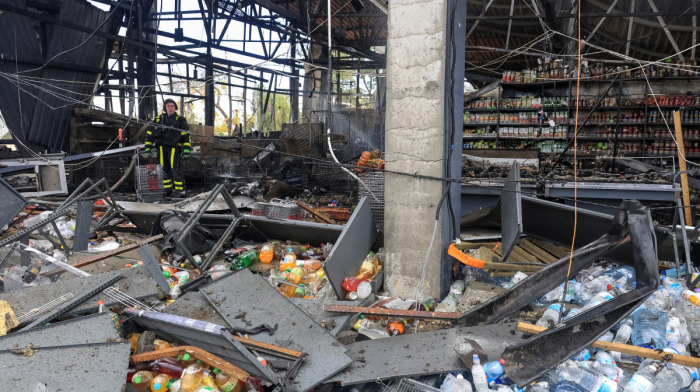
The strikes targeted electricity grids, power plants and substations as freezing temperatures added pressure to Ukraine’s already damaged energy sector.
"Every day Russia could choose real diplomacy, but it chooses new strikes," Zelenskyy said, adding that Moscow must be deprived of the ability to use winter conditions as leverage.
Ukraine’s energy minister Denys Shmyhal said two thermal power stations in western Ukraine were hit, along with key parts of the electricity distribution network.
Ukraine’s largest private energy company, DTEK, said equipment at several of its thermal power plants was seriously damaged, marking the tenth attack on its facilities since October 2025.
Emergency power cuts were introduced nationwide, while Kyiv requested emergency electricity imports from Poland to help stabilise the grid.
Regional officials reported strikes in Lviv, Rivne, Ivano-Frankivsk and Volyn, as well as damage in Kyiv and Kharkiv, with air alerts lasting for hours in some areas.
The renewed attacks come even as diplomatic efforts intensify.
U.S. President Donald Trump said "very good talks" were under way on Ukraine and suggested that progress could be possible, without giving details.
Zelenskyy has said Washington wants Russia and Ukraine to reach an agreement to end the war before the start of summer, adding that the U.S. is pushing for another round of talks between Kyiv and Moscow next week and may increase pressure on both sides to meet that timeline.
Despite those efforts, Russia has stepped up strikes on Ukraine’s energy infrastructure in recent months, forcing repeated power cuts and leaving millions without electricity during winter.
Earlier this week, Ukrainian officials said the energy system would take time to repair after sustained attacks.
Moscow did not immediately comment on the latest strikes.
Polish authorities said two airports in south-eastern Poland briefly suspended operations as a precaution because of the attacks near the border, before later resuming flights.















What is your opinion on this topic?
Leave the first comment