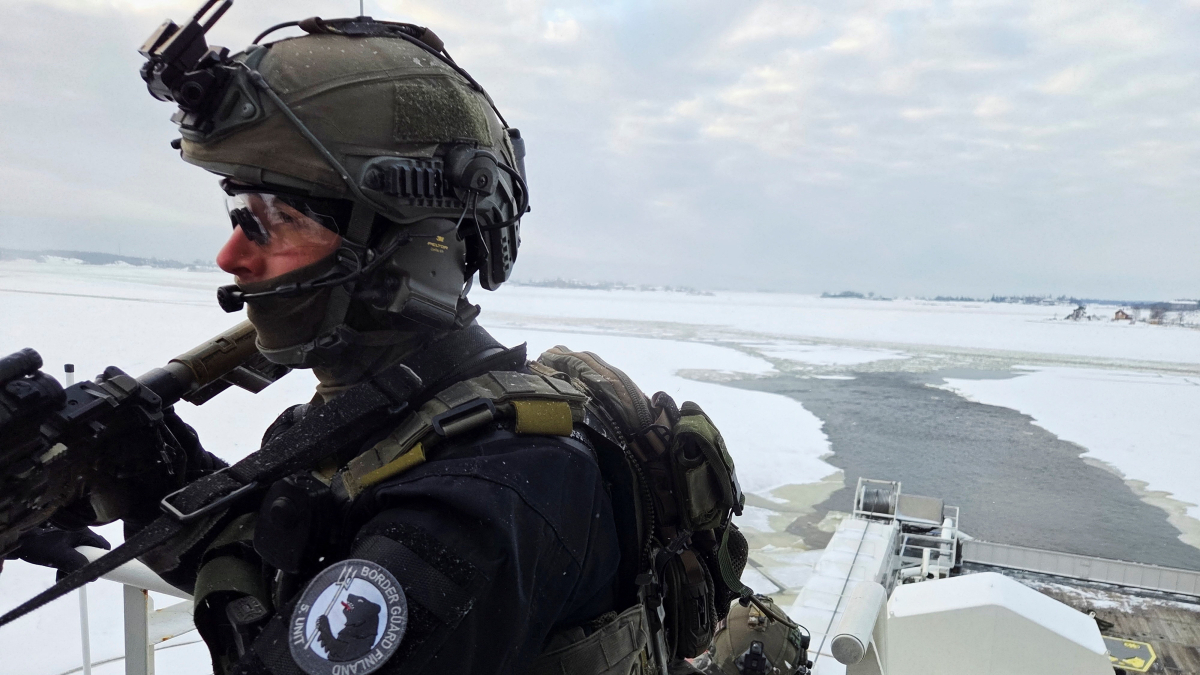
Finland’s Border Guard says it plans to establish a maritime surveillance centre to help prevent damage to critical undersea infrastructure in the Gulf of Finland, amid heightened concerns over cable and pipeline security in the Baltic Sea.
The Baltic region has been on high alert following a series of power cable, telecommunications and gas pipeline outages since Russia invaded Ukraine in 2022. The latest incident occurred on New Year’s Eve, when Finnish authorities seized a cargo vessel travelling from Russia to Israel on suspicion of sabotaging an undersea telecoms cable.
The planned Finnish centre will be developed in cooperation with other Baltic Sea states and the European Commission, and forms part of a wider EU action plan proposed last year to strengthen the protection of submarine cables.
“We are developing, and we have the need for, broader preventive measures, even before any harm has occurred,” said Mikko Hirvi, head of maritime safety and security at the Finnish Border Guard.
He said the measures would include seabed sensors, artificial intelligence tools to analyse maritime traffic in real time, and closer information-sharing with allies. Hirvi declined to say which capabilities are already operational.
The surveillance centre will be built gradually using the Border Guard’s existing resources, and Finland also plans to seek European Union funding for the project.
NATO has stepped up its military presence in the Baltic Sea region with frigates, aircraft and naval drones following repeated infrastructure incidents.
Finnish authorities have previously boarded and seized two vessels suspected of damaging seabed cables by dragging their anchors: the oil tanker Eagle S in December 2024 and the cargo vessel Fitburg in December 2025.
“By seizing the ships, authorities managed to prevent further damage from happening,” Hirvi said.
Mikko Simola, commander of the Gulf of Finland Coast Guard District, said officials monitor unusual changes in vessels’ speed or course.
“For the past year in particular, we have focused on obtaining real-time information about vessel deviations,” he said.




















What is your opinion on this topic?
Leave the first comment