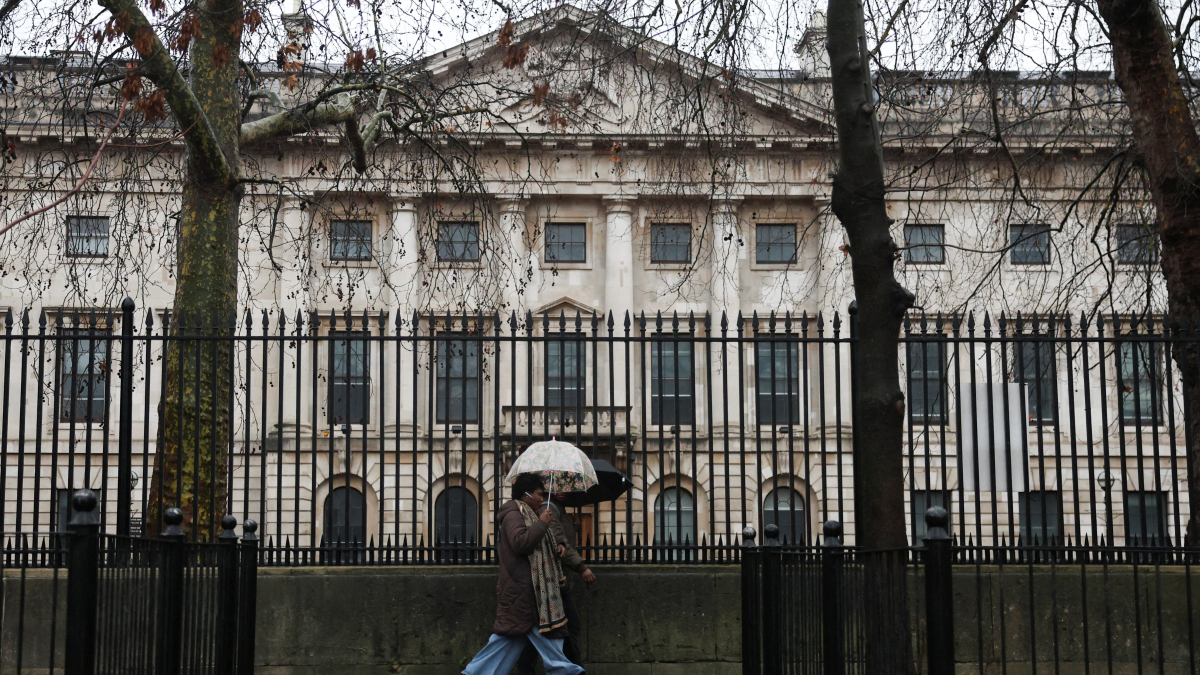
China's proposed embassy in the UK would be built near the Tower of London and cover about 600,000 square feet, according to planning documents, making it one of the largest diplomatic missions in the world.
The project had been stalled for three years amid opposition from some British politicians, Hong Kong pro-democracy activists and residents living near the site.
Concerns have focused on the embassy’s location, with some UK and U.S. politicians saying fibre-optic cables used by financial firms run underneath the area, raising questions about national security.
In parliament on Tuesday (21 January), Dan Jarvis, the UK's Minister of State for Security, acknowledged that China represents a national security risk, but told MPs: "We have acted to increase the resilience of cables in the area through an extensive series of measures to protect sensitive data. I can confirm that, contrary to some reporting, the government has seen the unredacted plans for the embassy. Based on all of this and our extensive work on the matter, I am content that any risks are being appropriately managed."
Britain’s intelligence agencies were involved in the approval process and said any potential security risks could be mitigated.
The decision comes ahead of an expected visit to China by Prime Minister Keir Starmer later in January 2025. Some British and Chinese officials have said the trip is linked to the embassy’s approval, although the UK government has not publicly confirmed this.
Following the approval of the embassy, exiled Hong Kong and Chinese dissidents criticised the move, while residents living near the site said they would pursue a legal challenge. A judicial review has been announced to contest the government’s decision.
China had previously criticised repeated delays to the project, with its current embassy in London accusing Britain of lacking "credibility and ethics". Beijing said the approval process had been "politicised", a claim the UK government rejected.
Charles Parton, a former UK diplomat and analyst, said: "I don’t think anyone in this country rejoices in the fact that an historic site sitting opposite the Tower of London and on top of an old abbey of historical interest has effectively become Chinese territory or sits just opposite those historic places. Is that sufficient reason for turning down the site? If it is, then why did the Conservative government in 2018 give the go-ahead for the Chinese to buy it, specifically with the intention of building a new embassy there?"
The approval reflects the shifting nature of UK-China relations over the past decade, from closer engagement to a more critical stance, and more recently efforts to stabilise ties.

















What is your opinion on this topic?
Leave the first comment