Shadow Trade is an AnewZ investigative documentary that explains how Russia’s war in Ukraine continues despite one of the most extensive sanctions regimes ever imposed.
Chapter II, The Electronic Pipeline
Modern warfare depends on technology. Missiles, drones, guidance systems, and communications all rely on microchips, electronics, optical components, and software.
The documentary follows Ukrainian military experts who dismantle missile and drone debris recovered from civilian areas. Many electronic components are deliberately erased or laser-covered to hide their origin. Yet their designs remain recognisable.
These investigations show that Western-made components continue to appear inside Russian weapons used against Ukrainian cities, despite sanctions meant to block access to such technology.
As direct routes closed, supply chains adapted. Indirect routes opened. Goods began moving through third countries, masked by altered paperwork and unusual trade flows.
Chapter III, Gold and Diamonds
Sanctions did not only target weapons. They also restricted Russia’s access to finance.
Shadow Trade shows how Russian raw materials, especially gold and precious stones, became an alternative payment method when traditional financial channels were cut off.
Instead of stopping, exports were rerouted. New intermediaries appeared. Trade corridors shifted. Gold and diamonds moved through third countries, allowing sanctioned resources to re-enter global markets under new labels.
Import of Russian Gold to Armenia
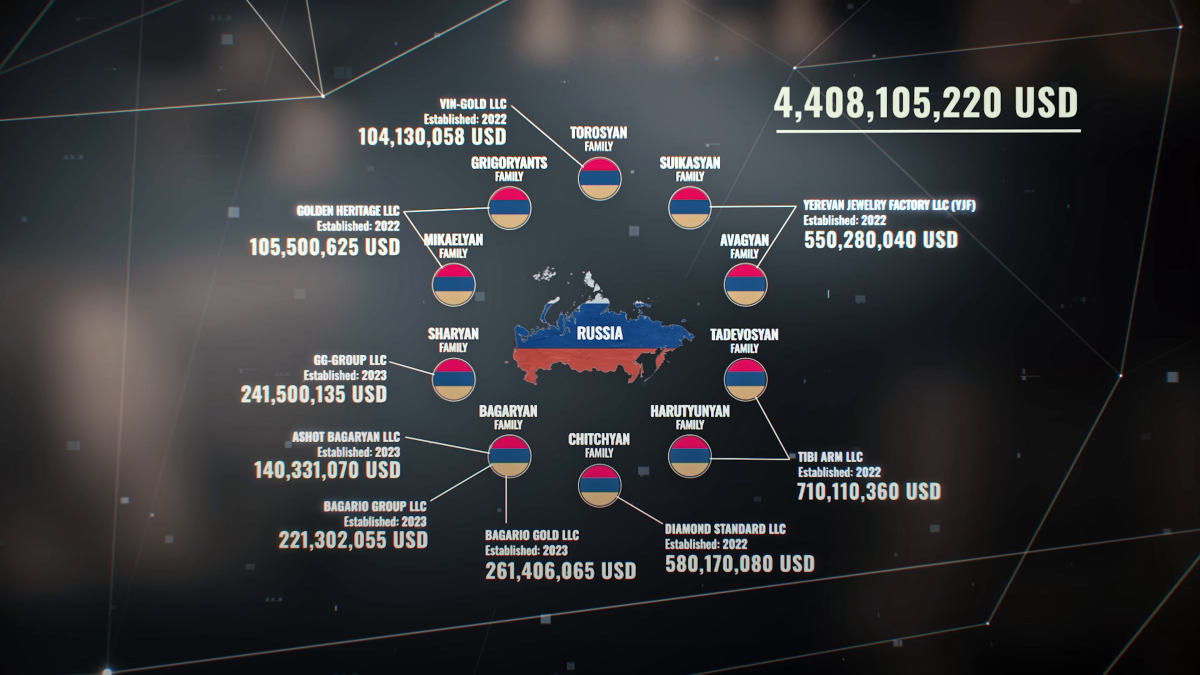
The documentary focuses closely on how Russian gold entered Armenia in volumes far beyond what the domestic market could absorb.
Customs data reveals sudden spikes following the introduction of sanctions. Newly formed companies began importing large quantities of gold, which was then re-labelled and exported onward, primarily to international markets in the Gulf.
Armenia, landlocked and strategically positioned, became a transit point rather than a final destination, turning logistics routes into financial lifelines.
Chapter IV, Complicity in War Crimes
Shadow Trade asks a difficult question.
If sanctioned goods, technologies, and resources continue to reach Russia’s military industry through intermediaries, who bears responsibility?
The film examines how sanctions evasion networks sustain Russia’s war effort, prolonging attacks on Ukrainian cities and civilian infrastructure. While the fighting happens at the front, the supply chains that enable it stretch far beyond Ukraine.
The documentary does not accuse. It documents. It shows how enforcement gaps allow the war to continue, and why accountability does not end at the battlefield.
Shadow Trade is the second film in the AnewZ Investigations series, following The Oligarch’s Design, and continues an editorial focus on uncovering hidden systems of power, finance, and influence shaping today’s world.















What is your opinion on this topic?
Leave the first comment