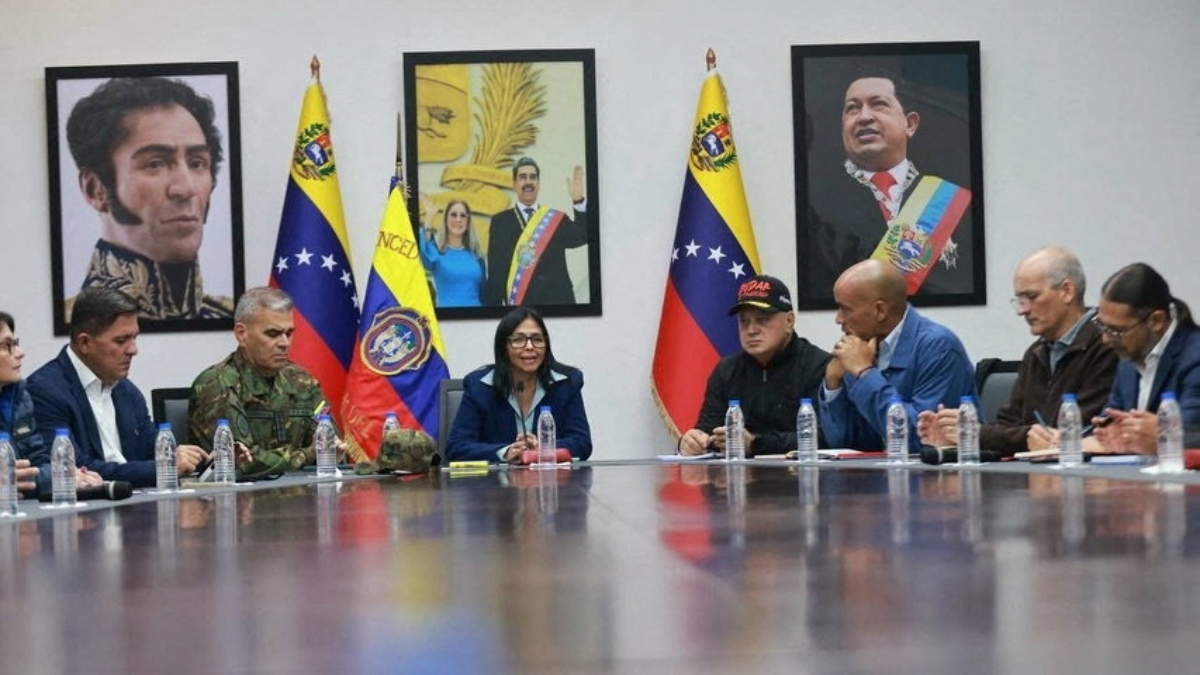
Venezuela’s acting president, Delcy Rodríguez, has called for dialogue and cooperation with the United States following the U.S. military capture of President Nicolás Maduro, as protests erupted in several countries condemning Washington’s actions.
Rodríguez made the appeal on Monday (5 January), urging a move towards "balanced and respectful international relations" and saying Venezuela "aspires to live without external threats".
Her remarks came after U.S. President Donald Trump warned of further military action.
Speaking aboard Air Force One on Sunday (4 January), President Trump said, “If they don’t behave, we will do a second strike,” adding that any further steps would depend on the actions of Rodríguez’s administration.
In a statement posted on social media, Rodríguez invited Washington to cooperate on an agenda focused on "shared development" within the framework of international law.
"President Donald Trump, our peoples and our region deserve peace and dialogue, not war," she said, adding that Venezuela had a right to peace, sovereignty and development.
The statement marked the first softening of rhetoric from Caracas since Maduro’s detention, after officials initially condemned the raid as illegal and motivated by U.S. interest in Venezuela’s oil resources.
Rodríguez, who also serves as oil minister and has assumed interim leadership with the backing of Venezuela’s top court, has long been viewed as the most pragmatic figure in Maduro’s inner circle.
Despite her overtures, she said Maduro remained Venezuela’s president, even as he was transferred to a federal detention centre in New York ahead of a court appearance on Monday.
Trump’s oil strategy
President Trump said he wanted Venezuela to open its oil sector fully to U.S. and private companies, granting “total access” to infrastructure including oil fields, roads and bridges.
He noted U.S. firms would invest billions of dollars to rebuild the industry, declaring, “We’re taking back what they stole. We’re in charge.”
The president acknowledged that the operation was driven not only by criminal charges but also by migration pressures and Venezuela’s historic nationalisation of U.S. oil interests.
Trump warned that Rodríguez herself could face consequences if she fails to cooperate, saying she could face a fate “probably worse than Maduro”.
U.S. officials believe her technocratic background and ties to the oil sector could make her a viable interlocutor on energy and political transition issues, despite her public defiance.
According to sources familiar with U.S. strategy, the Trump administration is betting it can intimidate or co-opt remaining members of Venezuela’s leadership through the threat of further military action, continued air and naval deployments off the country’s coast.
Reportedly, the “quarantine” on Venezuelan oil exports, the government’s primary source of revenue, was also part of the strategy.
Public response
Inside Venezuela, public reaction has been sharply divided.
Some residents expressed relief or hope, seeing Maduro’s removal as a potential break from years of economic collapse, shortages and repression.
Others described fear and confusion, recalling past crises of scarcity and worrying about possible further violence or power struggles among armed groups and security forces.
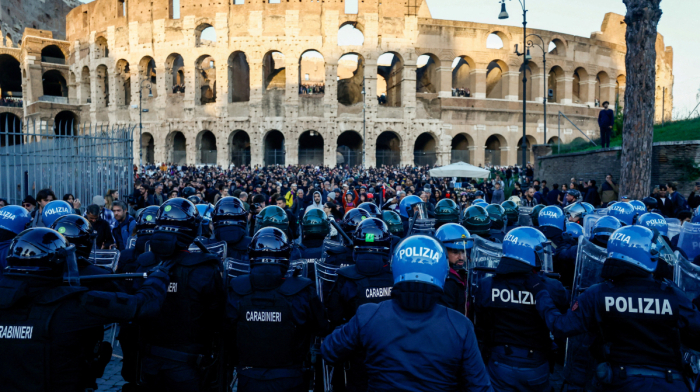
Protests have also taken place abroad, both supporting and opposing the U.S. intervention.
In South Korea, civic groups staged a protest outside the U.S. Embassy in Seoul, condemning Washington’s actions and calling for Maduro’s release.
Across the United States, left-wing and socialist groups organised demonstrations against what they described as U.S. "imperialism", while members of the Venezuelan diaspora in areas such as Doral, Florida, gathered to celebrate Maduro’s capture.
Demonstrations have also taken place near the White House in Washington, D.C., and in cities including Brasília and Havana, where crowds condemned what they described as U.S. military aggression against Venezuela.










What is your opinion on this topic?
Leave the first comment