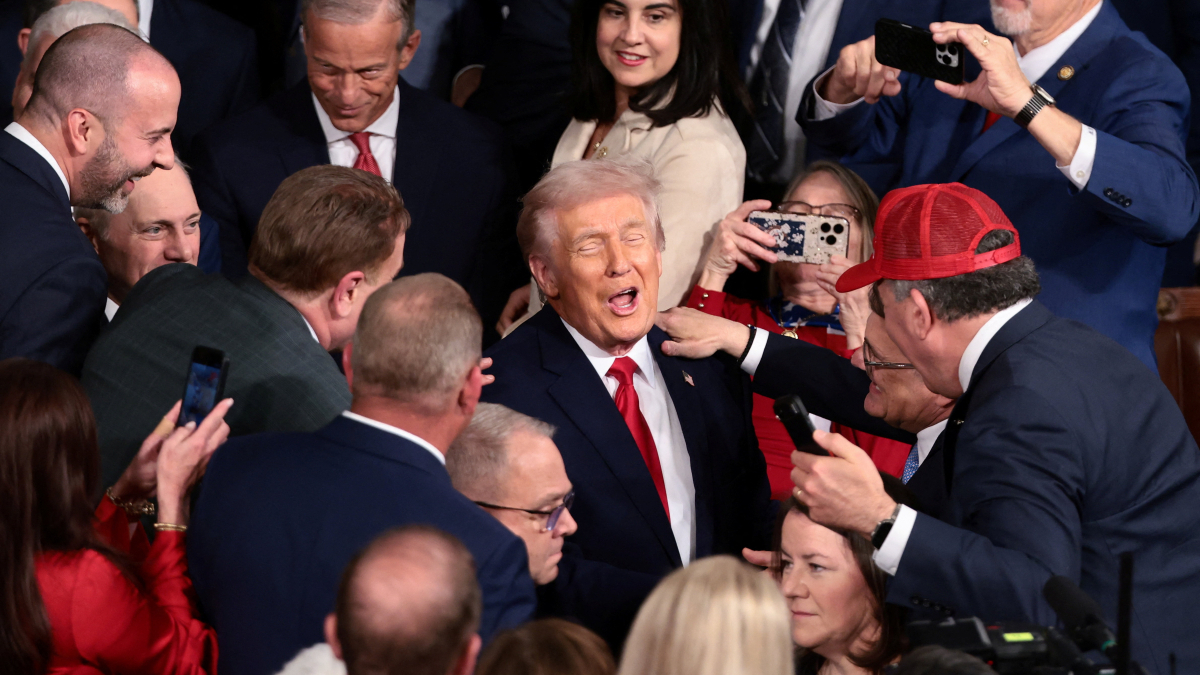
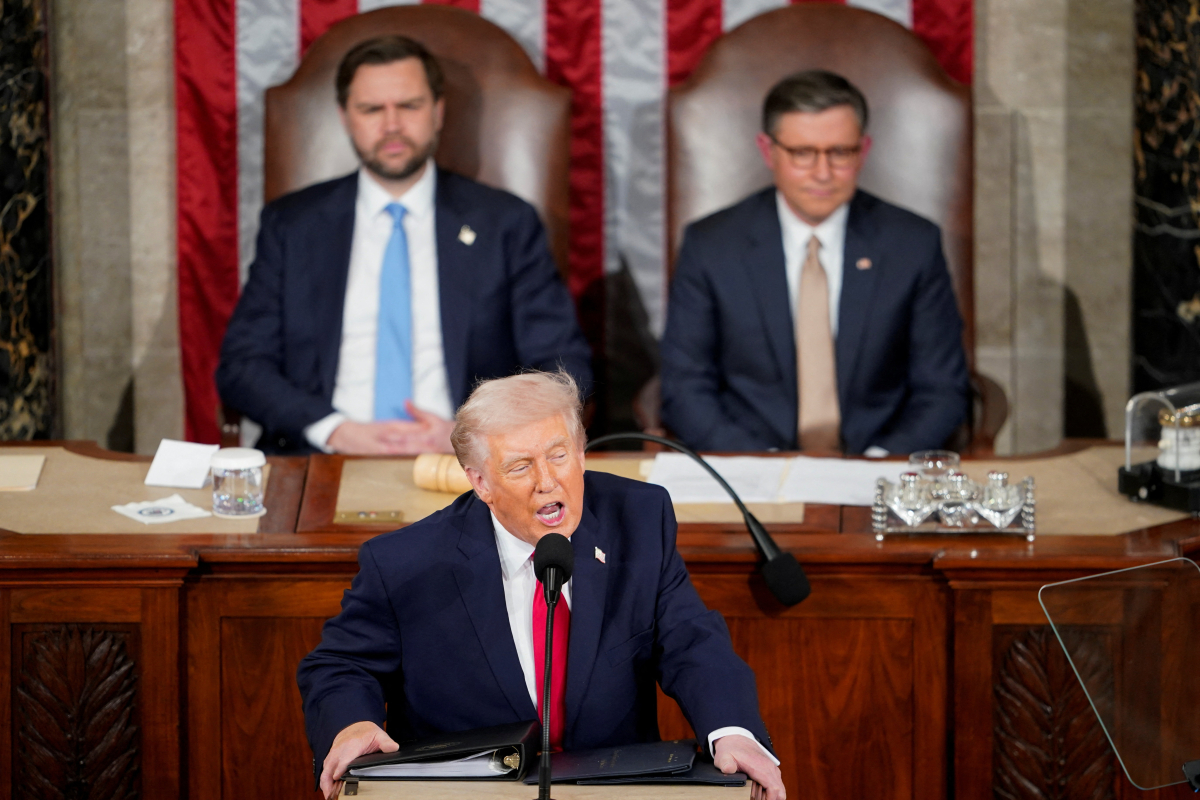
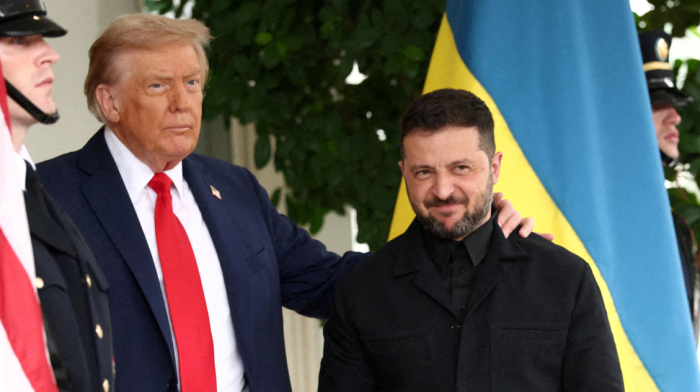
U.S. President Donald Trump declared a “golden age” for America in his first second-term State of the Union on Tuesday evening, delivering the longest-ever address at more than 90 minutes. Here are the main takeaways.
The address focused on major policy themes, with President Trump emphasising tougher immigration controls, robust economic growth, nationwide crime reduction and his tariff strategy, while also highlighting foreign policy achievements, including U.S. action in Venezuela, the Gaza ceasefire, and warnings to Iran.
Immigration
President Trump asserted that the U.S. border is now secure and highlighted efforts to sharply reduce illegal crossings. He called on Congress to expand funding for the Department of Homeland Security and maintain strict enforcement measures, emphasising support for “legal” immigration channels.
“After four years in which millions and millions of illegal aliens poured across our borders totally unvetted and unchecked. We now have the strongest and most secure border in American history by far,” he announced.
Tariffs dispute
Trump criticised a recent Supreme Court ruling that struck down large portions of his tariff regime last Friday (20 February), describing it as “very unfortunate,” and promised to pursue alternative legal avenues to maintain trade duties he says protects American industry.
"I used these tariffs, took in hundreds of billions of dollars, to make great deals for our country, both economically and on a national security basis," Trump said.
Venezuela operation
The U.S. President hailed the removal of Nicolás Maduro as a “colossal victory for the security of the United States”, while celebrating the release of political prisoners, and announcing ongoing oil shipments from Venezuela under its interim leadership.
"It also opens up a bright new beginning for the people of Venezuela. We're working closely with the new president of Venezuela, Delcy Rodriguez, to unleash extraordinary economic gains for both of our countries and to bring new hope to those who have suffered so terribly," he added.
Middle East policy
Trump highlighted progress on a ceasefire in Gaza and issued stern warnings to Iran regarding its nuclear ambitions, framing these alongside other diplomatic and military actions as evidence of U.S. strength abroad.
"They've (Tehran) already developed missiles that can threaten Europe and our bases overseas," Trump said, "and they're working to build missiles that will soon reach the United States of America."
"They were warned to make no future attempts to rebuild their weapons programme, in particular, nuclear weapons. Yet they continue," he added.
Iran denies its nuclear programme is aimed at producing weapons.
Economy
He argued that inflation is falling and incomes are rising, blamed high prices on the policies of his predecessor, and highlighted executive actions aimed at lowering prescription drug costs, curbing speculative home buying, and regulating energy use by artificial intelligence (AI) data centres.
"After just one year, I can say with dignity and pride that we have achieved a transformation like no one has ever seen before, and a turnaround for the ages. It is indeed a turnaround for the ages."
Election restrictions
He urged the passage of the SAVE America Act, which would impose mandatory voter ID and proof-of-citizenship requirements, repeating claims of widespread election fraud despite a lack of evidence.
Partisan rift
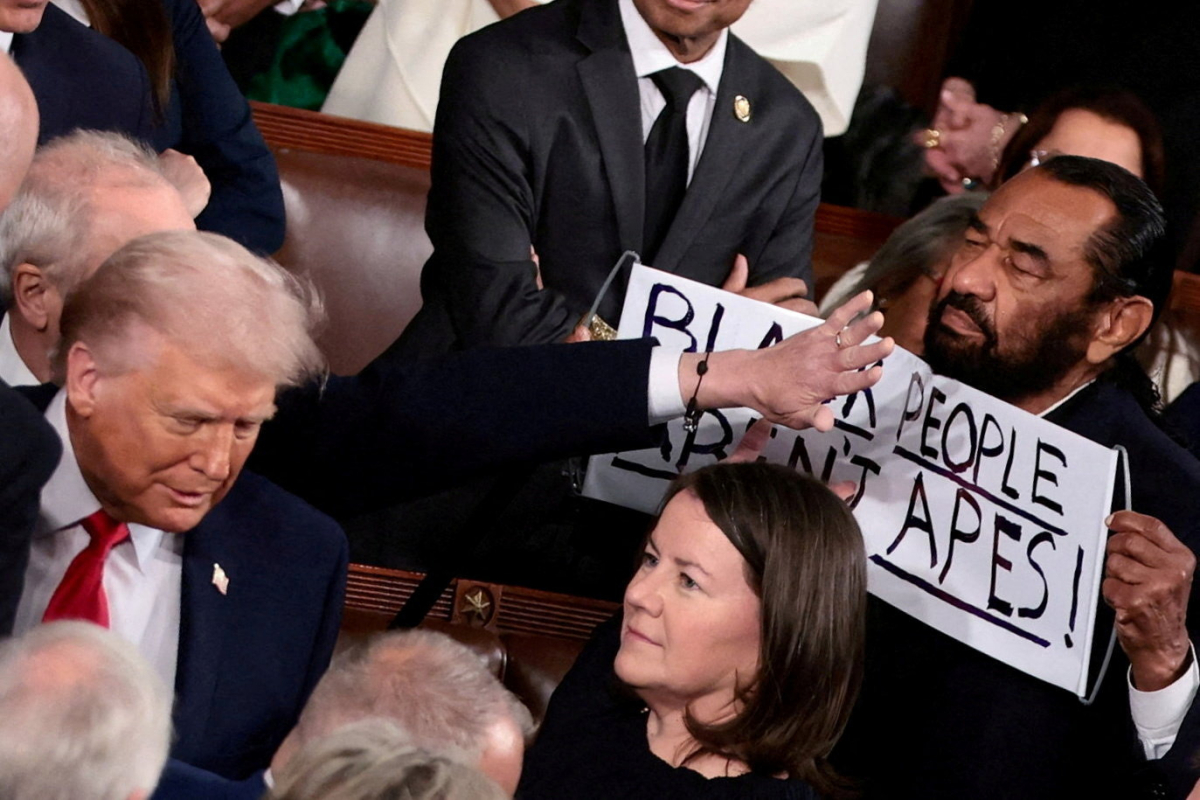
The address was marked by a stark partisan rift, with visible protests from Democratic MPs on the House floor, including the removal of one member for holding a protest sign reading, “Black people are not apes”, referring to a racist video recently shared online by Trump.
Applause from Republican representatives contrasted sharply with jeers from their Democratic counterparts, highlighting the deep and persistent rift shaping Congress and the wider national political landscape.













What is your opinion on this topic?
Leave the first comment