The European Union is facing mounting political pressure over its ability to keep Russian sovereign assets frozen, as internal divisions, leadership changes and war fatigue reshape decision-making across the bloc.
Speaking to AnewZ from Kharkiv, Ukraine, John Kavulich, senior editor at Issue Insight, said President Volodymyr Zelenskyy’s insistence that Russia’s frozen assets remain immobilised is encountering growing resistance within the EU, particularly as member states reassess their strategic priorities.
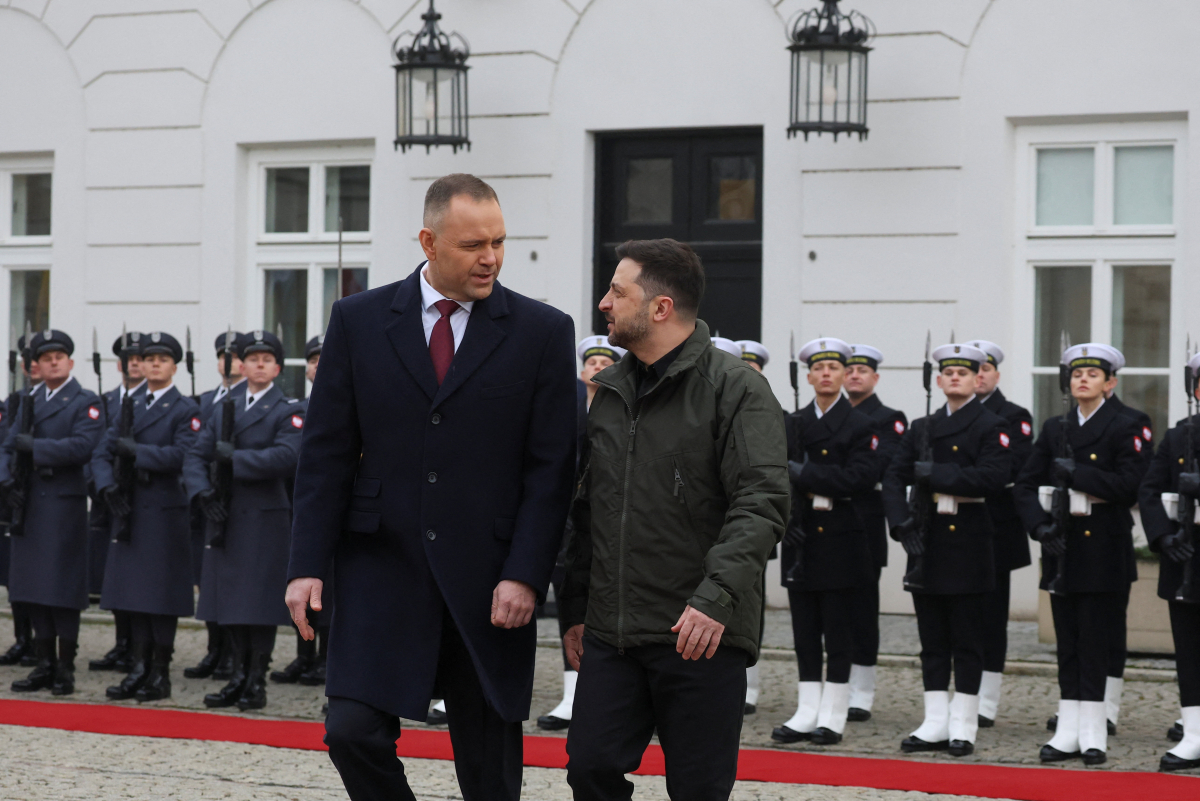
Kavulich pointed to Zelenskyy’s recent visit to Poland as an early sign of these shifting dynamics.
While Poland’s government has publicly backed the use of Russian assets to support Ukraine, the country’s new president is seen as more closely aligned with US President Donald Trump and more receptive to a Trump-aligned approach towards Russia.
This divergence, Kavulich said, highlights a widening gap between government policy and presidential influence in several key EU states.
According to him, time is working against Kyiv.
As the war enters its fifth year, European governments are showing signs of fatigue, while leadership turnover has diluted the unity seen at the outset of Russia’s full-scale invasion on 24 February, 2022.
Many of the leaders in power at that time are no longer in office, and some of their successors are less willing to sustain open-ended support for Ukraine.
Kavulich said this has created a deeply challenging situation for Zelenskyy. While there remains broad recognition within the EU that Russia’s actions in Ukraine have been devastating and that Moscow should ultimately pay for the damage caused, political priorities are shifting.
Over time, more European countries are beginning to look beyond the conflict and reassess economic and strategic interests, including future engagement with Russia’s market of about 140 million people.
Frozen assets dilemma
Kavulich noted that the standoff over frozen Russian assets, estimated to total around $247 billion (210 billion euros) held within the European Union, primarily at Belgium-based clearing house Euroclear, is likely to intensify.
The EU has agreed to keep the assets frozen indefinitely under sanctions imposed after 2022, preventing their return to Moscow while the war continues.
Brussels has also debated how the funds could be used to support Ukraine.
One proposal involves using profits generated by the frozen reserves, rather than the principal itself, to finance support for Kyiv. This approach was formalised in a regulation adopted on 22 May 2024, allowing net profits to be channelled towards Ukraine’s defence and reconstruction.
Revenue transfers have already taken place, including €3bn in May 2024 and a further €2.1bn in April 2025.
Another proposal involves using profits and cash flows from the assets to back loans for Ukraine, reflecting legal concerns raised by several EU states, including Belgium, about confiscating the principal outright.
Kavulich linked the current dilemma to a decision taken by Moscow just before the invasion.
On 23 February 2022, a day before Russian forces crossed into Ukraine, Russia could have withdrawn its funds from European jurisdictions without legal or political barriers, yet chose not to do so.
“Russia could have pulled all 320 billion back to Moscow with the click of a computer button, and no one could have stopped them. No one would have stopped them because they hadn’t done anything,” he said. “But they didn’t"
"Did they think that the war would be over quickly and then they’d be able to grab it back? Maybe," he continued, "but the other is that they modeled it out; they knew that this would fracture the European Union over time."
According to Kavulich "that’s precisely what it’s done.”
That calculation is increasingly visible, he added.
As divisions deepen within the EU and political priorities evolve, the question of how long the bloc can maintain a unified stance on frozen Russian assets is becoming central to broader debates over Ukraine, Russia, and Europe’s long-term sanctions strategy.
The issue came into sharper focus at an EU summit on 18-19 December 2025, where leaders agreed a $105bn (€90bn) loan package for Ukraine financed through EU borrowing, rather than through the direct use of frozen Russian assets, after Belgium blocked proposals over legal and financial risks.











What is your opinion on this topic?
Leave the first comment