Upcoming vote puts Armenia's European future to the test
When Armenians vote on 7 June, they will be voting in an election shaped by months of political change and a rapidly deepening relationship with the E...
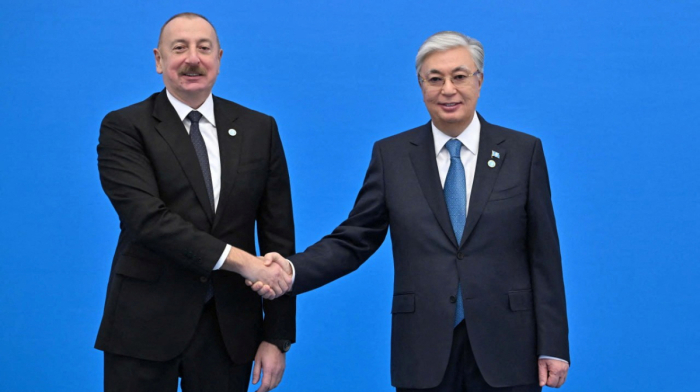
President of the European Council, Antonio Costa, visited Azerbaijan on Wednesday. A meeting between Costa and President Ilham Aliyev was held to reaffirm the European Union’s support amid regional security concerns, particularly following recent Iranian attacks on Nakhchivan Airport.
During a joint media briefing, Costa highlighted the EU’s commitment to Azerbaijan, condemning the attacks in the “strongest terms” and emphasising the importance of regional stability under international law.
“The European Union remains committed to working with all partners through dialogue and diplomacy to de-escalate tensions and protect civilians,” he said.
The meeting also underscored Azerbaijan’s strategic role in regional energy security.
Costa praised Azerbaijan’s continued natural gas exports to Europe, with 10 EU countries currently receiving Azerbaijani gas. He also highlighted the potential to expand supplies under the 2022 memorandum of understanding, which aims to double deliveries to 20 billion cubic metres.
President Aliyev stressed that, in total, 16 European countries now receive pipeline gas from Azerbaijan, reinforcing the country’s position as a key global energy supplier.
Beyond energy, discussions also focused on bilateral peace efforts with Armenia. Aliyev emphasised progress since the joint declaration signed in August 2025, noting that Azerbaijan and Armenia have maintained peace over the past seven months.
“Since 1991, Azerbaijan has been an independent sovereign state, but only recently have we been living in peace with Armenia,” he said.
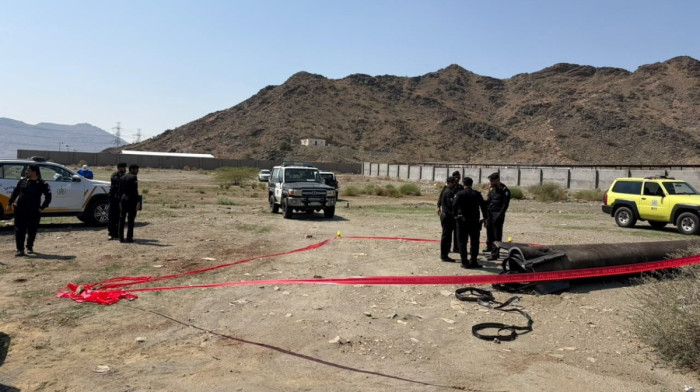
The visit comes amid heightened regional tensions following Iranian strikes on Azerbaijani territory.
Costa concluded by reaffirming the EU’s solidarity and willingness to cooperate with Azerbaijan on energy, security and diplomatic fronts, underscoring the country’s regional role in both stability and energy supply.

U.S. rapper Kanye West, now known as Ye, performed to a crowd of 118,000 people in Istanbul on Saturday night, marking his first concert in Europe in more than a decade, despite being barred from performing in several countries over past antisemitic remarks.
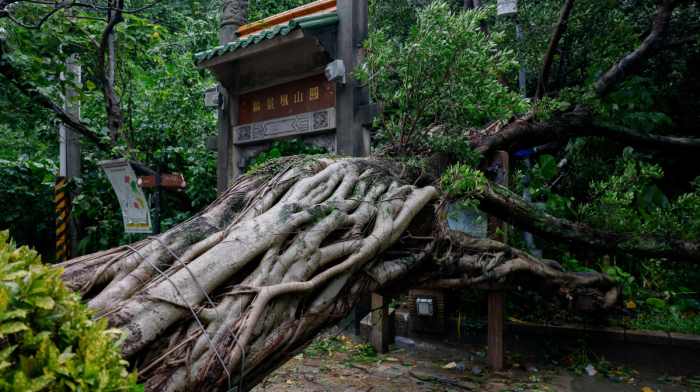
Okinawa lost transport links and suffered widespread power outages on Monday (1 June) as Severe Tropical Storm Jangmi brought destructive winds and heavy rain to Japan's south-western islands.
U.S. Secretary of State Marco Rubio has held talks with Lebanese President and Israeli Prime Minister on efforts to ease tensions between Israel and Lebanon. According to a U.S. official, Washington has proposed a plan aimed at achieving a gradual de-escalation of hostilities.
Competing narratives continue to shape perceptions of the war in Ukraine, with Russian leadership suggesting a possible end phase while Ukrainian officials warn of renewed large-scale attacks and ongoing escalation risks.
Unsealed records from the U.S. Department of Justice have renewed scrutiny of lawyer Robert Amsterdam after documents revealed communications between his law firm and Jeffrey Epstein's office. The disclosures have drawn attention because of Amsterdam's prominent role in Armenia.
When Armenians vote on 7 June, they will be voting in an election shaped by months of political change and a rapidly deepening relationship with the European Union. The result may not only determine who governs Armenia but also the future direction of the country's geopolitical alignment.
The Baku-Tbilisi-Kars (BTK) railway is resuming operations on 2 June after extensive modernisation works. Officials from Azerbaijan, Georgia and Türkiye are set to gather in Akhalkalaki for a launch event marking the reopening of one of the Middle Corridor's most important transport links.
Kazakhstan is open to expanding its oil export routes through Azerbaijan and advancing joint energy infrastructure projects across the Caspian region, Energy Minister Yerlan Akkenzhenov told AnewZ in an exclusive interview in Baku.
Russia's Foreign Ministry spokeswoman Maria Zakharova praised Georgia for resisting Western pressure (30 May), defending its national interests and pursuing a "multi-vector foreign policy" - language that closely mirrors the rhetoric of the ruling Georgian Dream party.
As Armenia approaches parliamentary elections, Russia appears to be increasing political and economic pressure on Yerevan, signalling that closer integration with the EU could lead to significant changes in labour, transport and energy arrangements between the two countries.
You can download the AnewZ application from Play Store and the App Store.
What is your opinion on this topic?
Leave the first comment