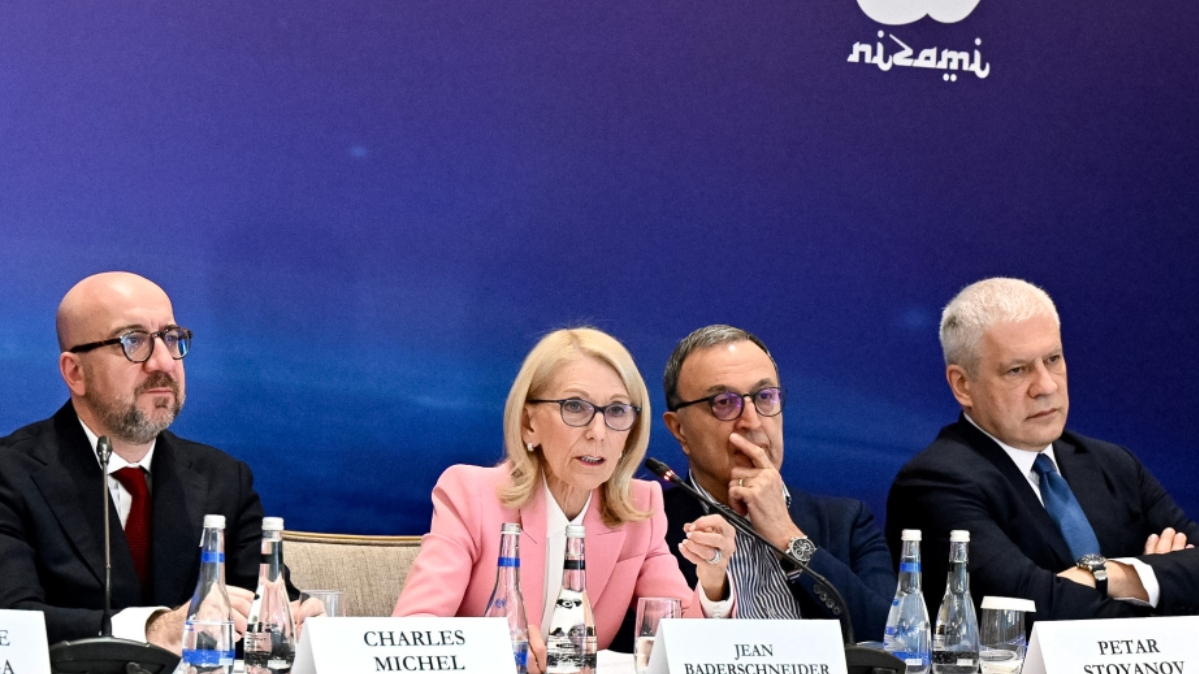
Organisers of the 13th Global Baku Forum outlined the agenda and key themes of the upcoming international gathering during a press conference in Baku ahead of the event, scheduled to take place from 12 to 14 March.
The forum, organised by the Nizami Ganjavi International Center under the patronage of the President of the Republic of Azerbaijan, is expected to bring together more than 350 world leaders, former heads of state, senior international officials, policymakers and experts.
Speakers at the press conference noted discussions will focus on global security, multilateral cooperation, climate policy, artificial intelligence, sustainable development and regional connectivity, reflecting growing concern over shifts in the international order.
Global tensions and a multipolar world
They said the world is currently facing a paradox in which the international system has become increasingly multipolar, while mechanisms for global cooperation have weakened.
Participants also noted that competition between major powers is expanding beyond traditional geopolitical arenas into energy, natural resources, advanced technologies, data and nuclear-related sectors.
They highlighted the growing influence of mid-sized powers, many of which seek to pursue independent foreign policies rather than align exclusively with a single major power.
Forum aims to promote dialogue and cooperation
Speaking at the press conference, María Fernanda Espinosa Garcés, president of the 73rd session of the United Nations General Assembly, said the forum’s theme, “Bridging Divides in a World in Transition”, reflects the realities of the current international environment.
“The theme of this year’s Global Baku Forum is highly relevant to the current global context, as it directly corresponds to the realities we are experiencing,” Espinosa said.
She noted the forum continues to attract broad international participation despite tensions in many regions.
“Despite the tense and dangerous situation in the region, the Forum will bring together over 350 thinkers, politicians, parliamentarians and heads of state and government from across the world, which clearly demonstrates the importance of the Forum,” Espinosa said.
She added that Azerbaijan has increasingly become a platform for international dialogue and diplomacy.
“Azerbaijan has become a vital reference point for dialogue and effective diplomacy. Therefore, I call on everyone to follow the discussions carefully and listen to the messages of optimism and hope that resonate in a world which often appears divided,” Espinosa said.
At the same press conference, Jean Baderschneider, a member of the Board of Directors at Fortescue Ltd, founder and chair of the Global Fund to End Modern Slavery and former vice-president of ExxonMobil, said Azerbaijan could play an important role in strengthening international cooperation.
“At a time of the partial paralysis of international organisations, growing criticism of the United Nations, and the rising activism of middle powers, Azerbaijan can play a crucial role in approaches based on pluralism, flexible models of cooperation and the formation of coalitions ready for action,” Baderschneider said.
Baderschneider expressed hope that the forum would generate important debates on global challenges.
“I hope that in the coming days we will witness extremely important debates,” she added.
Also speaking at the same press conference, Charles Michel, former President of the European Council, warned that the current global environment reflects a growing imbalance between geopolitical power and international cooperation.
“The world is facing a serious paradox. It has never been more multipolar. At the same time, multilateralism is probably weaker than ever,” Michel said.
He added that the Global Baku Forum provides an important platform for dialogue at a time of growing global uncertainty.
“This format, which brings together people from different fields and with diverse experiences, gives us the chance to speak together, listen to one another and develop mutual understanding. Because mutual understanding is the starting point for making the right decisions and for building a fairer, more predictable world,” Michel said.
Panels to address security, governance and connectivity
According to organisers, several high-level panel discussions are planned, including “Global Security and the Balance of Power,” “Multilateralism in Crisis: Re-thinking Global Cooperation,” and “The UN Eighty Plus,” examining the future role of the United Nations.
Other sessions will explore Eurasian connectivity through the Middle Corridor, digital transformation, artificial intelligence in governance, and global housing policy ahead of the World Urban Forum, which Baku will host later this year.
The opening ceremony of the forum will take place at Gulustan Palace, where President Ilham Aliyev is expected to deliver a special address alongside several international figures.
The Global Baku Forum, organised annually by the Nizami Ganjavi International Center, has become one of the region’s leading platforms for discussing global challenges and promoting dialogue among world leaders and policymakers.










What is your opinion on this topic?
Leave the first comment