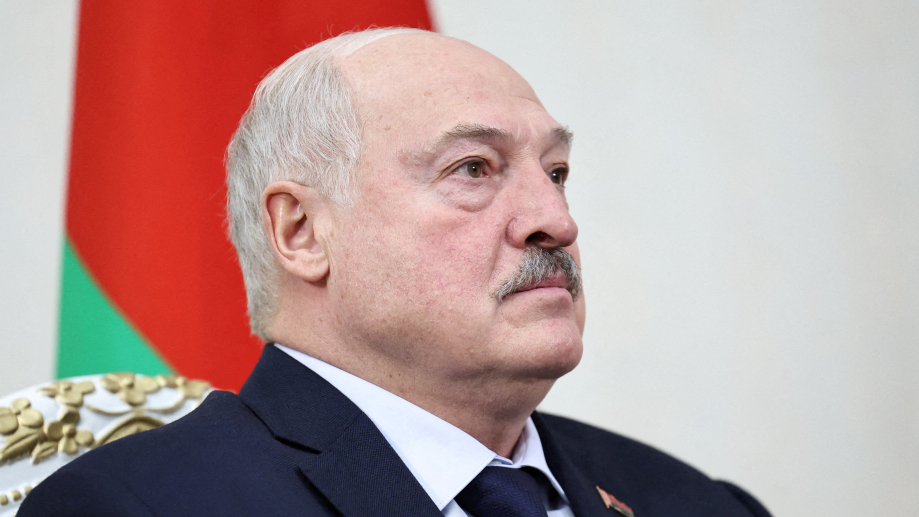
Belarusian President Alexander Lukashenko has confirmed that Russian-made Oreshnik missile systems have been deployed on Belarusian territory and placed on combat alert.
Speaking on Thursday at the 7th All-Belarusian People’s Assembly in Minsk, Lukashenko said the first launch positions for the missile system had been prepared and activated a day earlier. His remarks were broadcast by the state news agency Belta.
The announcement follows earlier statements by the Belarusian leader indicating that the deployment would take place by the end of the year. Lukashenko has previously described the move as a deterrent measure, signalling that Belarus would be capable of striking if faced with serious threats.
In July, Lukashenko said he had reached an agreement with Russian President Vladimir Putin for the system to be stationed in Belarus before year-end. Moscow first publicly acknowledged using the Oreshnik missile in November 2024, when it said the weapon struck an industrial facility in Ukraine’s Dnipro region in response to Kyiv’s use of Western-supplied long-range missiles against targets inside Russia.
Belarus has also taken part in joint military exercises with Russia involving the system. In September, Minsk said the Zapad-2025 drills included rehearsals for the deployment of Oreshnik missiles and planning for the use of non-strategic nuclear weapons.
Russia has steadily expanded its military footprint in Belarus since the start of the Ukraine conflict. In March 2023, President Putin announced plans to station tactical nuclear weapons in the country and to construct a dedicated storage facility.
Relations with the United States
In the same address, Lukashenko said Belarus had begun what he described as a difficult but constructive dialogue with the United States, suggesting that talks were moving towards a possible meeting with U.S. President Donald Trump.
He claimed Washington was prepared to guarantee the lifting of sanctions as part of broader discussions, while criticising the use of the U.S. dollar as a political tool.
Lukashenko also said talks were under way on reopening the U.S. Embassy in Minsk, though disagreements remain over security arrangements for the mission.
Lukashenko added that the European Union remains one of the world’s major centres of power alongside the United States, Russia and China, but warned that internal divisions could weaken its position.










What is your opinion on this topic?
Leave the first comment