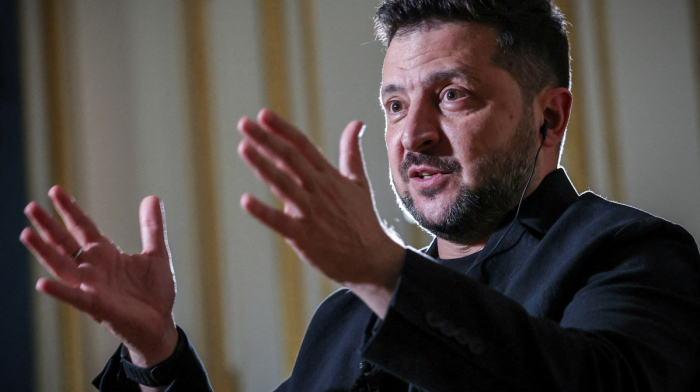
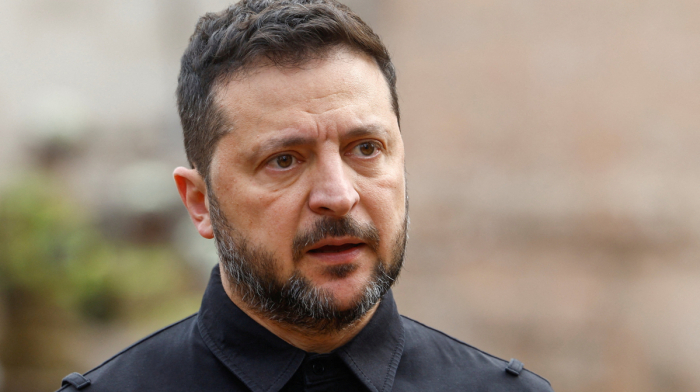
Ukrainian President Volodymyr Zelenskyy engaged in high-level talks in Berlin from 14-15 December, with German Chancellor Friedrich Merz, U.S. envoys, and European leaders, focusing on security guarantees and the framework for a potential peace deal with Russia.
The discussions brought together Ukraine’s Zelenskyy, German Chancellor Merz, U.S. special envoy Steve Witkoff, Jared Kushner (son‑in‑law of U.S. President Donald Trump), European Commission President Ursula von der Leyen, and NATO Secretary‑General Mark Rutte, among others. While a broader group of European leaders was reported to be involved in related meetings, the core negotiations focused on security and peace frameworks.
A central focus of the talks was security guarantees for Ukraine that Western partners say could help deter future aggression.
U.S. and European officials outlined a package of measures described as “Article 5‑like” referencing NATO’s mutual defence principle that would provide legally binding commitments to protect Ukraine against renewed attacks.
These guarantees would combine military support, diplomatic backing, and monitoring mechanisms under allied coordination.
U.S. negotiators said Washington is prepared to offer these guarantees and that they would require approval by the U.S. Senate to become legally binding.
European leaders echoed support for robust protection as part of any enduring peace framework.
European leaders formally backed the concept of a European‑led multinational force operating within Ukraine under the proposed security framework. Such a force would assist with rebuilding Ukraine’s defence capabilities, help secure airspace and maritime domains, and contribute to long‑term deterrence against future aggression. The inclusion of this proposal reflects coordinated U.S.–European support for a stronger post‑war security architecture.
Economic support and reconstruction discussions
Officials also discussed economic support measures for Ukraine, including long‑term reconstruction assistance and the possibility of leveraging frozen Russian assets.
While leaders advocated for robust financial aid to support Ukraine’s recovery and resilience, detailed agreements on asset use remain under negotiation and face political and legal complexities within the European Union.
Territorial disputes still unresolved
Despite progress on security ideas, the question of territorial control remains one of the most contentious issues. Ukrainian negotiators have resisted pressure to concede territory, particularly in eastern regions held by Moscow’s forces, and have reiterated that decisions over sovereignty must ultimately be made by the Ukrainian people under secure guarantees.
Russian demands concerning territory continue to complicate efforts to reach a comprehensive peace deal.
U.S.–European coordination and outlook
President Donald Trump described the outcome of the Berlin talks as constructive, saying parties were “closer now than ever” to a peace agreement, but acknowledged that significant challenges remain. Both U.S. and European leaders stressed that “nothing is agreed until everything is agreed,” indicating that further negotiations are required to refine security guarantees, address territorial disputes and finalise mechanisms for ceasefire monitoring and implementation.
Next steps
Negotiators will continue discussions with a focus on clarifying the specifics of the proposed security guarantees, the structure and role of a multinational force, and the political and legal arrangements for reconstruction support.
Russia, which was not a formal participant in the Berlin negotiations, is expected to be briefed on the proposals by the U.S. side, but has yet to commit to a comprehensive peace framework.








What is your opinion on this topic?
Leave the first comment