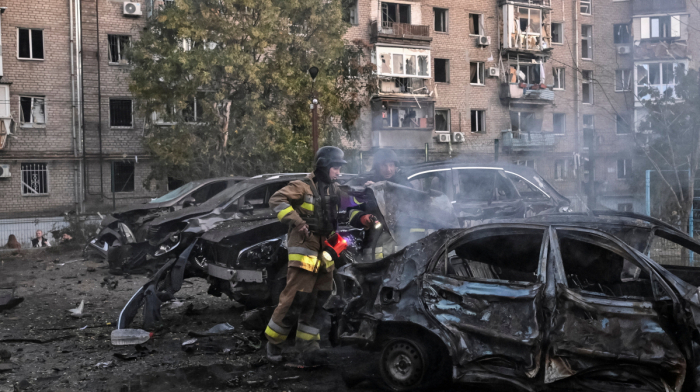
Iran protest death toll rises to 6,126, rights group says
The death toll from nationwide protests in Iran has climbed to 6,126, according to the U.S.-based Human Rights Activists News Agency (HRANA)....
Putin’s visit to India has put the spotlight on New Delhi’s evolving defence strategy as it seeks to modernise Russian-made systems with domestic production. At the same time, India is carefully navigating its ties with the U.S. and Europe ahead of key diplomatic visits.
Russian President Vladimir Putin’s two-day state visit to India on 4-5 December, his first since Russia’s 2022 invasion of Ukraine, focused on strengthening defence, trade, and energy cooperation.
Speaking on the AnewZ's Daybreak program from India, geopolitical and geoeconomics analyst Umesh Kumar explained that India, historically reliant on Russian arms, is now producing key technology domestically to meet its own defence needs while also exporting components to Russia and its traditional buyers.
“While major announcements about systems such as the S-400, S-500, or Sukhoi 57 were expected, these were avoided, likely due to ongoing negotiations with the United States on trade matters,” he added.
During the visit, India and Russia reaffirmed their commitment to broad cooperation across politics, security, economics, energy, education, and culture.
“Equally important is that Russia and India are working hand in hand to establish a just, multipolar world order,” Putin said, emphasising the shared vision of both countries in global affairs.
At the same time, India remains cautious, balancing its strategic partnership with Russia while pursuing trade talks with the U.S., including efforts to reduce punitive tariffs linked to its purchases of Russian oil.
Meanwhile, EU chief Ursula von der Leyen is scheduled to visit India next month as the chief guest for Republic Day.
According to Indian local media, this marks the first time that the European Union’s top leadership has been invited to India’s Republic Day celebrations, thus signalling a new level of strategic and diplomatic engagement between India and the EU.
The analyst believes that India’s approach: strengthening domestic defence production, supporting Russia’s traditional defence customers through component supply, and deepening trade ties, positions it as a strategic and reliable partner on the global stage.

The UN Human Rights Council has condemned Iran for rights abuses and ordered an expanded investigation into a crackdown on anti-government protests that killed thousands, as Tehran warned any military attack would be treated as an all-out war.
Minnesota Governor Tim Walz has activated the state’s National Guard following the fatal shooting of a U.S. citizen in Minneapolis, an incident that has triggered protests and intensified tensions between state and federal authorities.
Spain has faced a string of railway accidents in one week, including one of Europe’s deadliest in recent years, raising questions about whether maintenance investment is keeping pace with soaring passenger demand on the world’s largest high-speed rail network.
Venezuela’s interim president Delcy Rodriguez said on Sunday the country should not fear pursuing energy ties with the United States, as Caracas seeks to expand oil and gas production and attract foreign investment.
Iran’s Foreign Ministry has strongly rejected a U.S. magazine report on the death toll during January unrest. Nationwide protests erupted in response to soaring inflation and a national currency crisis.
Finland’s Border Guard says it plans to establish a maritime surveillance centre to help prevent damage to critical undersea infrastructure in the Gulf of Finland, amid heightened concerns over cable and pipeline security in the Baltic Sea.
The United States will send its largest-ever Winter Olympic team to the Milano Cortina Games, with 232 athletes selected to compete, the U.S. Olympic and Paralympic Committee said on Monday.
The death toll from nationwide protests in Iran has climbed to 6,126, according to the U.S.-based Human Rights Activists News Agency (HRANA).
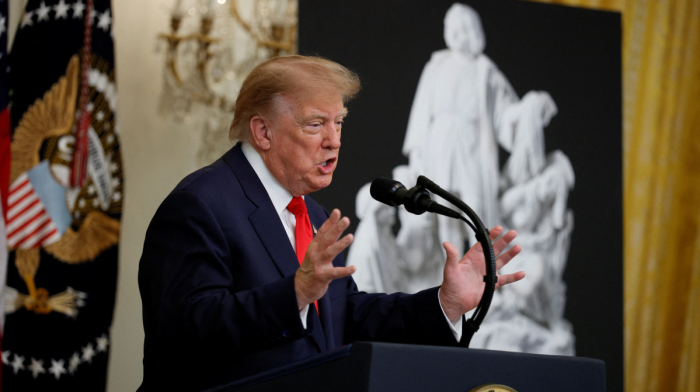
U.S. President Donald Trump on Monday announced higher tariffs on South Korean goods, accusing Seoul’s legislature of failing to approve a previously agreed trade deal between the two countries.
President Donald Trump said Iran wants to reach a deal with Washington, as the U.S. deploys an aircraft carrier strike group to the Middle East to bolster its military posture.
You can download the AnewZ application from Play Store and the App Store.
What is your opinion on this topic?
Leave the first comment