live Oil climbs past $119 a barrel as Iran crisis squeezes global supply - Monday 9 March
Global oil prices continue to rise, currently surpassing $119 a barrel this Monday, an almost four year high following fresh U.S.-Israeli...
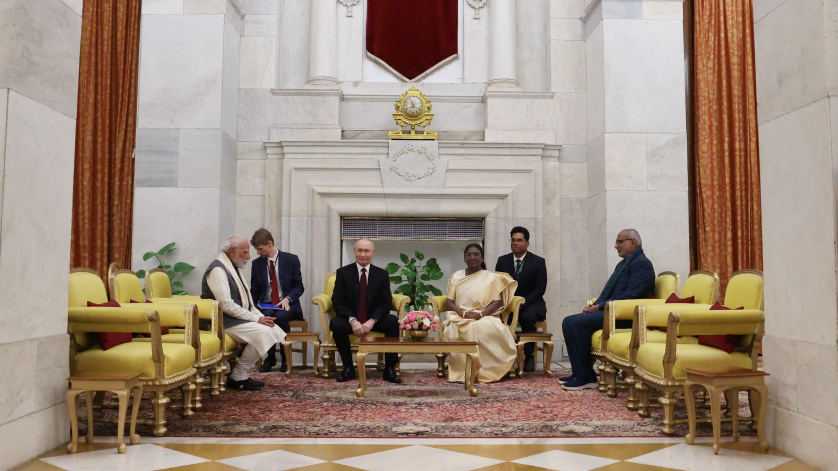
Russian President Vladimir Putin departed New Delhi on Friday after a two-day state visit, during which he and Indian Prime Minister Narendra Modi agreed to deepen trade and defence cooperation, while Russia offered uninterrupted fuel supplies to India.
The visit marked Putin’s first trip to India since Russia’s invasion of Ukraine in 2022. India, the world’s top buyer of Russian arms and seaborne oil, rolled out the red carpet for the Russian leader, highlighting the longstanding ties between the two nations.
During a state reception hosted by Indian President Draupadi Murmu, Putin described his talks with Indian officials as “genuinely open and constructive.” He highlighted that the final policy statement adopted between the countries included “large-scale plans for future co-operation in politics and security, economics and finance, transport, energy, education, and culture.”
“Equally important is that Russia and India are working hand in hand to establish a just, multipolar world order,” Putin added, emphasising the shared vision of both countries in global affairs.
Despite Moscow’s offer of continuous fuel supplies, Indian officials appeared cautious, reflecting New Delhi’s delicate balancing act between its strategic partnership with Russia and ongoing trade negotiations with the United States. India has been negotiating with the U.S. to reduce punitive tariffs imposed by President Donald Trump on Indian goods linked to its purchases of Russian oil. These measures have contributed to India’s projected three-year low in energy imports this month.
Russia has expressed interest in importing more Indian goods, aiming to expand bilateral trade to $100 billion by 2030. The two countries also agreed to enhance defence collaboration, building on decades of military and technological co-operation.
During the ceremonial farewell, Putin was seen shaking hands with Indian officials, including Foreign Minister Subrahmanyam Jaishankar, before boarding his plane to depart New Delhi.
The visit reflects both Russia and India’s commitment to strengthening bilateral relations amid a complex global geopolitical landscape, balancing energy security, trade, and strategic defence priorities.

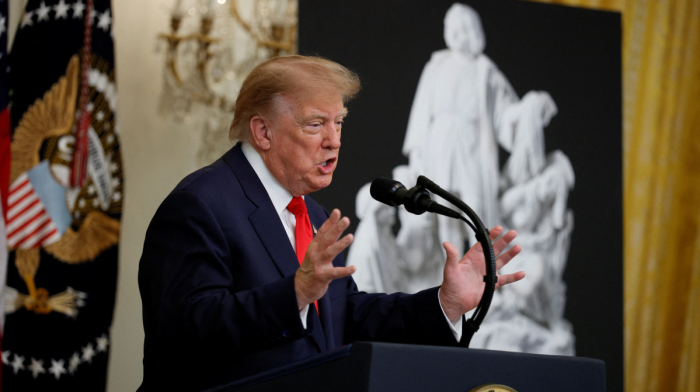
Trump says the United States "don’t need people that join wars after we’ve already won," targeting his criticism at UK Prime Minister Keir Starmer. Israel continues to fire missles at strategic sites in Iran and Gulf regions report more strikes from Iran.
Global oil prices continue to rise, currently surpassing $119 a barrel this Monday, an almost four year high following fresh U.S.-Israeli strikes targeting oil depots. Stock markets shares slumped on fears the conflict with Iran could disrupt shipments through the Strait of Hormuz.
Mojtaba Khamenei, son of the late Ayatollah Ali Khamenei, is a hardline cleric with strong backing from the Islamic Revolutionary Guard Corps. His rise signals continuity in Tehran's anti-Western policies.
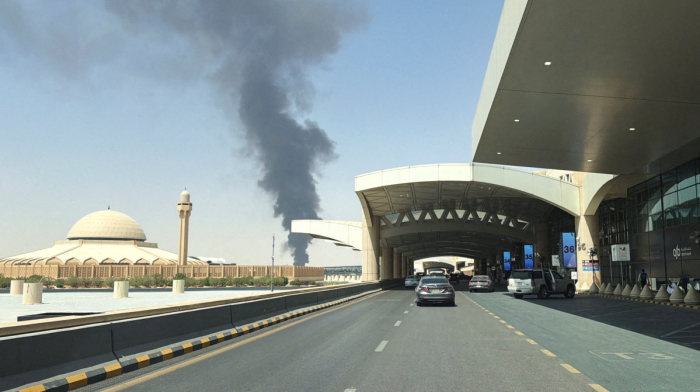
U.S. President Donald Trump threatened further attacks on Iran on Saturday (7 March), while the United Arab Emirates and Saudi Arabia continued to shoot down missiles in their airspace. Meanwhile, Iran’s President Masoud Pezeshkian said Tehran would stop attacking its neighbours.
Iran named Mojtaba Khamenei to succeed his father Ali Khamenei as supreme leader on Monday (9 March), signaling that hardliners remain firmly in charge, as the week-old U.S.-Israeli war with Iran pushed oil above $100 a barrel.
U.S. President Donald Trump and UK Prime Minister Keir Starmer spoke by phone on Sunday as tensions between Washington and Westminster deepened over the conflict involving Iran. The call came less than a day after Trump criticised Britain’s response to U.S. strikes on Iranian targets.
Norwegian police are searching for a suspect after an explosion at the U.S. embassy in Oslo on 8 March caused minor damage but no injuries, in what authorities say may have been a deliberate attack linked to the Middle East crisis.
An explosion damaged a synagogue in the Belgian city of Liège early on Monday (9 March) in what authorities said was an antisemitic attack that caused damage but no injuries.
The Group of Seven (G7) finance ministers will meet on Monday to discuss a global rise in oil prices and a joint release of oil from emergency reserves coordinated by the International Energy Agency, the Financial Times reports.
Start your day informed with AnewZ Morning Brief. Here are the top news stories for the 9th of March, covering the latest developments you need to know.
You can download the AnewZ application from Play Store and the App Store.
What is your opinion on this topic?
Leave the first comment