At a WHO supported malnutrition ward in Khartoum, doctors and mothers describe children arriving too weak to eat or drink as nearly three years of conflict, displacement and disease push Sudan towards famine.
In a children’s hospital in Khartoum, the quiet hum of oxygen cylinders and whispered prayers hangs over rows of small beds. At Al-Buluk Children’s Hospital, the stabilisation centre for malnutrition is one of the places where Sudan’s prolonged conflict is most brutally visible - on the bodies of its youngest patients.
Mothers arrive carrying children who can no longer eat or drink, hoping they have not come too late. One of them, Suhair Hamed Qamar, says that when she brought her daughter Hadia, she was “sick in every sense of the word”, so weak that she could not open her eyes or move. Doctors later diagnosed dysentery on top of severe malnutrition. For days, Suhair thought she might lose her child. Now, she says, Hadia is slowly improving, and for that she repeats the same words: “thank God”.
Clinicians at Al-Buluk say Hadia’s story is no longer unusual. Health workers describe a sharp rise in severe acute malnutrition, with many children arriving with multiple complications. Alongside extreme wasting and nutritional oedema - swelling caused by severe malnutrition - doctors are treating diarrhoea, persistent vomiting, fever, measles and HIV. Each new admission reflects the strain of displacement, food shortages and collapsing basic services across Sudan.
Once a child’s condition has deteriorated to the point that hospitalisation is needed, the risks do not end at discharge. Dr Nour El-Daem Abdel-Hadi from the hospital’s nutrition department says children remain vulnerable to slipping back into malnutrition, depending on their family’s income, access to food and the conditions in the communities they return to. Staff try to track where patients come from and feed that information into outreach and awareness campaigns, targeting villages and hard-to-reach areas where cases are concentrated.
Inside the ward, capacity remains a constant concern. Officially, there are around 60 beds, but staff say that during recent surges, there were three or even four children squeezed onto a single bed. At that point, there were no empty spaces at all, only mattresses filled with severely underweight children and their exhausted caregivers. The situation is somewhat calmer now, but teams know that any new wave of displacement or disease could quickly overwhelm them again.
Despite the pressure, the centre offers free, life-saving care. Examinations and medical tests cost nothing, and children referred from the emergency room receive their treatment without charge. Therapeutic milk - a key element in stabilising severely malnourished children - is also provided free and, for now, supply has been steady. For many families who arrive with no money, even for prescribed medicines, this can be the difference between life and death.
Other gaps are harder to close. According to staff, essential drugs are still missing and some supplies that should have reached the hospital have not yet arrived. The workforce is also stretched. A ward of this size should have one nutrition specialist for every 10 beds, but in reality, only two dieticians cover all 60, supported by a nursing team that is itself far smaller than required. Clinicians say they are doing everything they can, but the combination of staff shortages and high demand leaves little margin for error.
World Health Organization teams are present in the ward, working alongside local staff to keep services running. WHO support helps ensure that therapeutic milk and other critical materials continue to reach the centre and that children with severe acute malnutrition and medical complications can be stabilised and monitored. But the needs extend far beyond one hospital.
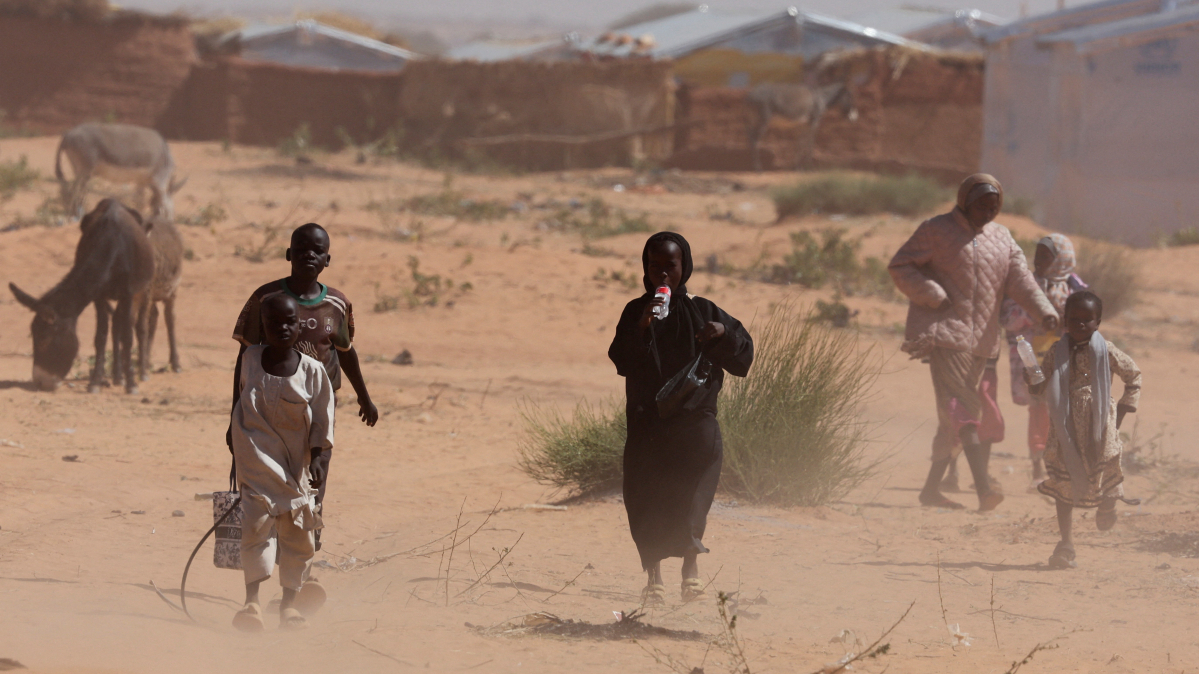
Sudan is now facing one of the world’s largest hunger emergencies. More than 21 million people are estimated to be acutely food insecure, and famine conditions have been reported in areas such as El Fasher and Kadugli. Between January and October 2025 alone, over 36,000 severely malnourished children with medical complications were admitted to stabilisation centres across the country that depend entirely on the WHO for life-saving supplies.
Back in Khartoum, these statistics are measured in very human moments: a doctor gently checking the swelling in a child’s legs, a mother admitting she could not afford the medicine originally prescribed, a nurse pouring therapeutic milk into a small plastic cup. Each child who begins to gain weight is a small victory in a crisis that shows no sign of easing.
For the staff at Al-Buluk, the message is clear. Emergency care can pull children back from the brink, but without wider action - food assistance, protection, outreach, and sustained support for health services - the cycle of malnutrition will continue. Inside the crowded ward, surrounded by the quiet sounds of recovery and fear, Sudan’s hunger crisis is no longer an abstract warning. It is a daily reality played out bed by bed.














What is your opinion on this topic?
Leave the first comment