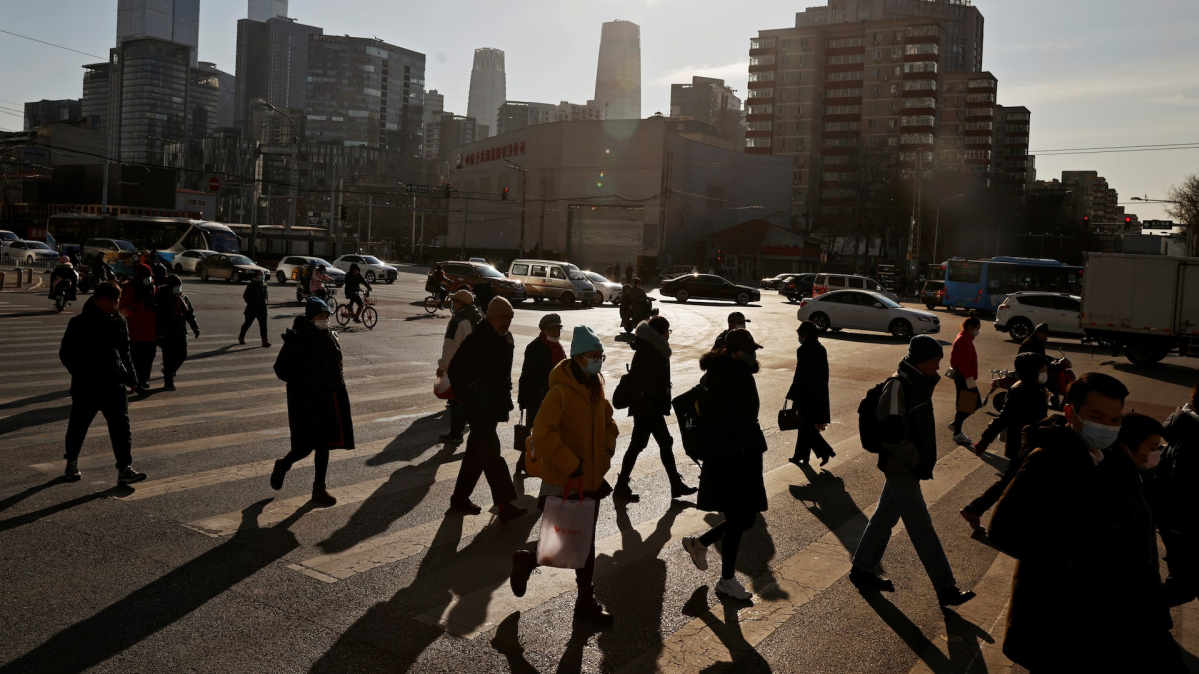
Following a high-level meeting of the Communist Party leadership on Monday, state media confirmed that China will seek to insulate its economy from external volatility by turning inward, pledging to "keep expanding domestic demand" through a suite of "more proactive" policies.
The announcement comes from the Politburo, the Party’s top decision-making body, and was relayed by the state news agency Xinhua. The directive signals a decisive shift in tone as the government looks to secure a strong footing for the commencement of the country’s next Five-Year Plan.
Analysts interpret the Politburo's call for a "more proactive fiscal policy" and "appropriately loose monetary policy" as a green light for significant government spending and increased liquidity. This language typically points to a widening of the budget deficit, increased sovereign debt issuance, and potential cuts to interest rates and the reserve requirement ratio (RRR) in the coming year.
Economists believe these measures are designed to defend a GDP growth target that is likely to remain anchored around 5% —a figure Beijing views as essential for maintaining social stability and development momentum.
"We should put people's livelihood first and strive to do more practical things for the people," the meeting concluded, emphasising a need to "stabilise jobs, firms, markets and expectations."
Structural headwinds persist
While the world's second-largest economy is largely on track to meet its 2025 growth targets, the recovery remains fragile. Beijing is battling a confluence of challenges, most notably a multi-year liquidity crisis in the property sector—which once accounted for a quarter of the nation’s output—and persistent deflationary pressures that have eroded consumer confidence.
Furthermore, "excess factory capacity" in key manufacturing sectors has led to trade friction abroad, while traditional infrastructure-led investment is yielding diminishing returns at home.
Trade pivot
The policy announcement also reflects a strategic pivot in China’s international trade relations. Despite Beijing and Washington recently reaching a trade truce to de-escalate tariff tensions, Chinese manufacturers are aggressively diversifying away from American reliance.
Customs data released on Monday underscored this shift. While Chinese shipments to the United States plummeted by 29% year-on-year in November, exports to the European Union surged by 14.8%.
Simultaneously, trade with fast-growing Southeast Asian economies rose by 8.2%, as Chinese firms leverage global footprints to establish new production hubs and bypass trade barriers.
Xinhua noted that the leadership intends to "better coordinate" domestic economic priorities with these international trade battles in the coming year.
Central Economic Work Conference to meet
Investors and global markets are now awaiting the Central Economic Work Conference (CEWC), expected to convene in the coming days. This annual closed-door gathering of top officials will translate the Politburo’s broad political directives into specific economic tactics.
While the Politburo sets the tone, the CEWC determines the practical application of policy. However, the official numerical targets for GDP, inflation, and fiscal deficits will not be formally disclosed until the National People’s Congress holds its annual parliamentary session in March.
Focus on the Consumer
Beijing appears to be acknowledging that long-promised structural reforms can no longer be delayed. Although the Xinhua report did not explicitly use the term "household consumption," the directive to "adhere to the principle of domestic demand taking the lead" suggests a realisation that sustainable growth must shift from state investment to consumer spending.



















What is your opinion on this topic?
Leave the first comment