live 4 injured by drones near Dubai Airport - Wednesday 11th March
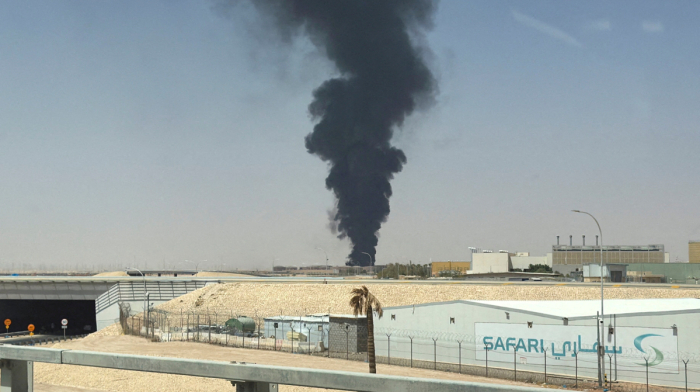
Four people have sustained varying degrees of injuries after two drones fell near Dubai's International Airport on Wednesday, as Iran and Israe...
China has approved the first batch of Nvidia's H200 artificial intelligence (AI) chips after Washington allowed limited sales, paving the way for major Chinese technology companies to gain access to processors that remain far ahead of domestic alternatives.
South China Morning Post reports that about 400,000 units are included in the initial shipment, with Alibaba, Tencent and Bytedance set to receive the first deliveries.
Other firms are still waiting for their applications to move through the system.
The expectation is that state supported operators such as telecommunications companies will continue to face stricter oversight, keeping their access to imported chips heavily managed.
Beijing is trying to direct these high performance processors to the companies that need them most for training and running AI and cloud systems, but it is doing so inside a tightly controlled approval framework.
The aim is to make sure that supply reaches core users without weakening domestic chip development. This balancing act sits at the centre of its broader push for self sufficiency in the semiconductor field.
The move follows a decision by U.S. President Donald Trump late last year to permit sales of the H200 on the condition that shipments to China do not exceed 50% of Nvidia's sales inside the United States.
Nvidia had warned that losing the Chinese market would threaten its global leadership in chip production, prompting the White House to adjust its stance.
The H200, capable of 15,832 calculations per second according to Chinese reporting, remains well ahead of the most advanced chips currently produced in China.
This performance gap explains why Chinese companies have pressed for access under the controlled approval system now in place.

Tensions in the region remained high on Tuesday (10 March), as the United States and Iran exchanged increasingly sharp warnings, including threats over the strategic Strait of Hormuz, a critical artery for global oil supplies.
China has urged Afghanistan and Pakistan to resolve their dispute through dialogue after Chinese envoy Yue Xiaoyong met Afghan Foreign Minister Amir Khan Muttaqi, as fighting between the two neighbours entered its eleventh day.
Kazakhstan has evacuated more than 7,300 citizens from the Middle East since regional tensions escalated, using both air and land routes to bring nationals home while closely monitoring political developments and potential economic effects linked to rising oil prices.
Almost 2,000 people have been evacuated from Iran via Azerbaijan since conflict erupted in the Middle East.
Norwegian police are searching for a suspect after an explosion at the U.S. embassy in Oslo on 8 March caused minor damage but no injuries, in what authorities say may have been a deliberate attack linked to the Middle East crisis.
Chinese electric vehicle giant BYD is pushing to make charging an electric car almost as quick and convenient as filling up a traditional petrol vehicle - a move that could help remove one of the biggest barriers to wider electric vehicle adoption.
South Korea will soon cease to be one of the few countries where Google Maps does not function fully, after its security-conscious government reversed a two-decade-old policy and approved the export of high-precision map data to overseas servers.
New research suggests 40,000-year-old carved objects from south-western Germany bear repeated marks arranged in organised sign sequences similar to early proto-cuneiform, although they are not regarded as a form of writing.
The chief executive of Google DeepMind, Demis Hassabis, has called for more urgent research into the risks posed by artificial intelligence, warning that stronger safeguards are needed as systems become more advanced.
NASA successfully completed a critical fueling rehearsal on Thursday (19 February) for its giant moon rocket, Artemis II, after earlier hydrogen leaks disrupted preparations for the next crewed lunar mission. The launch is scheduled for 6 March, according to the latest information from NASA.
You can download the AnewZ application from Play Store and the App Store.
What is your opinion on this topic?
Leave the first comment