Georgia and Armenia have resumed talks on their 225-kilometre border after years of limited progress, with disputes over historical boundaries, farmland and access to religious sites among the challenges still facing negotiators.
Georgia and Armenia are revisiting a longstanding territorial question left unresolved by the collapse of the Soviet Union: the precise location of their shared international border.
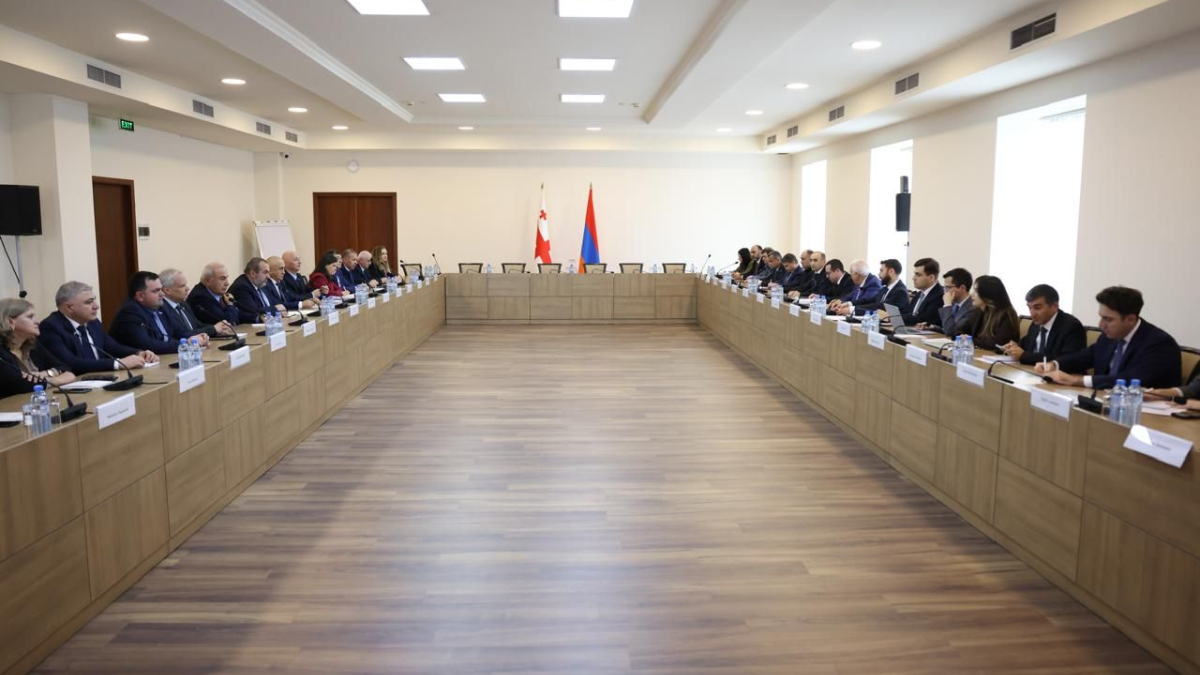
Government commissions from the two countries met in Yerevan on 6 November, holding their first talks in several years. The discussions were co-chaired by Georgian Deputy Foreign Minister Lasha Darsalia and his Armenian counterpart, Vahan Kostanyan.
Both sides welcomed the renewed dialogue as a step towards stronger bilateral relations and reaffirmed their commitment to resolving outstanding issues through negotiations. They also reviewed the legal framework underpinning the process, including existing protocols and potential measures to advance the commissions' work.
However, the meeting ended without any specific territorial agreements or a timetable for completing negotiations.
The talks have brought renewed attention to a largely peaceful but historically complex frontier, where shifting Soviet-era boundaries, conflicting maps and communities with deep cross-border ties continue to complicate efforts to establish a definitive international boundary.
A border shaped by Soviet history
The approximately 225-kilometre border between Georgia and Armenia took its present shape during the 1920s and 1930s, following earlier territorial arrangements and the brief Georgian-Armenian conflict in 1918.
A November 1921 agreement between the Soviet authorities of the two republics established a boundary that, with subsequent modifications, remained largely intact until the Soviet Union collapsed.
But transforming an internal Soviet administrative boundary into an internationally recognised border has proved difficult. After independence, Georgia and Armenia needed to agree on a legal basis for their frontier, drawing on historical agreements, maps and other documents.
Georgia's State Border Management Strategy, approved in 2014, identified border delimitation and demarcation as essential not only to effective border management but also to political, economic and social stability across the region.
The document stated that 71 per cent of the Georgian-Armenian border had been agreed at the time.
However, a 2025 assessment by the Armenian research organisation Armenian Council estimated that approximately 147 kilometres of the 225-kilometre frontier had been agreed, while acknowledging that other sources put the figure at 160 kilometres.
The differing estimates reflect variations in how the agreed sections were calculated.
Despite previous progress, significant work remains. Neither government has released an updated breakdown of the sections still under negotiation.
Where are the most difficult sections?
The challenges are concentrated in particular stretches of the border rather than spread evenly along its length.
According to a detailed 2025 study by Armenian Council researcher Samvel Meliksetyan, the western section is generally less complicated, with settlements located further from the boundary.
The most difficult areas lie east of the Armenian village of Metsavan, where dense forests, irregular borderlines and nearby settlements make delimitation more challenging.
The Akhkyorpi-Debed section is particularly sensitive. On the Georgian side, it includes several Armenian-populated villages, including Akhkyorpi, Chanakhchi, Opreti, Khokhmeli, Khojorni, Gyulbagh and Burdadzor, alongside Azerbaijani-populated communities such as Mollaoghli, Burma, Sadakhlo and Tazakend.
For generations, residents of these communities have depended on farmland, forests, pastures and water resources across what was once an internal Soviet boundary.
Tighter border controls introduced after independence disrupted these longstanding arrangements, restricting access to land and resources that local families had traditionally used.
The impact became clear in 2011, when residents of Burma, Sadakhlo and Tazakend, in Georgia's Marneuli municipality, protested after Armenian border guards restricted access to around 20 hectares of traditionally used land.
The proximity of some homes to the former administrative boundary has further complicated the situation.
Khojorni, an Armenian-populated village in Georgia's Marneuli region, presents another unresolved question.Research on the negotiations has referred to discussions about a possible arrangement involving a disputed plot near Armenia's Bavra area and Khojorni, although no territorial exchange has been publicly confirmed.
The challenges extend beyond farmland and residential areas.
Medieval religious complexes, including Khujapi Monastery, Khorakert Monastery and Khojorni Church, also lie in the border region, where unresolved territorial questions can affect access, restoration and preservation.
For people living along the frontier, the outcome of negotiations could have tangible consequences, shaping access to farmland, cultural heritage sites and natural resources, as well as everyday relations between neighbouring communities.
Why the border matters to Azerbaijan
The negotiations also have implications for the wider South Caucasus, particularly Azerbaijan.
Georgia, Armenia and Azerbaijan meet at a shared border junction, meaning decisions about one bilateral boundary could affect the other two countries.
This has become increasingly relevant as Armenia and Azerbaijan advance their own border delimitation process, including agreements on the principles governing their shared frontier.
An Armenian Council analysis published in February 2025 highlighted unresolved questions surrounding the three-country border junction near the Papakar mountain range.
The researcher cited reports of military positions in the area and argued that establishing the precise location of the tripoint would require coordination among Georgia, Armenia and Azerbaijan.
These assessments do not constitute officially confirmed agreements or positions of the Georgian government. However, they highlight the potential regional implications of the Georgian-Armenian negotiations.
The discussions are unfolding as territorial integrity, sovereignty and internationally recognised borders remain central to diplomacy across the South Caucasus.
Pashinyan stresses recognised borders
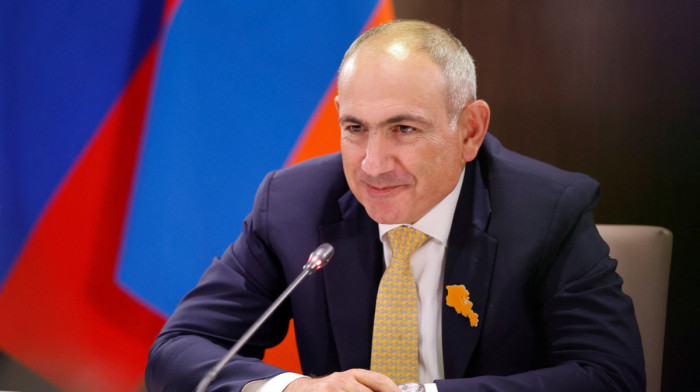
Armenian Prime Minister Nikol Pashinyan has meanwhile continued to promote his 'Real Armenia' political vision, which places the country's internationally recognised territory at the heart of its national identity and political direction.
Speaking at the Global Armenian Summit in Yerevan on 6 November, Pashinyan argued that borders should also serve as safeguards against territorial expansion by neighbouring states.
His remarks reinforced his government's emphasis on sovereignty and the protection of Armenia's internationally recognised territory.
The approach comes as Yerevan seeks to move beyond decades of conflict with Azerbaijan and establish more predictable relations across the region.
What happens next?
A fully agreed and internationally recognised border would provide greater legal clarity for both governments, improve conditions for communities along the frontier and support future cross-border cooperation.
It would also resolve a longstanding issue in a bilateral relationship that Georgia and Armenia both regard as strategically important.
Beyond the two countries, progress could carry wider diplomatic significance. As Armenia and Azerbaijan continue their own border negotiations, the South Caucasus faces a broader test of whether inherited territorial disputes can be resolved through dialogue.
The latest meeting in Yerevan delivered no breakthrough, but it marked an important return to negotiations after years of inactivity.
Whether that renewed dialogue produces a final agreement remains to be seen.








What is your opinion on this topic?
Leave the first comment