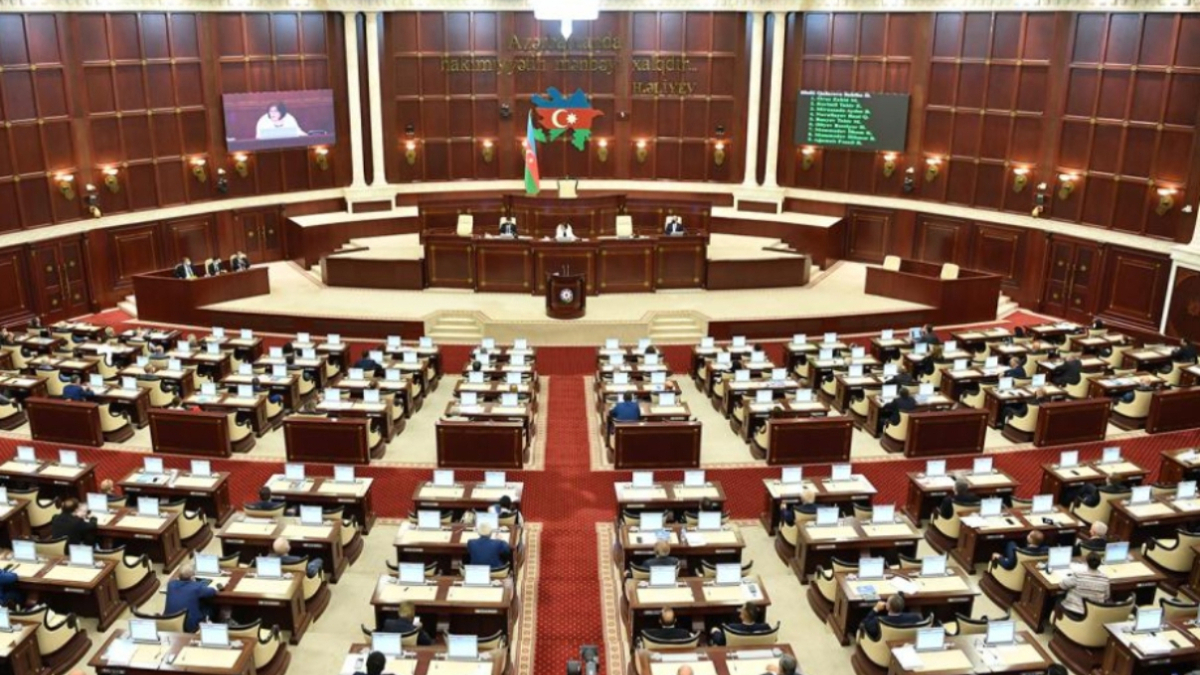
Members of Azerbaijan’s Milli Majlis and representatives of several non-governmental organisations have sent a letter to U.S. senators and members of the House of Representatives in response to an 5 October letter concerning Azerbaijan.
The Azerbaijani signatories said they support dialogue with the U.S. Congress and share the goal of lasting peace between Azerbaijan and Armenia. However, they argued that several claims in the U.S. lawmakers’ letter omitted what they described as important historical and legal context and could complicate progress in the peace process.
The letter highlighted the consequences of the conflict for Azerbaijan, including the displacement of more than one million people, unresolved cases involving 4,010 missing Azerbaijanis and the Khojaly massacre, in which 613 civilians were killed.
The signatories also drew attention to the continuing threat posed by landmines and unexploded ordnance, saying more than 440 Azerbaijanis have been affected by mine-related incidents since 2020. They called on U.S. lawmakers to support humanitarian demining and efforts to establish the fate of missing people.
Azerbaijani side backs peace process
The letter said Azerbaijan has pursued a course of peace, normalisation and regional economic integration and highlighted the 8 August, 2025 Washington Peace Summit as a major milestone.
The signatories said the Joint Declaration witnessed by U.S. President Donald Trump and the initialled Azerbaijan-Armenia peace agreement created new momentum for cooperation. They also pointed to growing trade between Azerbaijan and Armenia and the proposed Trump Route for International Peace and Prosperity, or TRIPP, as opportunities for greater regional connectivity.
The letter praised Trump’s role in advancing the peace process and called on Congress to support its further implementation.
Dispute over detained separatist officials
The Azerbaijani lawmakers and NGO representatives also rejected the description of several detained individuals as “political and military leaders”.
According to the letter, those individuals held senior positions in what the signatories described as an unlawful separatist structure on Azerbaijani territory and were prosecuted for serious offences, including war crimes. The signatories said the defendants had legal representation and that courts considered evidence and witness testimony before issuing their judgments.
They called on U.S. lawmakers to respect Azerbaijan’s sovereignty and judicial institutions while acknowledging Congress’s emphasis on due process.
Territorial and cultural heritage issues
The letter also disputed the characterisation of approximately 241 square kilometres as Armenian territory under Azerbaijani occupation.
The signatories said Azerbaijan recognises Armenia’s sovereignty and territorial integrity and argued that unresolved sections of the international border should be addressed through the bilateral delimitation and demarcation process.
On cultural heritage, they called for a universal and non-discriminatory approach, saying assessments should also account for the destruction and desecration of Azerbaijani mosques, cemeteries, shrines and historical monuments in formerly occupied territories and in Armenia.
Call to repeal Section 907
The signatories also called for the full repeal of Section 907 of the FREEDOM Support Act, arguing that it no longer reflects current regional circumstances or Azerbaijan-Armenia relations.
They said repeal would strengthen U.S.-Azerbaijan relations and signal congressional support for peace and regional cooperation.
The letter concluded by urging U.S. lawmakers to support the progress made since the Washington Summit and allow Azerbaijan and Armenia to address remaining humanitarian, legal, political and practical issues through direct engagement.
Read more:
















What is your opinion on this topic?
Leave the first comment