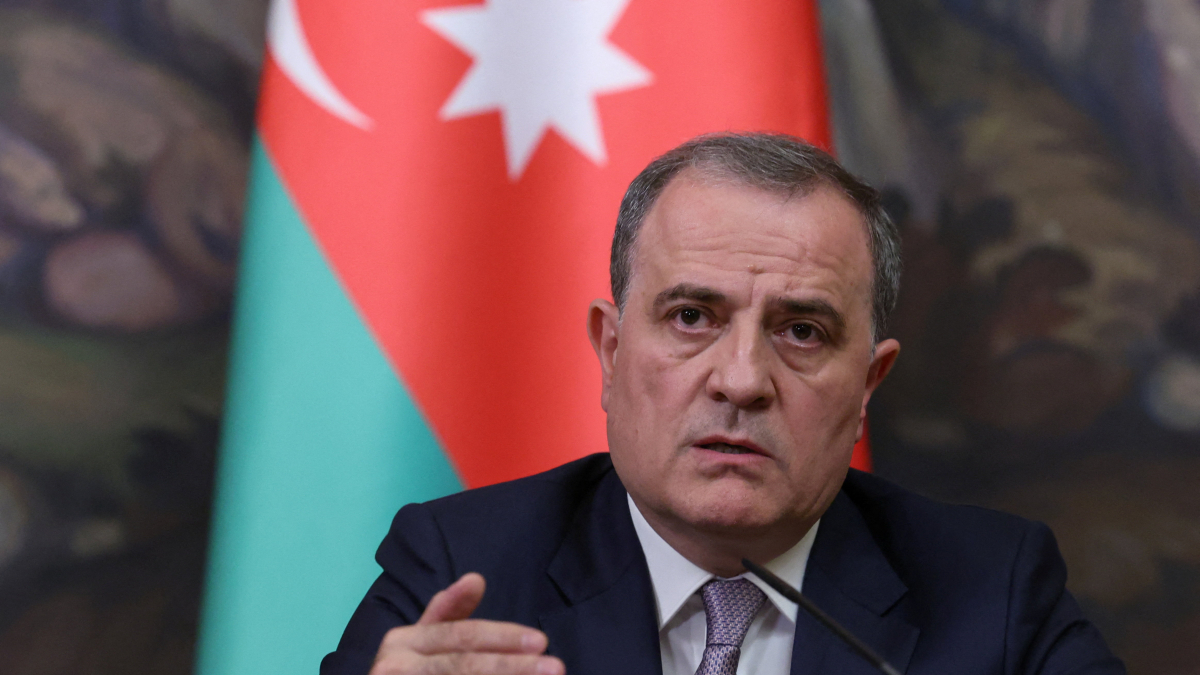
Azerbaijan’s Foreign Minister Jeyhun Bayramov has called for further integration of infrastructure between regional countries to bolster the Middle Corridor trade and logistics network.
Speaking at a meeting of foreign ministers of Central Asian countries and Azerbaijan in Avaza, Turkmenistan, on Wednesday, he also pressed for the need to digitalise transit to maximise cargo flows, according to a statement released by Baku’s Foreign Ministry.
The Middle Corridor, also known as the Trans-Caspian International Transport Route facilitates the transport of goods from China to Türkiye, via Central Asia, the Caspian Sea and the Caucasus.
It provides an alternative to the Northern Corridor, which runs through Russia, and the southern ocean-based routes via the Suez Canal and the Red Sea.
Azerbaijan is located at the centre of the route with cargo arriving via the Caspian Sea from Turkmenistan or Kazakhstan before moving west towards Georgia.
Importance to Azerbaijan's GDP
A World Bank report published last week estimated that the corridor could add $1.3 billion to Azerbaijan's GDP. The country is part of initiatives to upgrade the Middle Corridor worth $3.2 billion.
One of the projects involves the enlargement of the Port of Alat, near Baku, so it can handle 500,000 containers per year. The Baku-Tbilisi-Kars railway, which links Azerbaijan with Georgia and Türkiye, was upgraded in 2024.
Bayramov also highlighted Azerbaijan's full membership of the Consultative Meetings of the Heads of State of Central Asia, as part of the Commonwealth of Independent States summit in Turkmenistan.
He said Baku’s presence reflected a qualitatively new level of interaction rooted in historical ties and shared strategic interests.
Bayramov also outlined a new regional architecture of interconnectivity, driven by digital transit and by the strategic partnership between Azerbaijan, Kazakhstan and Uzbekistan in green energy production and transmission.
Read more from Azerbaijan:











What is your opinion on this topic?
Leave the first comment