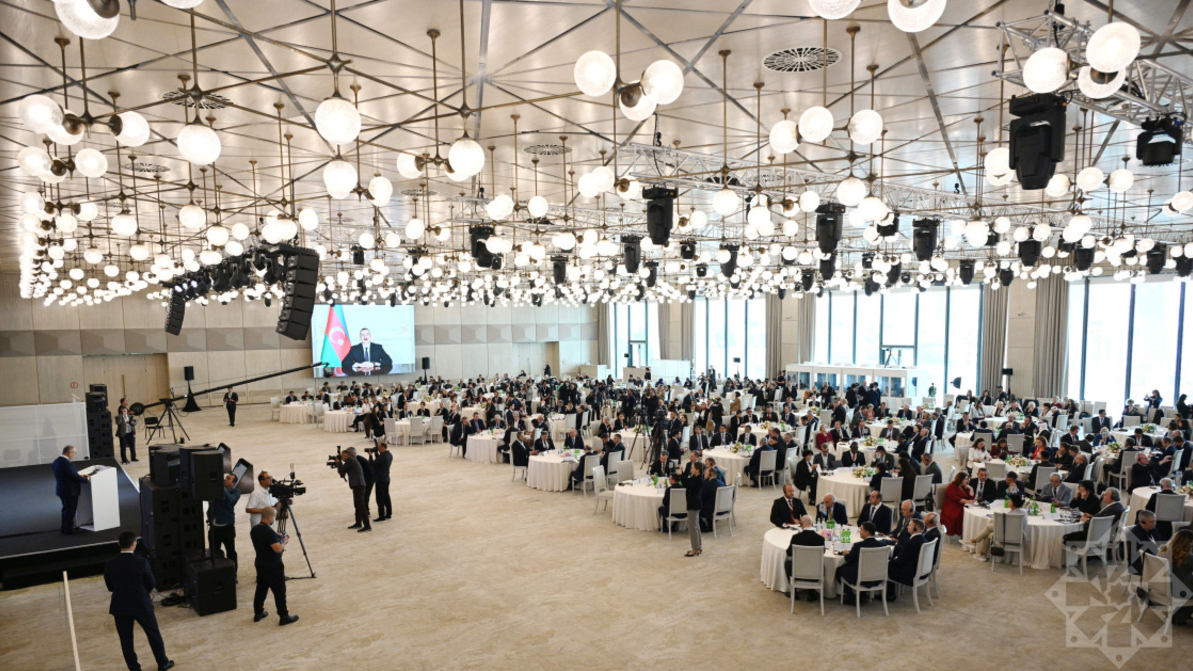
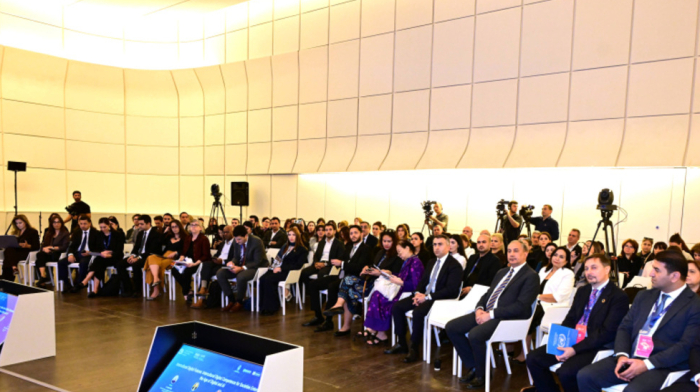
A conference focusing on the issue of missing persons has been held in Baku on Wednesday. The 4th International Conference in the Baku Dialogue format was titled “Strengthening Trust and Developing Effective Mechanisms in Addressing the Issue of Missing Persons”.
Azerbaijan has officially recorded 4,010 people, including children, women and elderly people, as missing as a result of the more than 30-year conflict with Armenia.
A total of 32 mass graves have so far been discovered in Azerbaijan’s territories recovered from occupation, according to President Ilham Aliyev in his address to the conference. Examinations of human remains found at the sites have indicated that some were subjected to torture.
Event focuses on trust-building
Organised by Azerbaijan’s State Commission on Prisoners of War, Hostages and Missing Persons, the conference brought together former heads of state and government, senior officials from international organisations and foreign countries, heads of institutions dealing with missing persons, experts, NGO representatives, human rights specialists, ambassadors, military attachés and other foreign representatives accredited in Azerbaijan.
One of the central themes of this year’s conference was building trust between parties and developing practical mechanisms to help determine the fate of people who remain missing. The conference focused on the need for comprehensive information about missing persons, including data on mass and individual burial sites, as well as opportunities for joint humanitarian efforts to locate, recover and identify remains.
President Aliyev calls missing persons a humanitarian issue
Chief of Azerbaijan’s State Security Service and Chairman of the State Commission, Colonel-General Ali Naghiyev, read out an address by Aliyev to the conference participants.
In his address, Aliyev described missing persons as “one of the gravest consequences of armed conflicts” and said the issue should be treated as a universal humanitarian problem affecting people across different regions.
“Achieving lasting peace requires not only political agreements but also building trust and addressing the humanitarian consequences of the conflict,” Aliyev said, adding that determining the fate of missing persons is an integral part of the peace process and a moral responsibility towards their families.
He also said that Azerbaijan’s restoration of sovereignty and territorial integrity had created new opportunities to search for missing people and locate mass graves.
UK House of Lords member highlights progress and need for closure
Lord Brady, a member of the UK House of Lords, also addressed the conference, reflecting on his previous visit to Azerbaijan 16 years ago and the changes he has witnessed since.
Brady recalled visiting Garabagh during the Azerbaijan-Armenia conflict and meeting refugees and internally displaced people who had been forced from their homes.
“What great progress it is that peace has been achieved today,” Brady said. “However, as long as missing persons remain unidentified and their stories remain uncovered, it is impossible to bring full closure to this issue for individuals, families and communities living in terrible uncertainty.”
He said it was an honour to support the humanitarian work being carried out by Azerbaijan on the issue.
Call for information and stronger international role
Aliyev said the effectiveness of efforts to locate missing persons depends directly on access to accurate information. He called for information concerning the fate of missing Azerbaijanis, the locations of mass and individual burial sites, access to relevant archives and the collection of witness statements.
“Data on human lives should not be a subject of politicisation,” Aliyev said. Participants also discussed the wider use of modern forensic, DNA and technological solutions in identifying missing people. Aliyev said effective mechanisms should be based on “political will, reliable data and continued collaboration”, while stressing the importance of access to archives, specialist training and regular information for families.
Aliyev also called for a greater role for the United Nations and other relevant international organisations in search efforts, information sharing, forensic capabilities and support for families.
Azerbaijan has been submitting draft resolutions on missing persons to the UN General Assembly since 2002. President Aliyev emphasised it is necessary to establish a special mechanism on missing persons within the UN framework to draw greater international attention to the issue.
Read more:











What is your opinion on this topic?
Leave the first comment