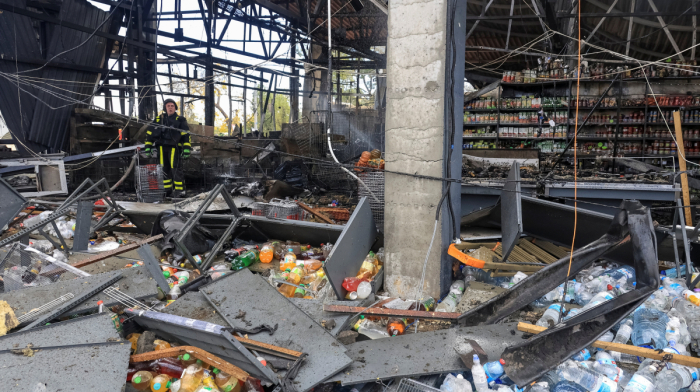
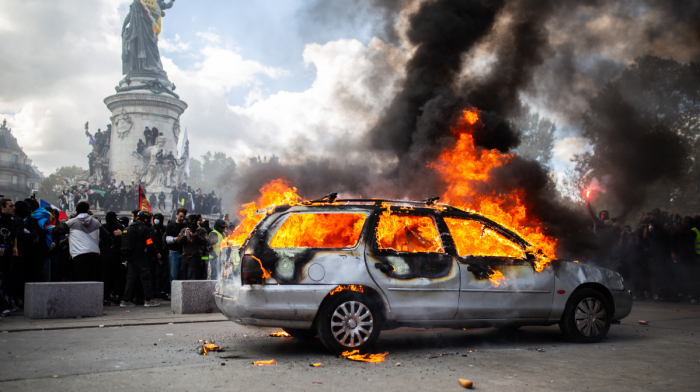
At a time when geopolitical tensions continue to ripple across multiple regions, from Ukraine to the Middle East, the South Caucasus once again finds itself at the crossroads of diplomacy and uncertainty.
The 8th Summit of the European Political Community (EPC), held in Yerevan, comes amid heightened sensitivities not only between Armenia and Azerbaijan, but also within a broader regional context shaped by developments in Iran and beyond.
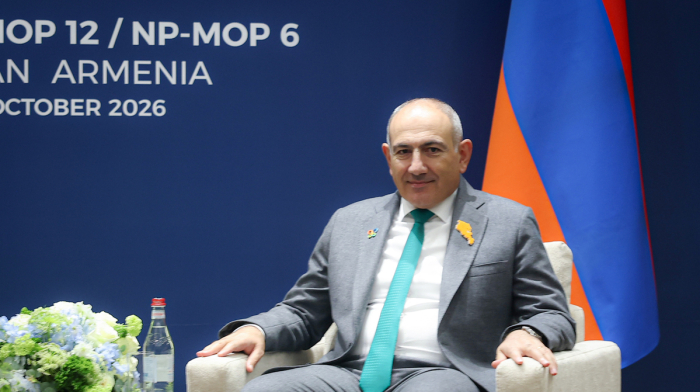
The summit has drawn a wide array of international leaders, underlining its growing importance as a platform for dialogue and coordination. Within this framework, diplomatic engagements have already begun to signal cautious optimism. Notably, Turkish Vice President Cevdet Yılmaz met Armenian Prime Minister Nikol Pashinyan in Yerevan during the summit.
According to reports, discussions covered transportation, customs, energy and digital infrastructure, while also addressing broader goals such as regional peace, economic cooperation and strengthening ties between peoples. The two sides also agreed to jointly restore the historic Ani Bridge on the Türkiye–Armenia border—an initiative seen as both a symbolic and practical step towards normalisation.
“A very critical time” for the region
Against this backdrop, AnewZ’s Bakhtiyar Hasanov spoke to political analyst Melih Demirtaş, who emphasised the timing and broader implications of the summit.
Speaking to AnewZ, Demirtaş underscored the gravity of the current moment:
“It is a very critical time, for both, I think, the region, but also the wider region. Just in the southern section of Armenia, also Azerbaijan, we just saw a very, of course, heightened tension still in Iran. But not only in Iran, but also in the Middle East, but also in Ukraine, we can see this encirclement of all these conflicts still affecting these actors.”
He pointed to overlapping crises surrounding the South Caucasus, describing a complex environment in which regional actors are navigating multiple pressures simultaneously.
Armenia’s shifting strategy
Demirtaş also highlighted what he described as a notable evolution in Armenia’s foreign policy approach under Prime Minister Pashinyan:
“Armenia and the governments of Mr. Pashinyan. He really struggles to find different roads in these last years. After the, again, tens of years with its neighbour, Azerbaijan, and with the very legitimate victory of our brother country, Azerbaijan, against Armenia, we can see Pashinyan took a road which really leads to another strategy which can be maybe summarised as a multidimensional, multipolar strategy.”
He added that Armenia’s outreach to a broader set of international partners appears to be gaining traction:
“Mr. Pashinyan's bureaucrats do have important messages. In relation now with some important Western countries, as we all see, especially in these last few days, many leaders are now in, I think, Yerevan, from France to Britain to Canada, Ukraine, also our Vice President is there. We can see, I think, Mr. Pashinyan's strategy is really working nowadays.”
Signals of cautious optimism
Demirtaş noted that early signals emerging from the summit suggest a potentially constructive direction:
“And I think his first messages, I mean, Mr. Pashinyan's messages, therefore important. He just said that we are in a very critical moment. We are in a very critical moment of tensions, he said, because of this Iranian, because of this Ukrainian crisis. And, we do want to make some stable and very peaceful acts in this new political community summit.”
“And I think the first news coming from Yerevan seems to be positive. And we are hopeful that for the South Caucasus, but also for the wider region, we can see much more positive environment thanks to this, such summits, thanks to such gatherings.”
A moment of opportunity
The EPC summit in Yerevan arrives at a delicate yet potentially transformative moment for the South Caucasus. As highlighted in Demirtaş’s remarks to AnewZ, the convergence of regional tensions and diplomatic initiatives makes this gathering particularly significant.
While challenges remain, the presence of international actors and ongoing dialogue suggest the summit could contribute to a more stable and cooperative regional environment - if momentum is sustained.








What is your opinion on this topic?
Leave the first comment