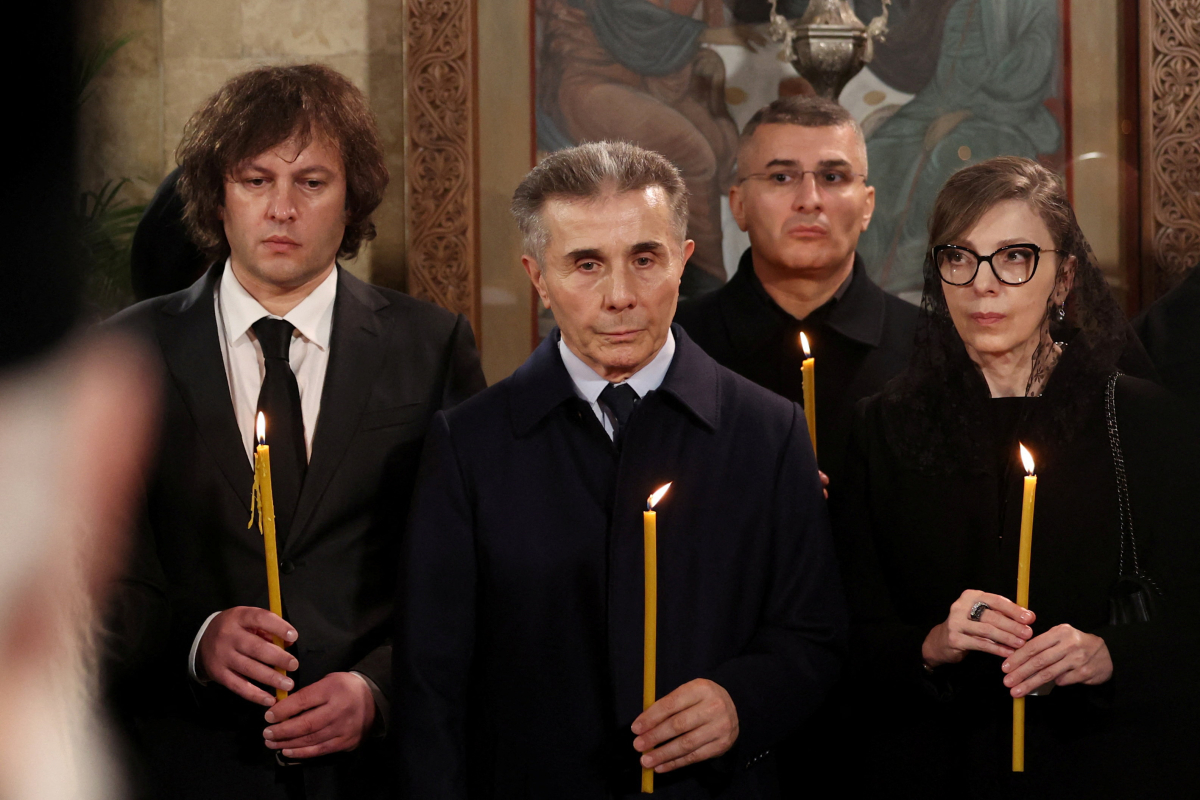
The Holy Synod of the Georgian Orthodox Church met on Tuesday (28 April) to nominate candidates for the new Patriarch to succeed Ilia II, who died on 17 March at the age of 93.
Three candidates were named following the meeting of senior clerics, with the election of the next Patriarch set to be held before 17 May.
Death of Ilia II triggers selection process
The death of Catholics-Patriach of All Georgia Ilia II in March set in motion the search for a new head of the Georgian Orthodox Church. Church law requires a new Patriarch be chosen between 40 and 60 days after the death of the previous one.
Born Irakli Ghudushauri-Shiolashvili in 1933, Ilia II became head of the Georgian Church in 1977 during the Soviet era when the institution still faced repression.
He was the longest serving Patriarch in the history of the Georgian Orthodox Church and expanded the Church’s influence over public life in the country, where 89% of people identify as Orthodox Christians, during his 49-year tenure.
Ilia II was named Georgia’s most trusted man in a 2008 poll. On social issues, he remained staunchly conservative, opposing abortion and likening LGBT people to drug addicts.
Synod meets to choose candidates
After a meeting of the Holy Synod on Tuesday, Metropolitan Nikoloz Pachuashvili, a high ranking bishop in the Georgian Orthodox Church, said that following a vote, three candidates had been chosen.
Metropolitan Shio Mujiri, who has been temporary Head of the Church since the death of Ilia II, emerged as the favourite with 20 votes. Metropolitan Iobi Akiashvili and Metropolitan Grigol Berbichashvili, who both received seven votes each, are the other two candidates.
According to Pachuashvili, 38 bishops attended the Synod meeting but some abstained from voting.
Three clerics vying for the top spot
Born in the Georgian capital Tbilisi, Metropolitan Shio, 57, studied Theology in Moscow, before becoming a Monk in 1993 and was ordained to the priesthood in 1996. He was appointed a bishop in 2003 and spent a period overseeing Georgian Orthodox parishes in Australia and New Zealand.
He is seen as a radical conservative, a supporter of closer ties with the Russian Orthodox Church and more vocally anti-Western than his predecessor. Metropolitan Shio is considered favourite of the country’s ruling reactionary Georgian Dream party.
Metropolitan Iobi, considered Shio’s main rival, belongs to the same conservative camp as him. The 65-year-old trained as an economist before becoming a monk and then a priest in 1988. He has been a bishop since 1995.
While a conservative, Metropolitan Iobi has not been shy to criticise the ruling Georgian Dream party, criticising political repression by the party in 2025, and indirectly calling for the release of former President Mikheil Saakashvili in a 2024 sermon.
The final candidate Metropolitan Grigol doesn’t belong to the conservative camp and is seen as the alternative option in the election. The 69-year-old Tbilisi native became a priest in 1990 and has been Bishop of Poti since 1996.
In 2024, he called on the Georgian Dream government to listen to protesters demonstrating against a controversial foreign agents law, which requires groups receiving more than 20% of their funding from abroad to register with the government.
What happens next?
According to Church rules, the election of the new Patriarch must take place by 17 May. The Church has yet to set a day for the election. On the day of the vote, the Holy Synod will meet in closed session and cast their ballots in secret.
The new Patriarch needs to receive a majority of votes to win. Following the announcement of the new Catholics-Patriach of All Georgia, a formal ceremony takes place attended by the clergy and public representatives where he is officially enthroned.














What is your opinion on this topic?
Leave the first comment