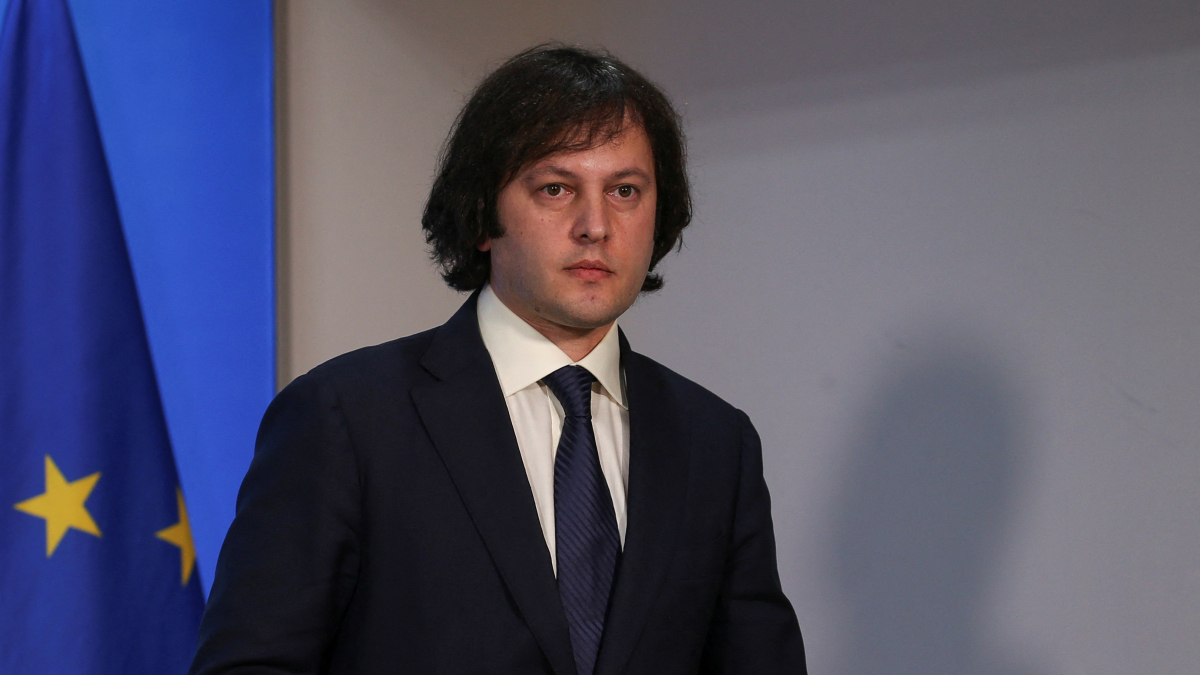
Georgia’s political crisis is intensifying as Prime Minister Irakli Kobakhidze hardens his stance on protest-related arrests, insisting that detainees must show “repentance and confession” before any discussion of amnesty or pardon can begin.
His comments come amid ongoing pro-Western demonstrations and growing criticism from both domestic opposition and European institutions.
The protests began in response to controversial government moves, including the so-called “Transparency Law,” which critics say targets civil society and risks pulling Georgia away from its European Union path. Demonstrators, many of them young, gathered in Tbilisi, accusing the ruling Georgian Dream of democratic backsliding and increasing control over institutions.
Clashes between protesters and police led to multiple arrests. Authorities say detainees were involved in violence and property damage. But Kobakhidze goes further, claiming protest organisers, opposition figures, and NGOs deliberately pushed young people into what he describes as “violent, revolutionary processes”.
His most controversial position concerns what happens next. According to Kobakhidze, the state should not even consider releasing detainees unless they first admit wrongdoing and formally request a pardon. He frames this as a “pragmatic” necessity for the state, but critics say it effectively conditions freedom on political submission.
The Prime Minister has repeatedly described recent unrest as part of a broader pattern, claiming Georgia has faced “five attempts at revolution” in recent years, with most of them violent. In this narrative, current protests are not spontaneous civic action, but part of an organised effort to destabilise the country.
Opposition figures strongly reject this, arguing the government is deliberately reframing pro-European protests as security threats to justify arrests and deter further mobilisation.
Tensions have escalated further following the sentencing of opposition politician Elene Khoshtaria. A court in Tbilisi sentenced her to one year and six months in prison for writing “Russian Dream” on a campaign banner in 2024, an act her supporters describe as political expression rather than a serious crime.
Under Georgian law, property damage can carry prison sentences, but legal observers note that similar cases rarely lead to imprisonment. Authorities argue Khoshtaria is a repeat offender, while critics see the ruling as a warning signal to the opposition.
The case has drawn sharp reactions from the European Parliament, which has called for her release and raised concerns about democratic backsliding.
For Kobakhidze, however, the line remains firm: no repentance, no discussion. For his critics, that position raises a deeper question: whether justice in Georgia is becoming conditional on political loyalty.











What is your opinion on this topic?
Leave the first comment