World leaders and organisations have responded strongly to the United States’ military operation in Venezuela that resulted in the capture and departure of President Nicolás Maduro. Many condemn the action as a breach of international law and calling for restraint and peaceful resolution.
In a significant diplomatic move, the governments of Spain, Brazil, Chile, Colombia, Mexico, and Uruguay issued a joint communiqué on 4 January, expressing deep concern over the events in Venezuela.
The statement condemned unilateral military actions, reaffirmed core principles of international law, and called for an exclusively peaceful, Venezuelan-led resolution to the country’s political situation.
Such operations constitute an “extremely dangerous precedent for peace and regional security” and place civilians at risk, according to the document.
The governments emphasised that “only an inclusive political process, led by Venezuelans themselves, can lead to a democratic, sustainable solution that respects human dignity,” and reaffirmed Latin America and the Caribbean as a “zone of peace.”
The communiqué also cautioned against any attempt at external control or appropriation of natural and strategic resources, declaring such actions incompatible with international law and potentially destabilising for the region.
Individual statements
Spain called for “de‑escalation and compliance with the principles of international law” and offered itself as a mediator for a peaceful solution.
Brazilian President Luiz Inácio Lula da Silva denounced the operation as crossing “an unacceptable line,” writing that “attacking countries, in flagrant violation of international law, is the first step toward a world of violence, chaos, and instability.”
Colombian President Gustavo Petro expressed “deep concern” over the strikes and called for urgent meetings of the United Nations and the Organisation of American States, writing that “Caracas is being bombed … they have attacked Venezuela.”
Petro urged all parties to “refrain from actions that deepen the confrontation and to prioritise dialogue and diplomatic channels.”
Mexico’s President Claudia Sheinbaum said “Mexico condemns the military intervention in Venezuela” and cited the UN Charter’s requirement that states “refrain from the threat or use of force against the territorial integrity or political independence of any State.”
Uruguay’s foreign ministry said it was following the situation with “close attention and serious concern,” reaffirming that military intervention by one country in the territory of another is unacceptable under international law.
The ministry also stressed the importance of refraining from force and respecting international law.
Chilean President Gabriel Boric expressed “concern and condemnation,” insisting that the crisis “must be resolved through dialogue and the support of multilateralism, not foreign interference or violence.”
Other regional responses
Bolivia expressed “firm and immediate support for the Venezuelan people” and reiterated its commitment to peace, democracy, humanitarian assistance, and institutional reconstruction.
Guyana’s President Irfan Ali said the “security architecture is fully active” to protect citizens, while Trinidad and Tobago’s Prime Minister Kamla Persad‑Bissessar emphasised her country was not involved in the military operations and maintained peaceful relations with Venezuela.
Ecuadorian President Daniel Noboa called on Venezuelans to “reclaim your country.” Panama’s President José Raúl Mulino pledged continued support for democratic processes in Venezuela.
Cuban President Miguel Díaz‑Canel described the U.S. action as “state terrorism” and a “criminal attack,” saying “our zone of peace is being brutally assaulted” and calling for a “response from the international community.”
Statements by major non-Western powers
China’s foreign ministry said it was “deeply shocked” by the strikes and “strongly condemns the use of force by the U.S. against a sovereign country and the use of force against the president of a country.”
The Ministry called on Washington to abide by international law and the UN Charter.
North Korea has strongly condemned the U.S. strikes on Venezuela, calling them “the most serious form of encroachment of sovereignty.”
“The incident is another example that clearly confirms once again the rogue and brutal nature of the United States,” a spokesperson for North Korea’s Foreign Ministry said.
Russia termed the U.S. action an “act of armed aggression against Venezuela,” calling for dialogue and warning that Venezuelans must be guaranteed the right to determine their own destiny without external military intervention.
Iran’s Supreme Leader Ayatollah Ali Khamenei said countries must resist foreign coercion, adding “we won’t give in to them… with reliance on God and confidence in the people’s support, we’ll bring the enemy to its knees.”
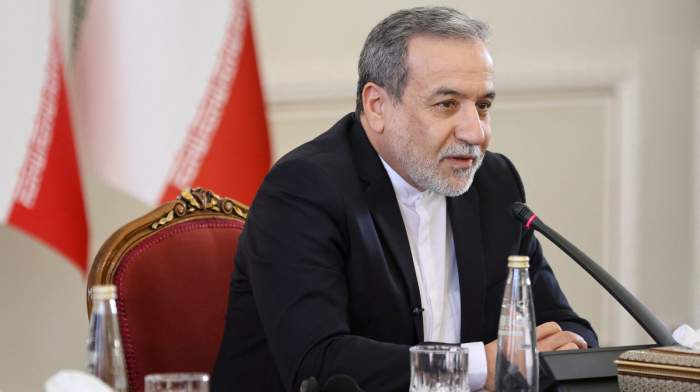
Iran’s foreign ministry also condemned the U.S. attack as a “flagrant violation” of Venezuelan sovereignty and territorial integrity.
Europe Union's response
EU High Representative for Foreign Affairs and Security Policy Kaja Kallas said the bloc was “closely monitoring the situation,” calling for restraint and respect for international law.
France’s Foreign Minister Jean‑Noël Barrot said the operation violated the principle of not resorting to force under international law, adding, “Only sovereign people themselves can decide their future.”
Germany’s foreign ministry said it was “monitoring the situation in Venezuela very closely and following the latest reports with great concern.”
The ministry noted it was in close contact with its embassy in Caracas and that the government’s crisis team was in session and coordinating closely with partners.
In addition, German Vice‑Chancellor Lars Klingbeil called the strikes “very worrying”, stressing that although Maduro led an authoritarian regime, “this cannot justify disregarding international law” and that steps must be taken to prevent further escalation and find a peaceful transition to democracy.
Italy’s response focused on the safety of its citizens and diplomatic monitoring.
Prime Minister Giorgia Meloni said she was “closely monitoring the situation in Venezuela”, with particular attention to the more than 160,000 Italians living there, and remained in constant contact with Foreign Minister Antonio Tajani and the Italian embassy in Caracas.
Meanwhile, the United Nations planned urgent discussions, with calls for the international community to convene after the strikes, stressing that peaceful negotiation and respect for the UN Charter should guide responses.













What is your opinion on this topic?
Leave the first comment