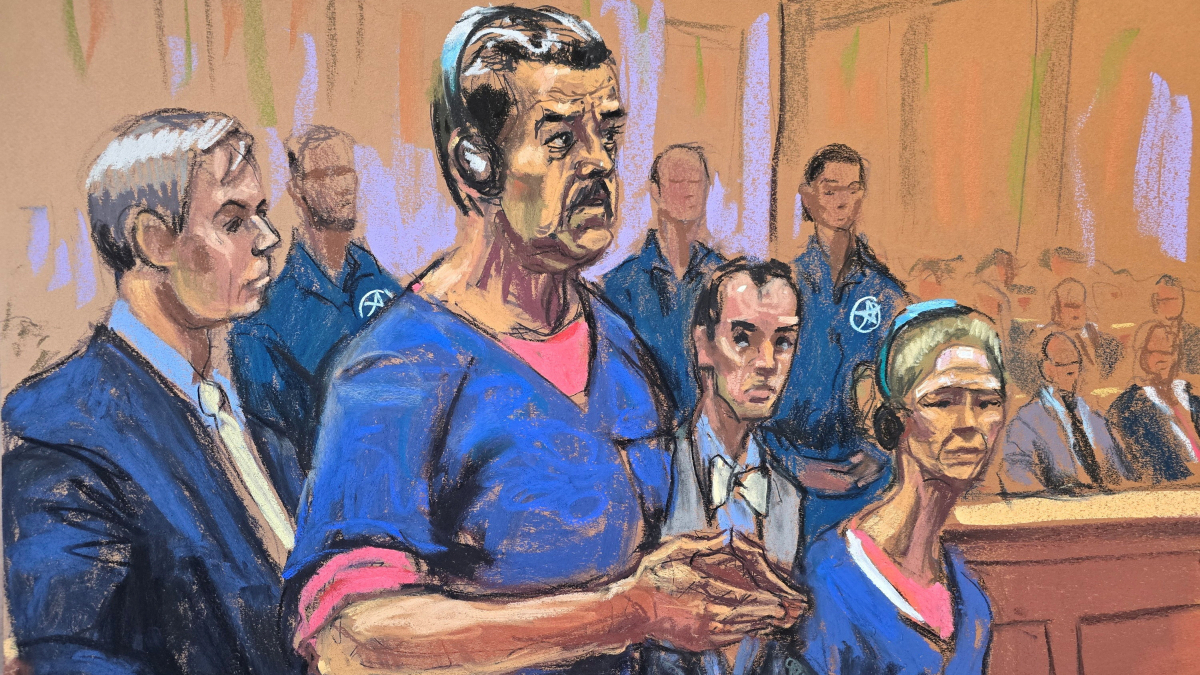
Appearing in a Manhattan courtroom after a U.S. military operation, Nicolás Maduro has denied narcotics and terrorism charges, as his vice president was sworn in as Venezuela’s interim leader in Caracas.
At a hearing on Monday, the man who has ruled Venezuela since 2013 described himself as a "decent man" who had been "kidnapped", before being cut off by the judge.
The arraignment has plunged U.S.-Venezuelan relations, international law and the future of the oil-rich nation into uncharted territory.
Courtroom Defiance
Wearing orange and beige prison clothing, Maduro, 63, told the court through an interpreter: "I am innocent. I am not guilty… I am still president of my country."
He and his wife, Cilia Flores, who also pleaded not guilty, listened through headphones as Alvin Hellerstein, a U.S. district judge, outlined four criminal counts.
The charges include overseeing a cocaine-trafficking network in coordination with international drug cartels, conspiracy to import cocaine and possession of machine guns.
Outside the courthouse, dozens of demonstrators both supporting and opposing Maduro gathered, reflecting deep divisions over his rule.
His lawyer, Barry Pollack, said he expected "voluminous and complex litigation" over what he described as his client’s "military abduction".
Interim president sworn in
As Maduro was being processed by the U.S. justice system, a rapid political transition was under way in Caracas. Hours after the hearing, Vice President Delcy Rodriguez was sworn in as interim president.
While offering support for her predecessor, Rodriguez gave no indication that she would challenge the U.S. military operation.
U.S. officials say the move forms part of a calculated strategy by President Donald Trump’s administration.
A recent U.S. intelligence assessment, reported by the Wall Street Journal, said Rodriguez was viewed as best placed to lead a temporary government capable of maintaining order.
Trump: Venezuela under U.S. control until stability restored
U.S. captures Maduro, Trump vows temporary control of Venezuela
Washington asserts control
The operation has raised serious legal questions internationally.
The United Nations Security Council met to debate the raid, which was condemned by Russia, China and several of Venezuela’s leftist allies as a violation of national sovereignty.
U.S. officials have rejected the criticism. White House deputy chief of staff Stephen Miller told CNN: "The United States of America is running Venezuela," adding: "We set the terms and conditions."
President Trump said U.S. oil companies including Exxon Mobil, ConocoPhillips and Chevron would return to help rebuild Venezuela’s oil infrastructure, a process he suggested could be subsidised by Washington.
However, Democratic leader Chuck Schumer said a congressional briefing on the plan was "vague, based on wishful thinking and unsatisfying", underlining divisions in Washington over the long-term strategy.
Maduro’s next court appearance is scheduled for 17 March.










What is your opinion on this topic?
Leave the first comment