Signals of a possible peace proposal in Ukraine could lift global market sentiment by offering investors greater clarity after years of geopolitical uncertainty, according to economic analyst Osama Rizvi.
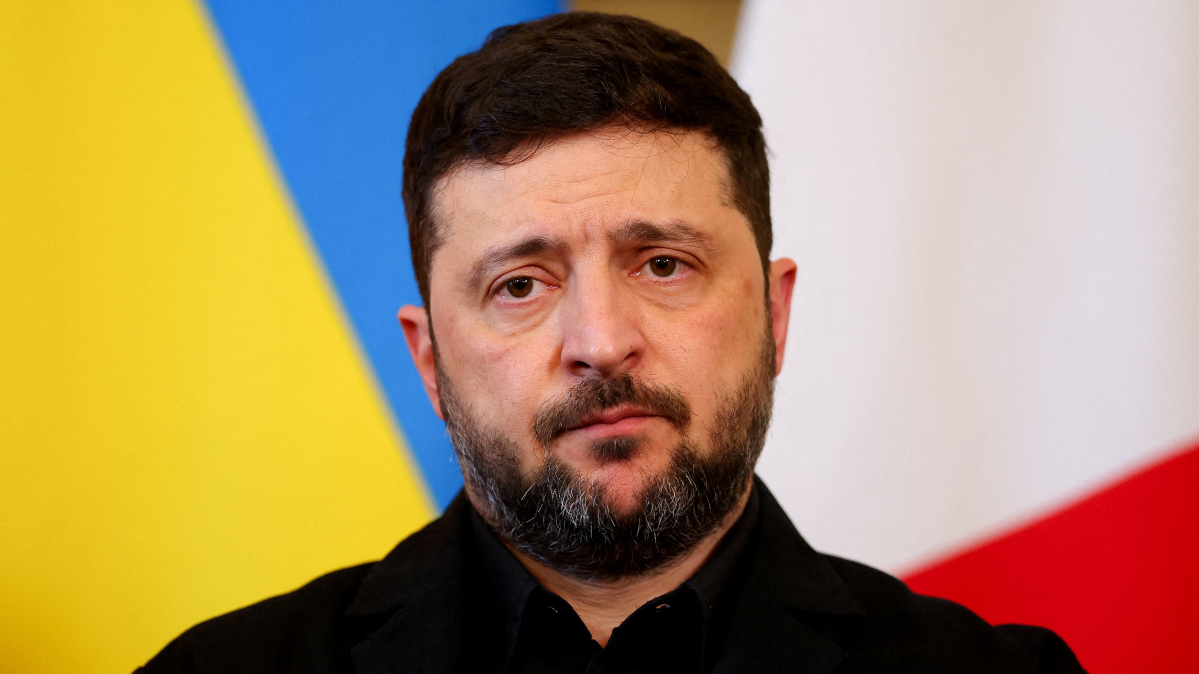
Ukrainian President Volodymyr Zelenskyy said on Friday that he would meet his American counterpart Donald Trump on Sunday to finalise 'everything' ranging from a possible ceasefire deal to security guarantees.
His words carry cautious optimism towards a long-awaited ceasefire agreement between Moscow and Kyiv brokered by the Trump led administration.
Speaking to AnewZ from Lahore, Pakistan, Rizvi said these recent developments have been closely watched by markets following sustained volatility throughout 2025.
“We have seen a lot of uncertainty in 2025 and as we enter 2026 updates or developments like the peace proposal give, if not hope, then at least some clarity to the investors,” he said.
Since Russia’s full-scale invasion of Ukraine in February 2022, global markets have remained highly sensitive to diplomatic signals, particularly in energy, equity and currency markets, according to assessments by the International Monetary Fund and market reporting over the past two years.
Rizvi noted that if diplomatic efforts gain traction, investor confidence and demand could recover, especially across Asia.
“If this goes through, we will see some confidence, resurgence, and demand coming from the Asian countries,” he said.
Market analysts have observed that peace-related signals have influenced oil prices and risk appetite, with Brent crude and global equities reacting to shifts in expectations around geopolitical stability, as reported by media in late 2025.
Rizvi stressed the heavy fiscal cost of prolonged conflict.
“We all know that war is a very expensive business,” he said, adding that “Russian, Ukrainian budgets and domestic priorities would change.”
International financial institutions, including the International Monetary Fund (IMF), have warned that continued hostilities place pressure on public finances, disrupt trade and sustain inflationary risks.
In its October 2025 World Economic Outlook, the IMF noted that a durable ceasefire could improve medium-term growth prospects.
Rizvi said post-war economic transitions often redirect resources towards trade and reconstruction.
“It always happens after a war. All the factors of production that were involved in the war effort, would go towards trade,” he said.
“So we might see another resurgence in global trade, especially from this region,” the expert added.
World Bank post-conflict studies support this view, showing that labour and capital often shift from military production into exports and infrastructure once wars end.
However, Rizvi cautioned that the broader global economic structure is unlikely to change dramatically in the short term.
“Fundamentally, if we talk about global economy, not much has changed,” he said.
He also pointed to Russia’s continued presence in global markets despite sanctions.
“Russia has still pretty much been a very key player in the global economy,” Rizvi said. “So they have failed to make it a private state, if that was the objective.”
European Commission and G7 reviews published between 2023 and 2025 have acknowledged that while sanctions constrained parts of the Russian economy, global commodity and energy markets adapted rather than collapsed.
Rizvi concluded that while fundamentals may remain stable, sentiment matters.
“So fundamentally things will remain the same, but sentimentally, of course, it will give a big boost to the business,” he said.
The comments come as Ukrainian President Volodymyr Zelenskyy revealed key elements of a draft 20-point peace framework discussed with the United States, which he said could form the basis of a future settlement with Russia.
The proposal includes a potential demilitarised zone in eastern Ukraine, long-term security guarantees from the US, NATO and European partners, and economic recovery funds totalling up to 800 billion US dollars.
Zelenskyy said disagreements remain over territorial control and the Zaporizhzhia nuclear power plant, while Russia has acknowledged the talks but said its core positions remain unchanged.










What is your opinion on this topic?
Leave the first comment