OSCE Chair welcomes Azerbaijan-Armenia peace process, hails closure of Minsk Group
OSCE Chairperson-in-Office, Minister of Foreign Affairs of Finland, Elina Valtonen told the press that "the end of the conflict between Azerbaijan and...
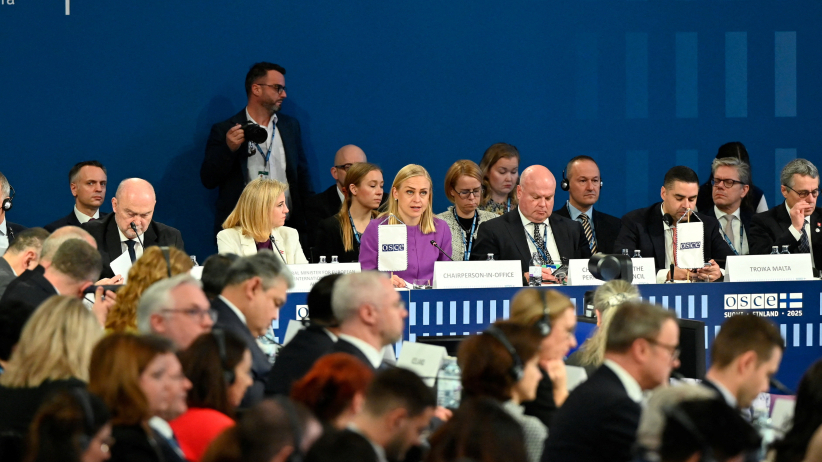
OSCE Chairperson-in-Office, Minister of Foreign Affairs of Finland, Elina Valtonen told the press that "the end of the conflict between Azerbaijan and Armenia is a highly successful example that fosters optimism throughout the entire OSCE region," on Thursday (4 December).
Elina Valtonen reminded that she’s had the opportunity to visit both countries and familiarize myself with the peace process. "We always maintain productive relations with both countries," she stated.
Chairperson-in-Office Valtonen reiterated OSCE’s readiness to provide any support regarding the issues currently being discussed between the parties.
Closure of OSCE Minsk Group
Valtonen also noted that the decision to close the OSCE Minsk Group and its associated structures on 1 September, 2025 was a vital step supporting the peace process between Azerbaijan and Armenia.
Moreover, she noted that it removed a major obstacle in approving the OSCE budget.
The statement was made at the 32nd Meeting of the OSCE Ministerial Council on Thursday (4 December) in Vienna, Austria.
The Minsk Group was created in 1992 to mediate the Karabakh conflict, and from 1994 operated under a co-chairmanship of Russia, the United States and France.
It served for decades as the main platform for Armenia–Azerbaijan negotiations but lost relevance after Azerbaijan’s 2020 victory and the restoration of its territorial integrity in September 2023, according to Azerbaijani media.
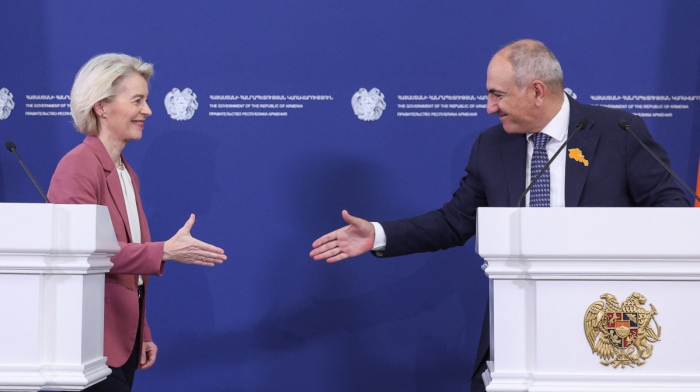
Baku repeatedly called for its formal closure, and on 8 August, 2025, the foreign ministers of Azerbaijan and Armenia signed a joint appeal in Washington calling for the termination of the Minsk Group.

For nearly three decades following the dissolution of the Soviet Union, the international system was defined by a singular, overwhelming reality: American unipolarity.
Chinese scientists have unveiled a new gene-editing therapy that they say could lead to a functional cure for HIV, making it one of the most promising developments in decades of global research.
As the year comes to an end, a new initiative bringing civil society actors and regional analysts from Armenia and Azerbaijan together is steadily gaining ground.
Faced with mounting public outrage following one of the deadliest environmental disasters in the nation’s recent history, the Indonesian government has pledged to investigate and potentially shut down mining operations found to have contributed to the catastrophic flooding on Sumatra.
Uzbekistan has reopened its border with Afghanistan for the first time since 2021, the country’s Chamber of Commerce and Industry announced on Tuesday.
Tensions between Georgia and Russia resurfaced this week after Moscow declared it sees “no preconditions” for renewing political dialogue, blaming Tbilisi’s insistence on de-occupation.
Georgian Foreign Minister Maka Bochorishvili is participating in the 32nd OSCE Ministerial Council holding from 3rd to 5th December in Vienna.
Iran launched naval manoeuvre in its southern waters on Thursday as it concluded on the hosting the joint counter-terrorism drills of the Shanghai Cooperation Organisation (SCO).
The United States and Central Asian countries have expressed interest inn new opportunities arising from the Trump Route for International Peace and Prosperity (TRIPP).
Kazakhstan has drafted a bill that would prohibit users under the age of 16 from registering on most online platforms.
You can download the AnewZ application from Play Store and the App Store.
What is your opinion on this topic?
Leave the first comment