The 32nd Organisation for Security and Co-operation in Europe (OSCE) Ministerial meeting in Vienna exposed a sharp divergence between governance priorities in Brussels and Tbilisi.
The former expressed concern over democratic regression in Georgia and while the latter prioritised territorial integrity, regional diplomacy, and strategic realignment.
On one side stood Elina Valtonen, Finland’s Foreign Minister and the 2025 OSCE Chairperson-in-Office, who used the platform to sound the alarm over what she described as Georgia’s “democratic backsliding” and shrinking civic space.
Maka Bochorishvili, Georgia’s Foreign Minister on the other hand sought to refocus attention on the occupation of Georgian territory by Russia, regional security, and the country’s shifting network of international partnerships.
Valtonen’s prior and recent engagements highlight the OSCE’s continued concern regarding democratic norms in Georgia. During her visit to Tbilisi in October 2025 part of her mandate as OSCE Chair she met not only with government officials but also with civil-society figures and independent think tanks.
Her message was unequivocal: for Georgia to remain on a path toward Europe, reforms are indispensable — including transparent governance, inclusivity, freedom of expression, and protection for media and NGOs.
In Vienna, however, Bochorishvili turned the focus to enduring existential challenges. She stressed that “20 % of Georgia’s sovereign territory remains under occupation,” referring to the regions of Abkhazia and the Tskhinvali region, areas still controlled by Russian forces.
She urged the OSCE and other international actors to keep the issue of Georgia’s territorial integrity and the protection of displaced persons high on their agenda, while condemning “disinformation campaigns” and hybrid threats targeting Georgia’s democratic institutions.
This dual emphasis — democratic backsliding and occupation-related insecurity — revealed a deep rift in how international actors view Georgia’s priorities.
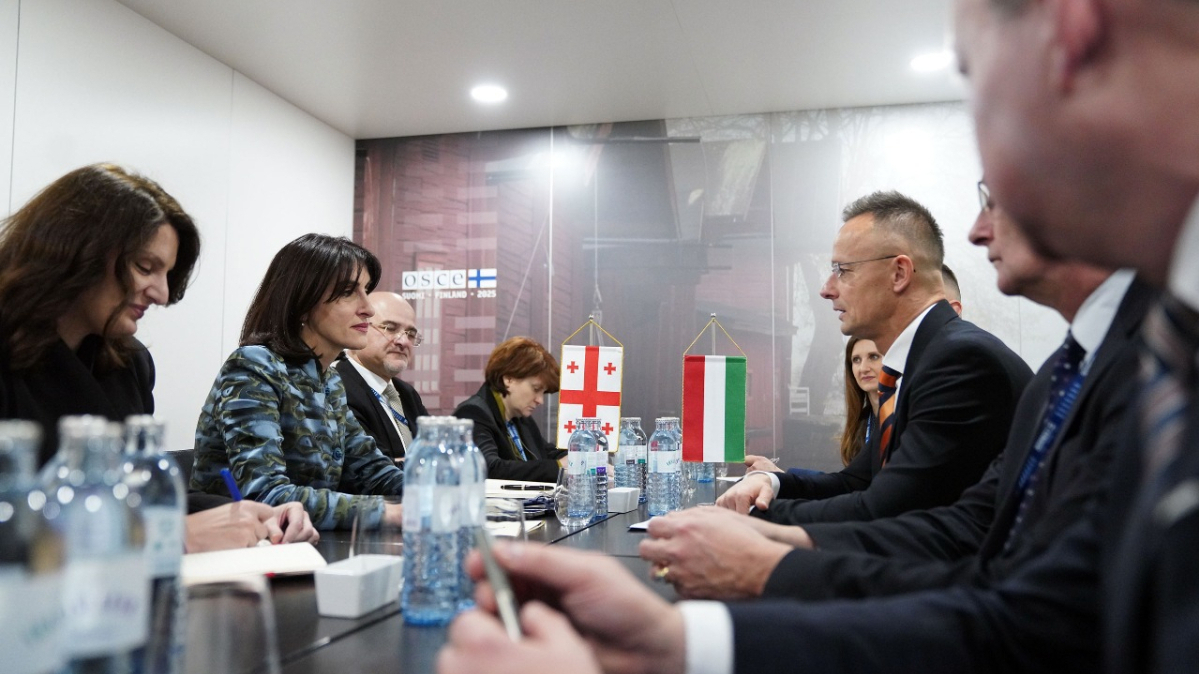
At the OSCE meeting, Bochorishvili met with the Foreign Minister of Slovakia, who reiterated support for Georgia’s European aspirations and committed to intensify political dialogue and economic cooperation.
At the same time, Tbilisi re-affirmed its close coordination with regional ally Türkiye, especially on transport, trade, and transit through the Middle Corridor, as well as strategic cooperation on security and regional stability.
While details of a Vienna-level meeting with Türkiye’s foreign minister remain limited, Georgia’s outreach underscores a broader foreign-policy pivot toward a diversified, multi-vector diplomacy.
These moves illustrate Georgia’s aim to recalibrate its external alignments — seeking support from states often more sympathetic to non-liberal European stances, while maintaining ties with NATO aspirants and regional players.











What is your opinion on this topic?
Leave the first comment