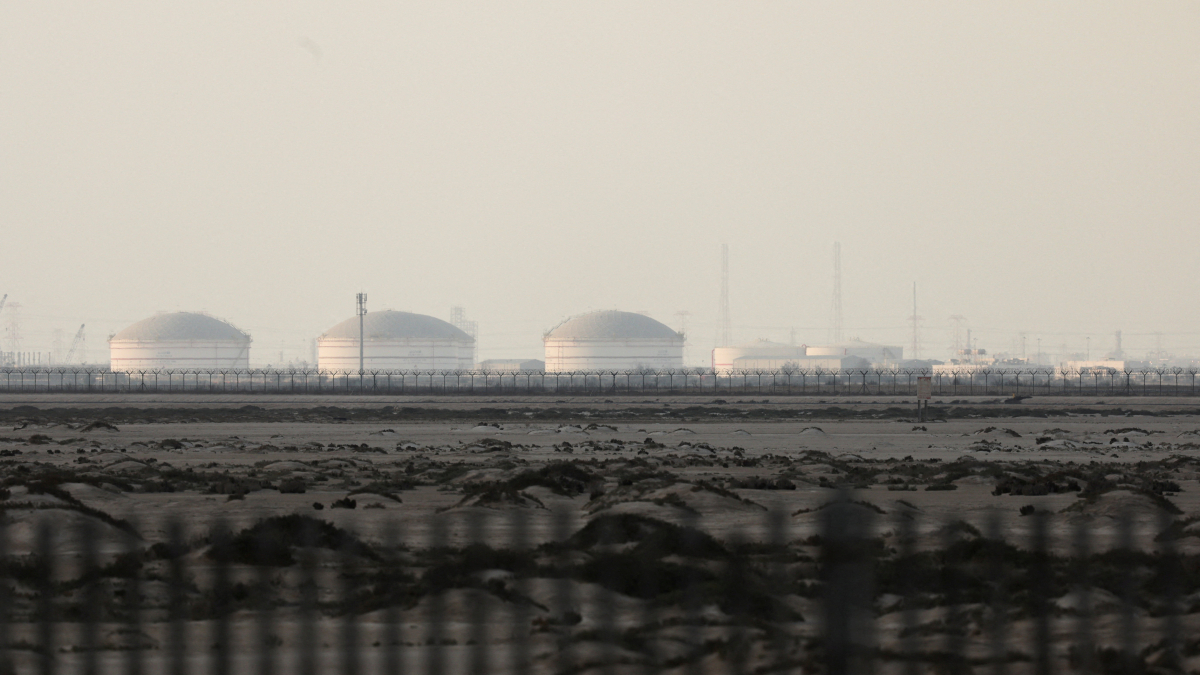
Qatar said Thursday that civil defence teams have fully extinguished all fires at the Ras Laffan Industrial City, 80 kilometres (50 miles) north of Doha, following Iranian missile strikes on the facility, with no injuries reported.
The Qatari Interior Ministry said containment and security operations are still underway at the site, and an explosive disposal team has been deployed to the area.
QatarEnergy reported that multiple LNG facilities in Ras Laffan had been hit overnight by missiles, resulting in fires and significant damage.
The attacks, which drew a furious response from U.S. President Donald Trump, came hours after Iran issued evacuation warnings for several oil facilities across Saudi Arabia, the UAE and Qatar.
Ras Laffan, located 80 km (50 miles) north of Doha, is an energy-industry hub and hosts several international companies including Shell, the world's biggest LNG trader.
"We are currently assessing any potential impact on any asset operated or utilised by Shell in Ras Laffan Industrial City and will provide further information in due course," a Shell spokesperson said.
Qatar produces 77 million metric tons of LNG annually and is the world's second-largest exporter of the fuel used in power generation and industries. The Laffan refinery primarily processes condensate into refined products including aviation fuel.
Trump warns of retaliation
In a statement on social media, U.S. President Donald Trump warned Iran not to attack Qatari LNG facilities again and threatened to "massively blow up the entirety of the South Pars Gas Field" if it did so. He said Israel had attacked South Pars without informing Qatar or the United States.
Qatar's foreign ministry told Iran's security and military attaches to leave the country within 24 hours and declared them "persona non grata".
Saul Kavonic, head of research at Australia's MST Marquee, said attacks on Ras Laffan "could cause a lasting global gas shortage, but this won't pressure the Trump administration because the U.S. benefits economically from high global gas prices".
UAE shuts down gas facilities
In nearby United Arab Emirates, authorities said they were responding to incidents at the Habshan gas facilities and at the Bab oil field caused by falling debris from intercepted missiles.
The gas facilities were shut down and no injuries were reported, the Abu Dhabi Media Office said.
The Habshan complex, operated by Abu Dhabi state oil giant ADNOC, is one of the world's largest gas processing facilities, comprising five plants with a total capacity of 6.1 billion standard cubic feet per day (bscfd).












What is your opinion on this topic?
Leave the first comment