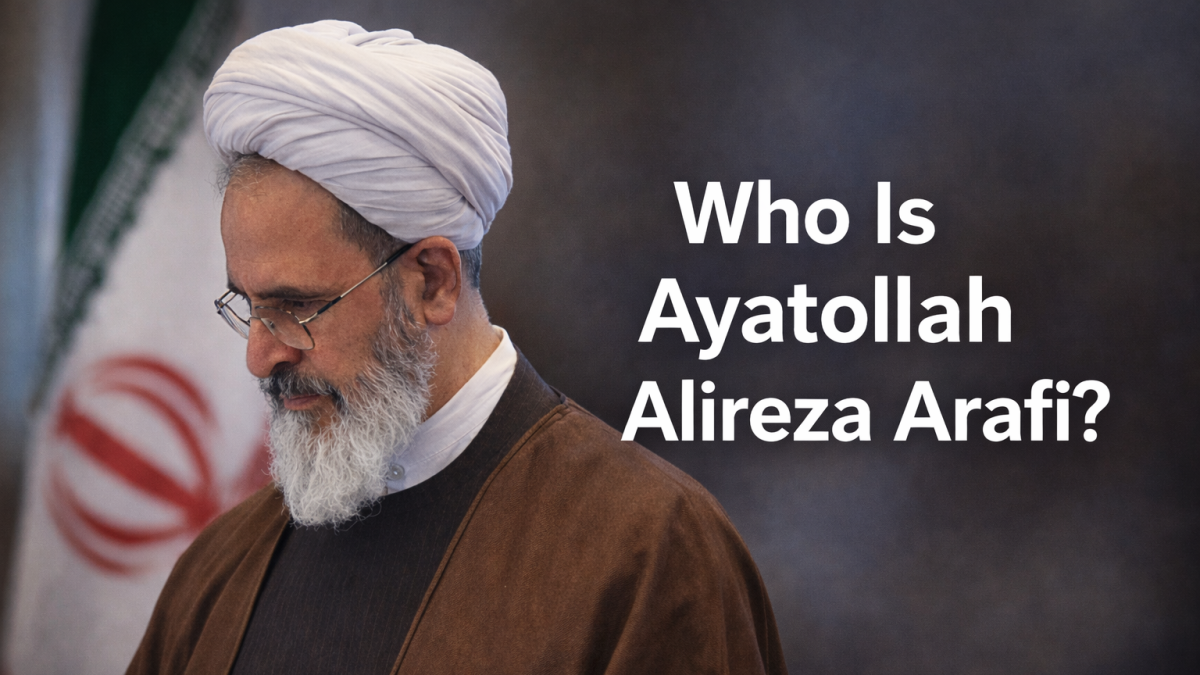
Ayatollah Alireza Arafi has moved into a pivotal constitutional role following the death of Supreme Leader Ayatollah Ali Khamenei, becoming the clerical member of Iran’s temporary leadership council under Article 111 of the Constitution of the Islamic Republic of Iran.
Article 111 sets out the succession procedure if the Supreme Leader dies or is unable to perform his duties. In such circumstances, a three-member council assumes the Leader’s powers until the Assembly of Experts selects a permanent successor.
The interim council consists of:
- The President
- The Head of the Judiciary
- A senior Islamic jurist drawn from the Guardian Council
The interim council consists of the President, the Head of the Judiciary and a senior Islamic jurist drawn from the Guardian Council. Following Khamenei’s death, the body is composed of President Masoud Pezeshkian, judiciary chief Gholamhossein Mohseni Ejei and Arafi as the designated jurist member.
Although some descriptions have referred to Arafi as interim Supreme Leader, constitutionally he is one part of a collective authority rather than the sole office holder.
Early life and religious education
Born in 1959 in Meybod in Yazd province, Arafi comes from a clerical background and was educated in Qom, Iran’s leading centre of Shia religious scholarship. Over decades, he rose through the country’s theological institutions and became firmly embedded within the Islamic Republic’s religious establishment.
https://www.instagram.com/p/DVVsPyaDswb/?utm_source=ig_web_copy_link&igsh=MzRlODBiNWFlZA==
Positions within Iran’s power structure
His influence stems primarily from institutional religious authority rather than electoral politics. He serves as a member of the Guardian Council, the body responsible for vetting legislation and approving election candidates. He is also a member of the Assembly of Experts, the 88-member clerical body tasked with appointing and supervising the Supreme Leader.
In addition, Arafi heads Iran’s national seminary system and previously led Al-Mustafa International University, an institution overseeing religious education for clerics from Iran and abroad. His positions within both the Guardian Council and the Assembly of Experts placed him at the constitutional core of the state even before the succession process began.
A critical moment for the Islamic Republic
Khamenei’s death marks only the second leadership transition since the 1979 Islamic Revolution. The Assembly of Experts is now required to appoint a permanent successor, though the timing may be shaped by security and political conditions.
Until that decision is taken, Arafi, alongside the president and judiciary chief, forms part of the temporary leadership guiding Iran through a period of significant domestic and regional tension.










What is your opinion on this topic?
Leave the first comment