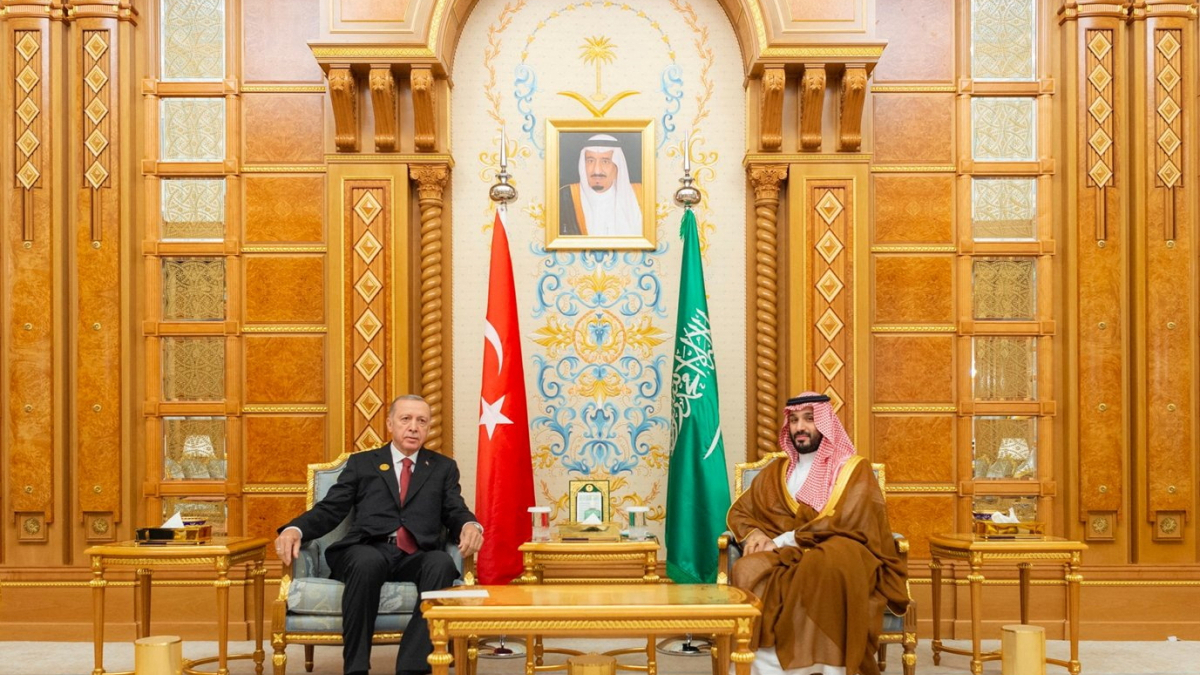
Turkish President Recep Tayyip Erdoğan has begun a two-day visit to Saudi Arabia and Egypt, seeking to deepen political and economic cooperation as regional tensions over Gaza, Iran and wider Middle East stability dominate the agenda.
Erdoğan departed on Tuesday with a senior delegation that includes Turkish first lady Emine Erdoğan, Foreign Minister Hakan Fidan, Finance Minister Mehmet Şimşek and Defence Minister Yaşar Güler.
Communications Director Burhanettin Duran said Erdoğan will hold talks with Saudi Crown Prince Mohammed bin Salman in Riyadh on expanding cooperation and reviewing regional developments.
He will travel to Cairo on Wednesday at the invitation of Egyptian President Abdel Fattah al-Sisi to co-chair the second meeting of the Türkiye-Egypt High-Level Strategic Cooperation Council.
Duran said the discussions will cover bilateral matters and wider regional issues, with a particular emphasis on Palestine.
High-stakes talks on Iran and Gaza
Speaking to AnewZ, Mehmet Öğütcü, chairman of the London Energy Club and a former Turkish diplomat, said the visit comes “at a very critical time”, with Gaza, Syria and Iran shaping the agenda. He noted that the size of Erdoğan’s delegation reflects a drive to expand trade, investment and construction projects, alongside discussions about a possible informal Türkiye–Saudi–Pakistan arrangement “benefiting from Pakistan’s nuclear umbrella”.
Öğütcü said the key question remains whether the United States might take military action against Iran. Türkiye is mediating, he told AnewZ, with U.S. and Iranian delegations already talking in Ankara. “If this succeeds, this is going to be a huge achievement,” he said, warning that any strike could prompt regional disruption, from missile launches to threats to routes through the Strait of Hormuz.
He added that Saudi Arabia and Türkiye share an interest in preventing escalation despite different sensitivities. Riyadh remains concerned about Shia militancy and exposure along its oil-producing east, while Türkiye is alert to potential instability affecting “20 to 25 million Iranians of Turkish origin” in the event of conflict.
On Gaza, Öğütcü said both capitals are frustrated by continued Israeli strikes despite ceasefire efforts. Reconstruction will require “tens of billions of dollars”, with Türkiye ready to contribute, though Saudi Arabia wants political leadership to run through Egypt. Türkiye’s role, he said, is acceptable “for humanitarian and reconstruction purposes”, not for shaping Gaza’s future governance.
He also underlined economic ambitions, noting efforts to raise Türkiye–Saudi trade from 8-9 billion dollars to 30 billion dollars, with Turkish construction firms seeking a greater share of major projects and both sides looking at opportunities in energy, infrastructure and defence.













What is your opinion on this topic?
Leave the first comment