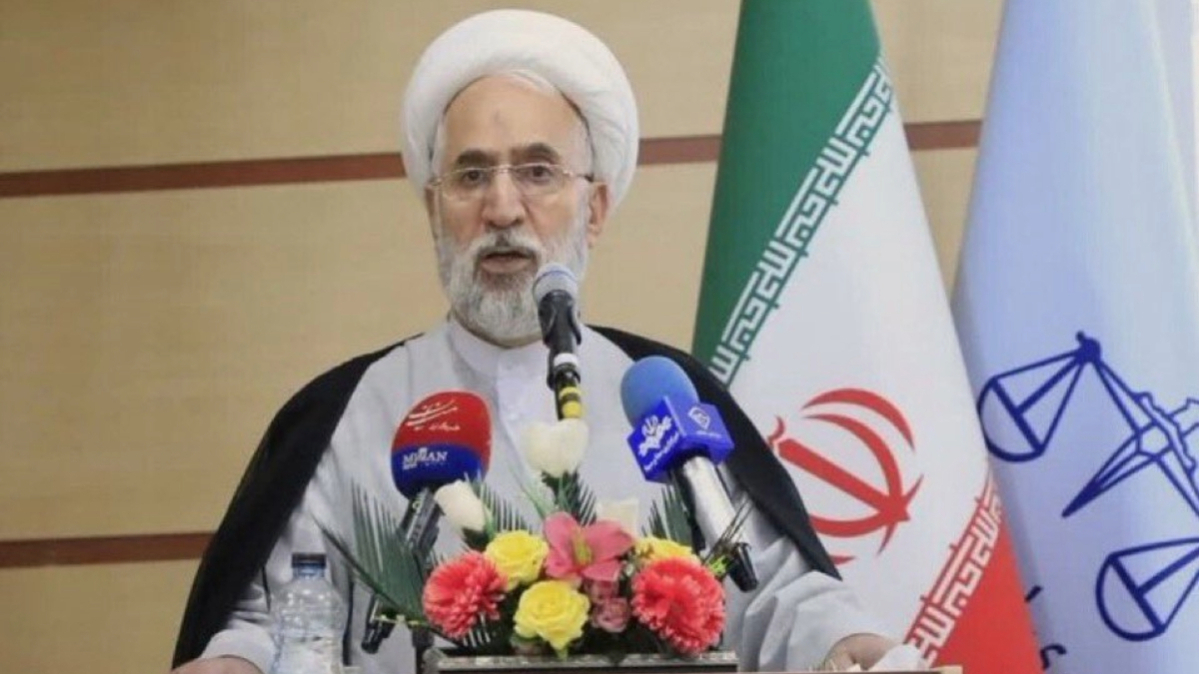
The claim that U.S. President Donald Trump's intervention stopped the execution of 800 detainees is "completely false", said prosecutor-general of Iran, Mohammad Movahedi on Friday (23 January). According to him, the number cited by Trump does not exist and the judiciary has made no such decision.
The quote, first published by the judiciary’s Mizan news agency, follows Donald Trump's statement made to the press on Tuesday (20 January).
Trump told reporters that Iran had decided against executing 837 detained protesters after Washington warned that such action would provoke severe consequences.
He added that the authorities “didn’t hang the people” but cautioned that the situation could change, noting, “We’re just going to have to see what happens with Iran.”
He repeated that claim on Thursday (22 January) saying Iran cancelled nearly 840 hangings after his threats.
"I said: 'If you hang those people, you're going to be hit harder than you've ever been hit. It'll make what we did to your Iran nuclear (program) look like peanuts,'" Trump said.
He was referring to the 12-day war in June last year with the U.S. and Israel targetting Iran's military and nuclear sites.
Throughout the recent unrest in the country, President Trump has consistently expressed support for Iranian demonstrators and sharply criticized Tehran’s handling of the protests, warning that lethal force would cross a red line.
Meanwhile, tensions between Tehran and Washington remain high. A U.S. aircraft carrier group is positioned near the Middle East, which Trump described as an “armada,” though analysts note that airstrikes alone may not be enough to destabilise the Iranian regime.
The Soufan Center, a New York-based think tank, said the continued military buildup signals that kinetic options remain on the table, despite Trump apparently scaling back immediate threats.
Varying tolls
The crackdown on protests, which began on 28 December, has already claimed thousands of lives.
Activist groups estimate at least 5,002 people have been killed, with more than 26,800 detained.
The Human Rights Activists News Agency (HRANA) said its count includes 4,716 demonstrators, 203 government-affiliated individuals, 43 children, and 40 civilians not participating in protests.
Iranian authorities offered a lower toll on Wednesday, reporting 3,117 deaths, including 2,427 civilians and security forces, and describing the remainder as “terrorists.”
The crackdown continues under the most extensive internet blackout in the country’s history, which began on 8 January, making independent verification difficult.
UN Human Rights Council hold emergency session
Meanwhile, the United Nations Human Rights Council will hold an emergency session on Friday (23 January) to discuss the "alarming violence" used in Iran against protesters, while a group of states will call on UN's investigators to document alleged abuses for future trials.
Rights groups say thousands, including bystanders, were killed during the unrest, which represented the biggest challenge to Iran's clerical government since 2022.
At least 50 countries backed the call for a special session of the UN Human Rights Council to address credible reports of violence, crackdowns on protesters and violations of international human rights law across the country, according to a letter drafted by Iceland.
"The scale of the crimes is unprecedented," Payam Akhavan, a former UN prosecutor with Iranian-Canadian nationality, told Reuters ahead of the session, where he is set to speak.
"We are trying to set the stage for transitional justice in Iran, for the country’s Nuremberg moment, should that come to pass," he said, referring to the international criminal trials of Nazi leaders following World War Two.
Iran's diplomatic mission did not immediately respond to a request for comment.












What is your opinion on this topic?
Leave the first comment