Kazakhstan vows to fast-track AZAL crash investigation amid rising diplomatic tensions
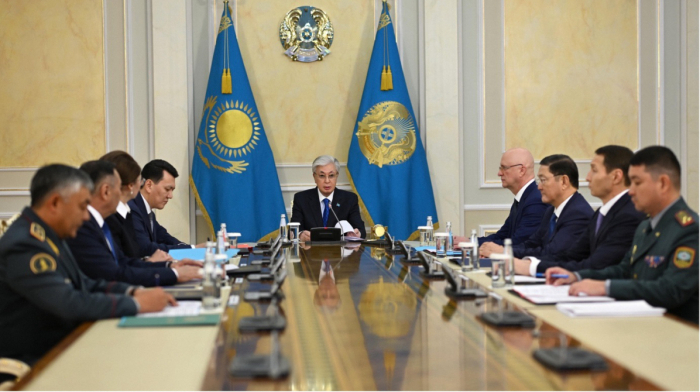
Kazakhstan has vowed to speed up its investigation into the Azerbaijan Airlines (AZAL) crash near Aktau, as mounti...
Several locally-developed instant messaging applications were reportedly restored in Iran on Tuesday (20 January), partially easing communications restrictions imposed after recent unrest.
Users were again able to access key functions on the platforms, including group chats, dynamic posts and multimedia sharing, marking the first significant rollback of controls since the nationwide shutdown.
Despite the move, Internet access remained blocked nationwide on Monday. Netblocks, a watchdog organization that monitors cybersecurity and digital governance, confirmed very slight increases in connectivity, though overall traffic remained far below normal levels.
Hossein Afshin, deputy for scientific affairs to the Iranian president, told reporters on Monday that internet restrictions will be “gradually” eased starting at the end of the week, though he offered no additional details.
Access to Google’s search engine was restored on Sunday, according to local media, a day after short message service (SMS) was reinstated.
The restoration of messaging apps follows a broader phased easing of communication bans amid one of the most extensive internet blackouts in the country’s recent history, imposed on 8 January.
The blackout was imposed amid the Iranian protests, which saw mass demonstrations against economic hardship and political repression that began in late December and continued into January.
The shutdown greatly limited the ability of journalists, rights groups and citizens to document or share news about the unrest, prompting criticism from international organisations, including calls from a United Nations fact-finding mission to restore internet and mobile communications amid reports of serious human rights violations.

The Kremlin is utilising the recent United States and Israeli military strikes on Iran to validate its ongoing war in Ukraine. Russian officials are pointing to the escalation in the Middle East as evidence that Western nations do not adhere to international rules.
Saudi Arabia’s state oil giant Saudi Aramco closed its Ras Tanura refinery on Monday following an Iranian drone strike, an industry source told Reuters as Tehran retaliated across the Gulf after a U.S.-Israeli attack on Iranian targets over the weekend.
The Middle East crisis intensifies after the deadly attack on the compound of the Supreme Leader of Iran Ali Khamenei on Saturday that killed him, other family members and senior figures. Iran has launched retaliatory strikes on U.S. targets in the region.
U.S. President Donald Trump said the U.S. military has enough stockpiled weapons to fight wars "forever"; in a social media post late on Monday. The remarks came hours before conflict in Iran and the Middle East entered its fourth day.
Türkiye raised its security level for Turkish-flagged vessels in the Strait of Hormuz to Level 3 on Sunday (2 March). The development follows Iranian restrictions on shipping after U.S. and Israeli strikes and confirmation of Supreme Leader Ali Khamenei’s death.
Seven opposition parties in Georgia have formed a coordinated alliance ahead of upcoming elections, saying it aims to challenge the dominance of the ruling Georgian Dream party. The government has dismissed the move as a rebranding of familiar political figures.
Türkiye’s President, Recep Tayyip Erdoğan, has described the ongoing U.S.–Israeli military campaign against Iran as a “clear violation of international law”, in his strongest remarks yet on the escalating regional crisis.
U.S. President Donald Trump said the U.S. military has enough stockpiled weapons to fight wars "forever"; in a social media post late on Monday. The remarks came hours before conflict in Iran and the Middle East entered its fourth day.
Kazakhstan has vowed to speed up its investigation into the Azerbaijan Airlines (AZAL) crash near Aktau, as mounting diplomatic pressure and geopolitical tensions push the disaster further into the international spotlight.
Entrances to Iran's underground and previously bombed uranium-enrichment plant at Natanz have been struck as part of the U.S.-Israeli military attacks on the country, the United Nations nuclear watchdog, the International Atomic Energy Agency (IAEZ) confirmed on Tuesday (3 March).
You can download the AnewZ application from Play Store and the App Store.
What is your opinion on this topic?
Leave the first comment