Italian man under investigation over alleged “sniper tourism” in Sarajevo
Milan prosecutors have placed an elderly Italian man under investigation over allegations that foreigners paid to shoot at civilians during the 1990s ...
Iran has supplied Russia with more than $4 billion worth of military equipment since late 2021, including missiles, drones and ammunition, according to assessments by Western security officials reported by Bloomberg.
The reported transfers began months before Russia launched its full-scale invasion of Ukraine in February 2022 and have continued throughout the war, contributing to Moscow’s military campaign.
According to the assessment, missile contracts signed from October 2021 were valued at about $2.7 billion and included hundreds of short-range ballistic missiles, as well as surface-to-air missiles linked to air defence systems. Among them were Fath-360 missiles, which have a range capable of reaching major Ukrainian cities near the front lines.
It also said that Iran has also supplied Russia with Shahed-136 attack drones and provided technical assistance that allowed Moscow to manufacture a domestic version known as the Geran-2. That cooperation was linked to a separate contract worth about $1.75 billion, signed in early 2023, the assessment said.
In addition to missiles and drones, Iran is reported to have delivered millions of rounds of ammunition and artillery shells to Russia, though officials said this does not represent the full scale of military support provided so far.
Since Russia's invasion of Urkaine, Tehran and Moscow have drawn closer as both countries face extensive Western sanctions. The two signed a strategic partnership agreement in January 2025, though it did not include a mutual defence clause.
Despite the growing cooperation, Russia did not provide direct military support to Iran during Israeli and U.S. strikes last year, highlighting the limits of the partnership.
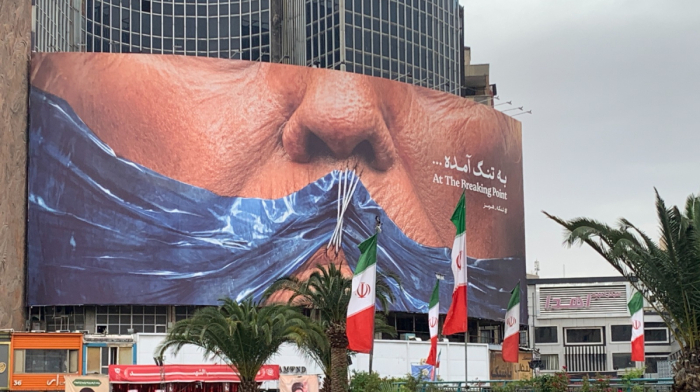
At present, Iran faces intense international scrutiny over its handling of ongoing domestic protests. The United States has warned that military options remain under consideration in response to Tehran’s actions during the demonstrations. Latest death toll figures show more than 2,571 people have been reportedly killed during these last two weeks since the protests began.

Cuba’s Deputy Foreign Minister Carlos Fernández de Cossío has denied that Havana and Washington have entered formal negotiations, countering recent assertions by U.S. President Donald Trump, while saying the island is open to dialogue under certain conditions.
Talks with the U.S. should be pursued to secure national interests as long as "threats and unreasonable expectations" are avoided, President Masoud Pezeshkian posted on X on Tuesday (3 February).
Mexico said it will stop sending oil to Cuba as U.S. President Donald Trump ramped up pressure on the Caribbean nation.
Elon Musk’s rocket company SpaceX has acquired his artificial intelligence firm xAI, as the billionaire moves to bring more of his technology businesses under one structure.
Ukrainian President Volodymyr Zelenskyy accused Russia on Tuesday (3 February) of exploiting a U.S.-backed energy ceasefire to stockpile weapons and launch large-scale drone and missile attacks on Ukraine ahead of peace talks.
U.S. President Donald Trump has said Iran’s Supreme Leader Ali Khamenei “should be very worried”, as efforts to establish a diplomatic path between Washington and Tehran appear to be breaking down.
Another shipment of grain was sent to Armenia via transit through Azerbaijani territory on 4 February. The latest delivery consisted of eight wagons carrying 560 tonnes of grain dispatched from Azerbaijan to Armenia.
Azerbaijan and Armenia used a high-profile international platform in Abu Dhabi on Tuesday to underline growing trade ties, expanding cooperation and what both leaders described as an irreversible turn towards peace after decades of conflict.
Afghan officials and international partners met in Kabul on Wednesday (4 February) for the fourth meeting of the Doha Process Working Group on Counter-Narcotics, with officials citing a reduction in poppy cultivation to “nearly zero” as efforts to curb drug production and trafficking were reviewed.
Uzbekistan is accelerating plans to expand uranium production and deepen international nuclear cooperation, positioning the sector as a pillar of long-term industrial growth and resource security.
You can download the AnewZ application from Play Store and the App Store.
What is your opinion on this topic?
Leave the first comment