Syrian universities reopened after a month-long closure following the fall of Bashar al-Assad’s regime, marking a new era of freedom and hope. Students and educators, reflecting on the shift, shared their optimism about rebuilding a united and open Syria.
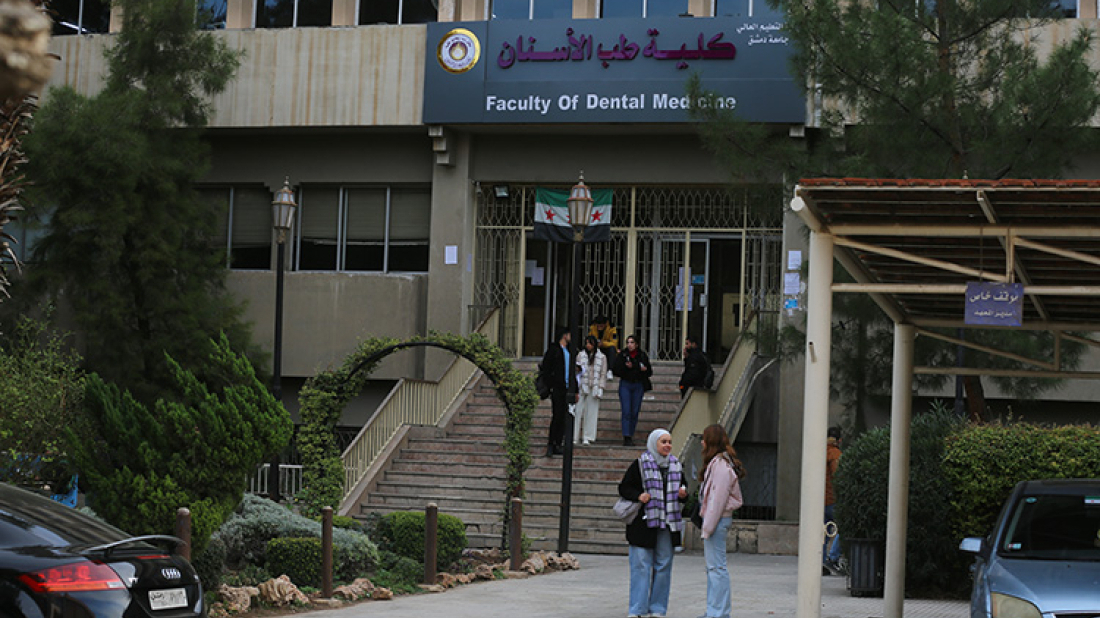
DAMASCUS – Universities across Syria reopened on Monday after a month-long suspension of educational activities, which began on 8 December due to political uncertainty following the fall of the Bashar al-Assad regime. The closure, which coincided with the Christmas holiday, delayed academic schedules. With the resumption of classes, students returned to campuses to continue their studies and sit for final exams.
Students and educators, reflecting on the profound changes in the country, shared their perspectives with Anadolu.
A New Era of Freedom and Expression
Reem Al Zohaili, a graduate of Damascus University’s Faculty of Architecture and Higher Institute of Languages, who now teaches, described the relief and optimism felt in the aftermath of the regime’s fall.
"'Under Assad’s regime, people were not allowed to do anything or speak about anything, even political topics,' a Syrian graduate told Anadolu."
Zohaili highlighted the newfound openness in classrooms.
"'I can feel that students are now more open. They participate, they give their own opinions,'" she stressed.
Reflecting on the oppressive conditions under Assad, Zohaili recounted how discussing political matters often led to imprisonment. She remembered how students were expelled or jailed in 2014 and 2015 for criticising the regime, and how some tragically lost their lives in school bombings.
Unexpected Change
Another educator, Jouman Msouti, an English teacher at the Higher Institute of Languages, emphasised how unexpected the regime's collapse was.
"'No one expected the regime to fall,' a Syrian graduate told Anadolu."
Msouti expressed hope for the future, noting that while rebuilding governance would take time, Syrians now have a unique opportunity to create a peaceful, unified country. She urged those living abroad to return and help rebuild the nation.
Addressing Western perceptions, she added, "'We are not terrorists. We are normal people who want to live our lives.'" She called for improved infrastructure and modern educational facilities to ensure a brighter future for all Syrians.
Renewed Optimism Among Students
Students shared similar sentiments of hope and determination. Lana Channais, a second-year dentistry student, described the relief that has come with the new era.
"'People are happier. Many have been released from prisons, which is a good thing because many were jailed simply for their ideas,' she told Anadolu."
Channais commended the new administration for prioritising public safety and stressed the importance of improving education and facilities.
Suleiman Selloum, also a second-year dentistry student, spoke of the need to rebuild a united Syria.
"'We must build a free Syria without fear or hesitation,' a Syrian graduate told Anadolu," emphasising the need to respect minority rights and foster inclusivity.
Selloum expressed his commitment to staying in Syria to aid its recovery. "'I don’t plan to go abroad. I want to stay here and help,'" he concluded.
As universities reopen and students return, the sense of renewed hope and determination among Syrians reflects a commitment to rebuilding a stronger and freer nation.










What is your opinion on this topic?
Leave the first comment