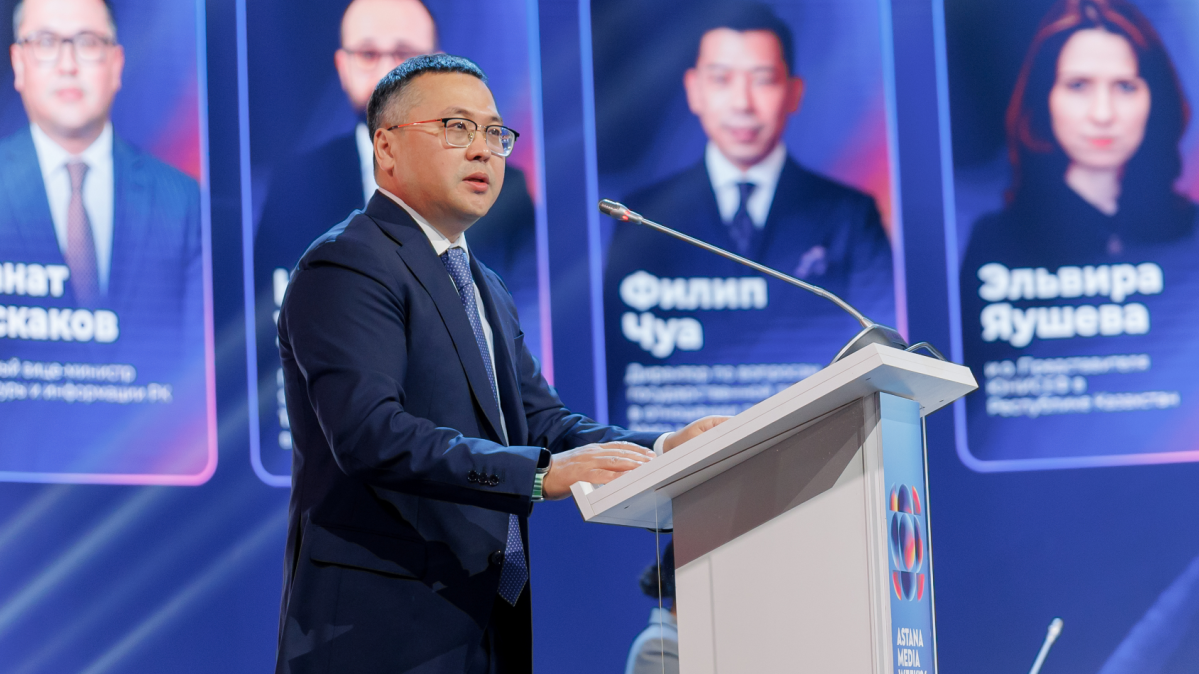
Kazakhstan is considering new rules governing the use of artificial intelligence in newsrooms, including requirements to label AI-generated content. The proposal was discussed at the tenth Astana Media Week, which also focused on digital threats and children's online safety.
AI raises questions over trust in journalism
Kazakhstan’s First Vice-Minister of Culture and Information, Kanat Iskakov, called for clear guidelines to ensure AI-assisted journalism meets professional standards.
As newsrooms increasingly use AI to process information and produce content, realistic AI-generated images and videos are making it harder to separate authentic footage from fabricated material.
The proposed rules aim to set standards for how AI is used in journalism and how AI-generated content is identified.
The debate comes amid a major shift in how people in Kazakhstan consume news. Internet access has risen from 73 per cent to 93 per cent over the past decade, while 39 per cent of people now get their news from social media and messaging apps.
Bloggers and Telegram channels are increasingly challenging traditional broadcasters, prompting established media outlets to adapt their reporting for digital audiences.
AI could reshape the future of news
The transformation could accelerate as AI becomes more deeply embedded in media production.
Dmitriy Mun, CEO of Q.AI, predicted that AI could generate much of the content for some radio programmes and commentary within two to three years.
With automated content expected to become more common, Mun argued that the real challenge for journalists would be earning public trust rather than simply delivering information.
Fact-checking, accuracy and editorial independence could therefore become crucial in distinguishing professional journalism from machine-generated content.
Children's online safety under scrutiny
The forum also raised concerns about the growing influence of digital technology on children.
According to the Kazakhstan Kids Online study, 46 per cent of children surveyed first accessed the internet between the ages of five and eight, while 66 per cent use social media daily.
UNICEF representatives warned that online algorithms and AI chatbots could expose young users to misleading information.
Participants also considered restricting social media access for children under 16, but no decision was announced.
Bringing Central Asian stories to the world
Beyond AI and online safety, the forum explored how Central Asia can strengthen its presence in international news coverage.
Journalists from several media organisations, including AnewZ, examined ways to make regional stories more accessible and engaging for global audiences.
Discussions focused on what interests international viewers and how journalists can explain complex regional developments without sacrificing accuracy, context or the significance of local reporting.
Read more:





















What is your opinion on this topic?
Leave the first comment