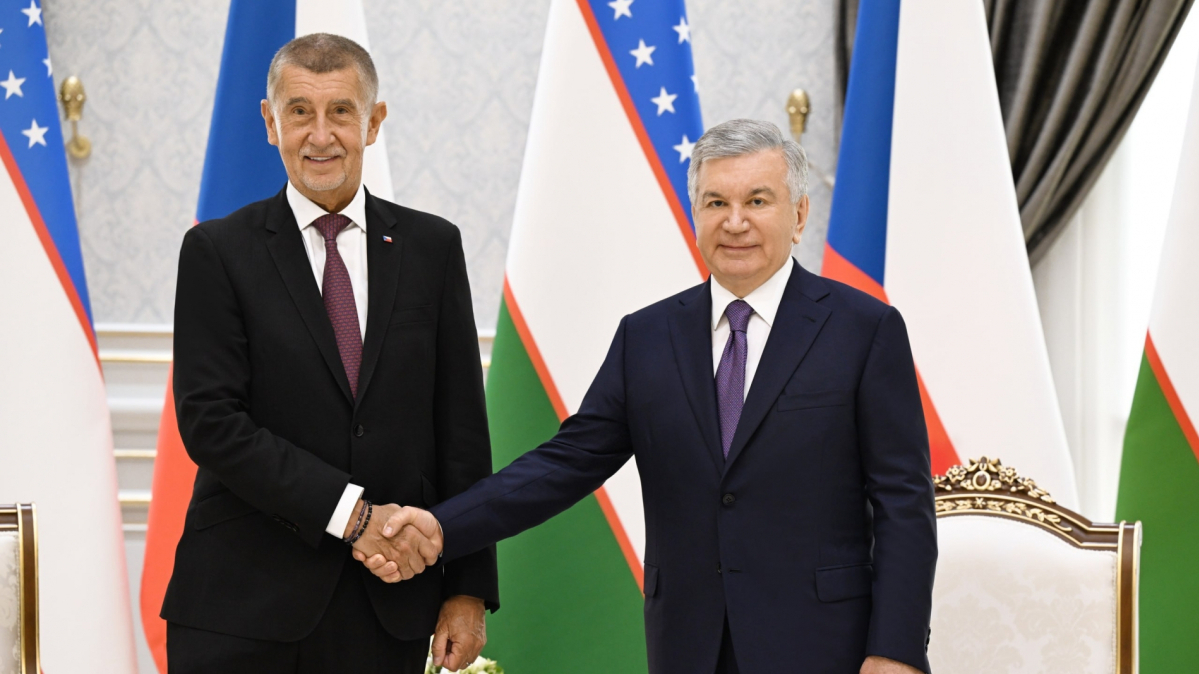
The Republic of Uzbekistan and the Czech Republic have agreed to increase bilateral trade to $1 billion and explore the resumption of direct flights between Tashkent and Prague following high-level talks between President Shavkat Mirziyoyev and Prime Minister Andrej Babiš.
The agreements were reached during negotiations at the Kuksaroy residence in Tashkent, where both sides outlined priorities for expanding economic cooperation, improving connectivity and strengthening their long-term partnership.
A central focus of the talks was boosting trade turnover, which has nearly doubled in recent years. The two countries set a new target of reaching $1 billion in bilateral trade by diversifying exports and deepening industrial cooperation.
In parallel, officials confirmed plans to work towards restoring direct air links between the two capitals, a move expected to support business ties, tourism and people-to-people exchanges.
Industrial and investment cooperation
The discussions also highlighted growing investment cooperation, with 37 joint ventures involving Czech capital currently operating in Uzbekistan. Both sides agreed to expand collaboration in key sectors, including engineering, green energy, pharmaceuticals and critical raw materials.
Plans were announced to establish an Uzbek certification office in Czechia and to jointly develop a Euro-6 automotive certification laboratory, aimed at facilitating trade and improving technical standards.
Czech financial institutions, including export credit agencies and banks, expressed readiness to support projects in Uzbekistan. Both governments also agreed to establish a joint Business Council to further promote economic ties.
Technology and infrastructure
The sides reached agreement on developing a programme of technological cooperation involving leading Czech companies. Areas of focus include infrastructure development, smart cities, engineering and digitalisation.
These initiatives build on proposals discussed at the recent Uzbek–Czech business forum in Tashkent and are expected to strengthen industrial cooperation between the two countries.
Cultural and humanitarian exchange
In addition to economic priorities, both countries reaffirmed their commitment to expanding educational and cultural cooperation. Plans include increasing academic exchanges, introducing dual-degree programmes and organising joint cultural events.
The potential reopening of direct flights is also seen as a key step in boosting tourism and strengthening broader bilateral engagement.
Agreements signed
Following the talks, the two leaders signed a Joint Declaration on expanding cooperation, alongside a package of agreements covering economic, industrial, scientific and technological collaboration, as well as the supply of electric trains.
Officials said the outcomes of the visit mark a new phase in Uzbekistan–Czechia relations, with a stronger focus on trade, connectivity and investment.









What is your opinion on this topic?
Leave the first comment