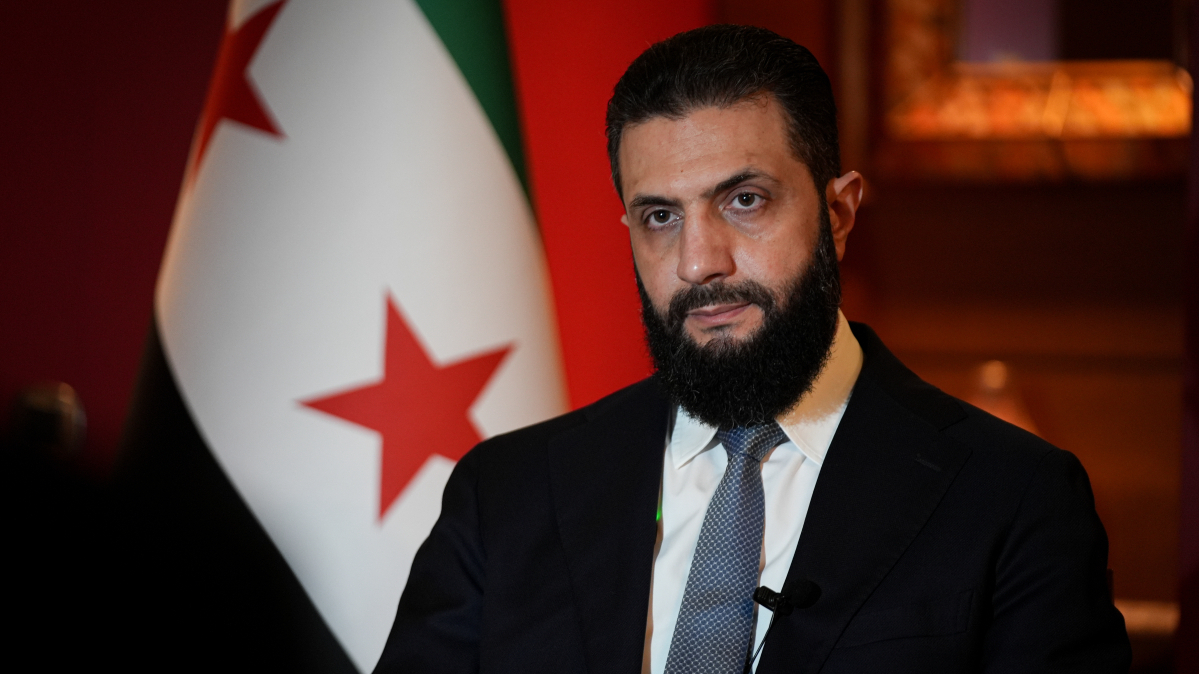
Syrian President Ahmed al-Sharaa has said his country could provide a “safe corridor” and “alternative route” for regional energy shipments, as supply disruptions continue to affect the wider Middle East.
Syrian President Ahmed al-Sharaa said his country offers a “safe corridor” and “alternative route” for regional energy shipments amid ongoing supply disruptions.
“Syria's access to the Mediterranean makes it an excellent and secure link between Eastern and Western supply chains,” he said in remarks to Turkish state media.
Al-Sharaa went on to assert that “connectivity” was being enhanced between Türkiye and the Arab Gulf states via Syria and Jordan.
The connectivity scheme has already begun to “take shape”, he said, noting that Iraqi oil is now being exported through Syrian ports under a deal recently signed between Damascus and Baghdad.
“Stable relations between Türkiye, Syria, Jordan, and the Gulf states are a major asset here,” he added. “The main challenge remains keeping the region stable and neutral amid the surrounding conflicts.”
Al-Sharaa made the remarks after arriving in Türkiye, where he is taking part in the Antalya Diplomacy Forum, which brings together leaders, diplomats, and policymakers from across the region.
Four Seas Project
According to al-Sharaa, the Syria–Iraq oil transit agreement reflects growing regional co-operation in the energy sector.
He also pointed to the so-called “Four Seas Project,” a longstanding transit scheme aimed at transforming the region into a major energy and transport hub.
The project seeks to link Azerbaijan and the Caspian Sea to the Mediterranean via Türkiye and Syria, while also connecting the Persian Gulf and Red Sea regions through integrated transport networks.
Plans include the development of pipelines, railways, and road corridors designed to facilitate the movement of goods - especially critical energy resources - across multiple regions.
Advocates of the project say it could, if implemented, reduce reliance on traditional maritime chokepoints, including the strategically sensitive Strait of Hormuz.
The project has recently drawn increased attention as regional states scramble to find alternative routes to ensure uninterrupted energy flows at a time of heightened geopolitical tension.












What is your opinion on this topic?
Leave the first comment