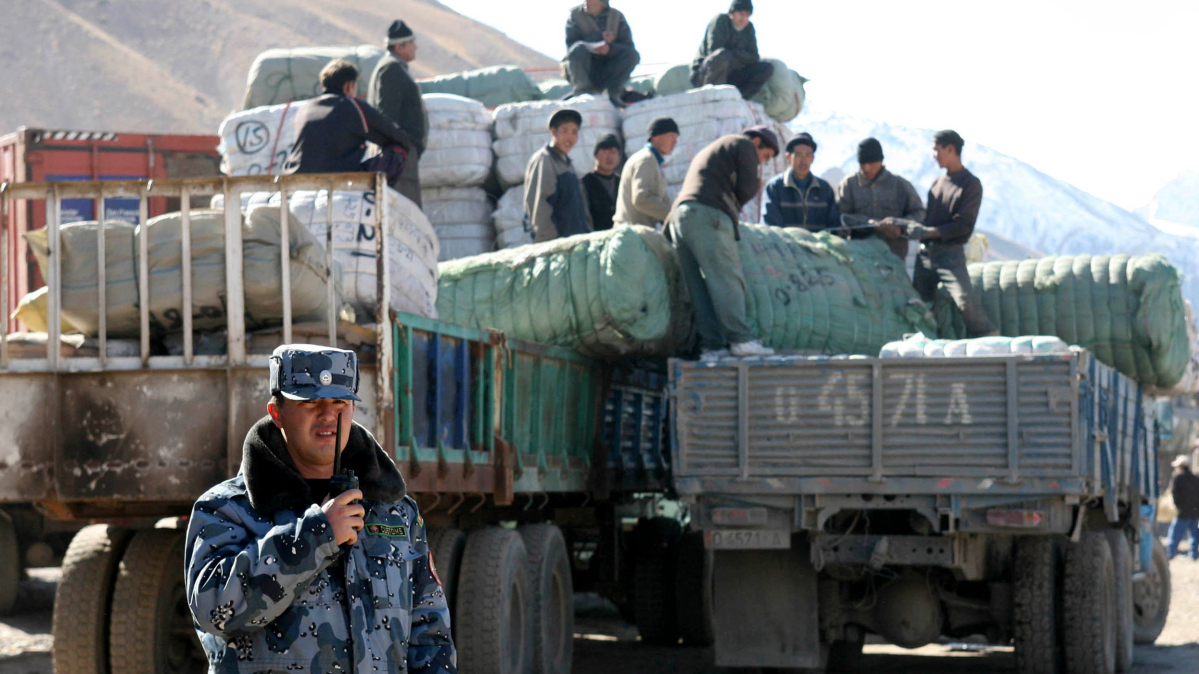
Imports of industrial goods into Kyrgyzstan surged in January 2026, driven by a construction boom and the modernisation of production capacity, with China supplying $51.2 million in electrical equipment to become the country’s largest trading partner.
The National Statistical Committee reported that imports of electrical machinery and equipment rose by 45.8% year on year to $51.2 million, largely supplied by China. Imports of base metals also increased sharply, rising 2.3-fold to $79.7 million, including $58.8 million in steel products from Russia.
Other key import categories included plastics and related products at $21.1 million, pharmaceuticals at $20.9 million (up 18.1%), and clothing and accessories at $6.3 million, supplied mainly by China, Türkiye and Uzbekistan.
Overall, imports accounted for 87.7% of Kyrgyzstan’s total external trade turnover, which reached $1.05 billion in January, underlining the country’s continued reliance on foreign industrial and technical goods.
Trade imbalance and export trends
Despite strong import growth, export performance remained uneven. Exports of machinery and equipment rose by 54.3% to $9.8 million, while exports of plastics increased by 30.1% to $5.7 million.
However, clothing exports, a key employment sector, declined by 21.2% to $5.5 million, signalling structural challenges in the textile industry. Exports of transport equipment reached $3.6 million, while glass products totalled $1.4 million.
The country recorded a significant trade deficit of $799.3 million, with exports accounting for just 12.3% of total trade.
Key trade partners
China and Russia remained the dominant suppliers, accounting for a combined 63% of total imports. China alone contributed 36.6% ($338.6 million), while Russia accounted for 26.4% ($244.3 million).
Other notable import partners included Kazakhstan (9.4%), Uzbekistan (5.7%) and South Korea (5%).
On the export side, Russia and Kazakhstan were the main destinations, each accounting for around 22% of exports, followed by Uzbekistan with a 13% share. Meanwhile, Switzerland ranked fourth, highlighting diversification in export markets.
Regional trade dynamics
Imports from Commonwealth of Independent States (CIS) countries increased by 27.4%, while imports from non-CIS countries declined by 6.1%, indicating a shift towards regional trade integration.
However, analysts note that Kyrgyzstan remains highly dependent on imports from third countries, which account for 62.3% of total trade. The current trade structure reflects both rising domestic demand and ongoing challenges in developing competitive export industries.



















What is your opinion on this topic?
Leave the first comment