Japan’s growing interest in Caspian crude reflects a pragmatic response to uncertainty in global energy markets and its continued reliance on the Middle East for more than 90% of its oil imports.
By redirecting part of its supply chain, Tokyo is seeking to reduce exposure to potential disruptions along key transit routes.
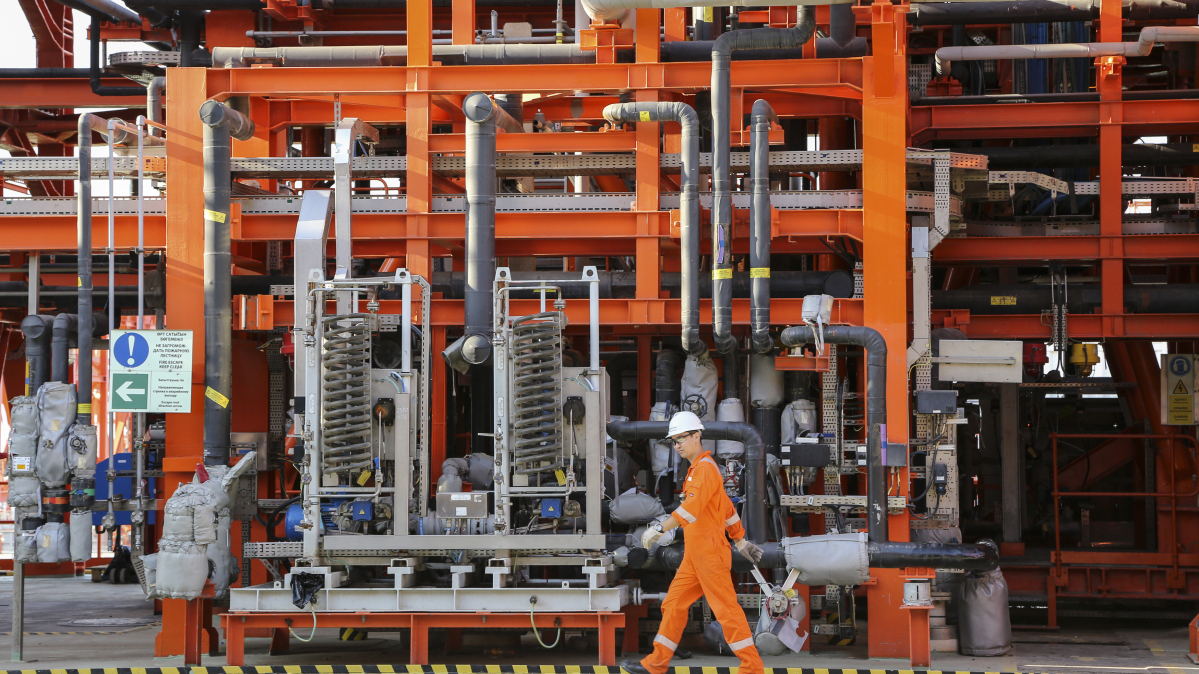
The position of Japan’s largest oil and gas exploration and production (E&P) company, INPEX, in the region underpins this shift. The company holds stakes in Kazakhstan’s Kashagan field, producing around 430,000 barrels a day, and Azerbaijan’s Azeri-Chirag-Gunashli complex, with output of roughly 350,000 barrels a day. The crude produced, largely light to medium grades, is comparable to Middle Eastern oil and suitable for Japanese refineries without significant adjustments.
Until recently, most of this oil was exported to Europe under long-term and spot contracts. INPEX now intends to redirect part of its spot volumes to Japan, where demand from domestic refiners and trading houses is expected to support the shift, which the company presents as contributing to supply stability.
The shift also brings logistical challenges. With traditional routes under pressure, shipments are expected to pass via the Red Sea, the Mediterranean, or around the Cape of Good Hope. Delivery times may extend to between 25 and 55 days, depending on origin - more than double the typical route via Hormuz - adding to transport costs.
Japan is also considering broader diversification, including increased imports from Central Asia, South America and the U.S. The transition, however, is likely to be gradual. U.S. crude accounted for 3.8% of Japan’s imports in 2025, underscoring the difficulty of rapidly reshaping supply structures.
At the same time, developments within the Caspian region point to constraints on future production. Kazakhstan’s national oil company, KazMunayGas, has suspended a joint offshore project at the Kalamkas-Sea and Khazar fields with Lukoil due to the impact of Western sanctions, according to chief executive Askhat Khassenov.
The fields, located in Kazakhstan’s sector of the Caspian Sea, are estimated to hold recoverable reserves of 48.5 million tonnes of oil and 19 billion cubic metres of gas. Production had been projected at around 4 million tonnes a year, with first oil expected by the end of 2029 and total investment estimated at $6.4 billion.
Sanctions imposed by the United States Department of the Treasury in October 2025 targeted Lukoil, complicating financing and access to technology, although a number of international projects in Kazakhstan were granted temporary exemptions until 2027.
Despite the suspension, Lukoil remains involved in major projects in Kazakhstan, including Tengiz oil field, Karachaganak field and the Caspian Pipeline Consortium, underscoring the continued but increasingly complex role of Russian companies in the region.


















What is your opinion on this topic?
Leave the first comment