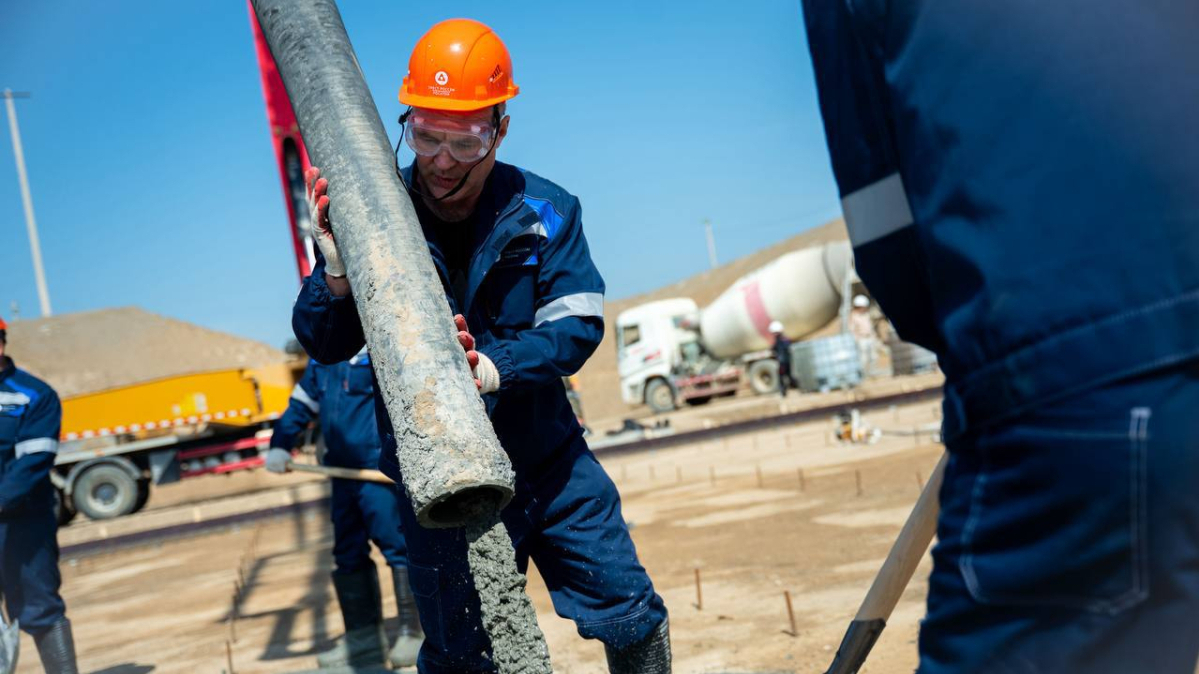
Uzbekistan has launched the next phase of its first nuclear power plant (NPP) project, with initial concrete works now under way at the construction site in the Farish district of the Jizzakh region, according to the national atomic energy agency, Uzatom.
The works mark the beginning of the reactor building’s foundation stage, which includes preparing a concrete base with waterproofing and grounding systems. Officials say approximately 900 cubic metres of concrete will be laid, with this phase scheduled for completion by April 2026.
Nuclear power project
The construction forms part of Uzbekistan’s integrated nuclear power programme, combining both large-scale and small modular reactor technologies. Under the updated configuration agreed in September 2025, the facility will include two large reactors based on the VVER-1000 Generation 3+ design and two smaller RITM-200N reactors, each with a capacity of 55 megawatts.
Once fully operational, the plant is expected to generate around 15.4 billion kilowatt-hours of electricity annually, accounting for more than 15% of Uzbekistan’s total power consumption.
Authorities say the project will play a key role in diversifying the country’s energy mix, which currently relies heavily on natural gas, while also supporting long-term energy security and economic growth.
Construction and localisation
Uzatom officials confirmed that direct construction of the reactor building is expected to begin in summer 2026, following completion of the current preparatory phase.
The project is also being implemented with a focus on localisation. According to Uzatom Director Azim Akhmedkhadzhayev, around 29–30% of the work has already been localised, with efforts under way to increase the involvement of domestic industries and suppliers.
“All materials used in the project will undergo strict laboratory testing and will only be approved after meeting safety requirements,” he said, emphasising that cost optimisation will not come at the expense of safety standards.
International cooperation and safety
Uzbekistan and Russia have also signed an additional agreement outlining the project’s updated configuration, alongside a broader “road map” for cooperation in nuclear energy and related sectors. This includes workforce training, infrastructure development, and measures to enhance public acceptance of nuclear energy.
Regulatory authorities have granted approval for the use of the site for two reactor units, confirming that it meets all nuclear and environmental safety standards. Experts found no significant risks, such as active fault lines or high seismic activity, at the location.
Officials describe the approval as a critical milestone, allowing the project to move forward into detailed design and full-scale construction.
Energy transition context
The nuclear project comes amid Uzbekistan’s broader efforts to modernise its energy sector and reduce dependence on fossil fuels. Alongside expanding renewable energy capacity, nuclear power is expected to provide a stable, low-carbon source of baseload electricity.
With construction now progressing, the project represents one of the most significant infrastructure developments in the country’s energy sector to date.















What is your opinion on this topic?
Leave the first comment