Kazakhstan is preparing a new phase of efforts to restore the Northern Aral Sea together with the World Bank, focusing on raising water levels, improving irrigation management and strengthening regional co-operation over shared water resources.
The initiative, developed by Kazakhstan’s Ministry of Water Resources and Irrigation, centres on the reconstruction of the Kokaral Dam - a key hydraulic structure separating the Northern Aral Sea from the largely dried southern basin. Modernising the dam is expected to raise the sea’s water level to 44 metres, according to the Baltic height system.
Once the project is completed, the surface area of the Northern Aral Sea is expected to reach approximately 3,900 square kilometres, while the volume of water could increase to around 34 billion cubic metres. Authorities believe this will further stabilise the ecosystem of the northern basin, which has shown signs of recovery in recent years.
Modernisation and automation
Alongside the dam reconstruction, the ministry is preparing more than 160 design and cost documentation packages aimed at modernising and automating irrigation systems in the Aral–Syr Darya basin. The projects will cover agricultural areas in the Turkestan and Kyzylorda regions and are intended to improve water efficiency, allowing surplus water to be redirected towards the Northern Aral Sea.
The project is currently being prepared for review by Kazakhstan’s Co-ordination Council for Co-operation with International Financial Organisations, chaired by Prime Minister Olzhas Bektenov. The planned implementation period is 2026–2029.
Recent figures indicate that restoration efforts already under way have produced measurable results. Over the past three years, more than six billion cubic metres of water have flowed into the Northern Aral Sea following co-ordinated management of reservoirs along the Syr Darya River and the implementation of interstate water agreements.
As a result, the sea’s water volume increased from 18.9 billion cubic metres at the end of 2022 to 23 billion cubic metres by the end of 2025.
For Kazakhstan, the Northern Aral Sea is no longer viewed solely as an environmental issue. Its condition directly affects employment in coastal communities, the recovery of fisheries, the sustainability of agriculture and the overall balance of local ecosystems. In this context, co-operation with the World Bank is seen as a continuation of long-term efforts to stabilise the region.
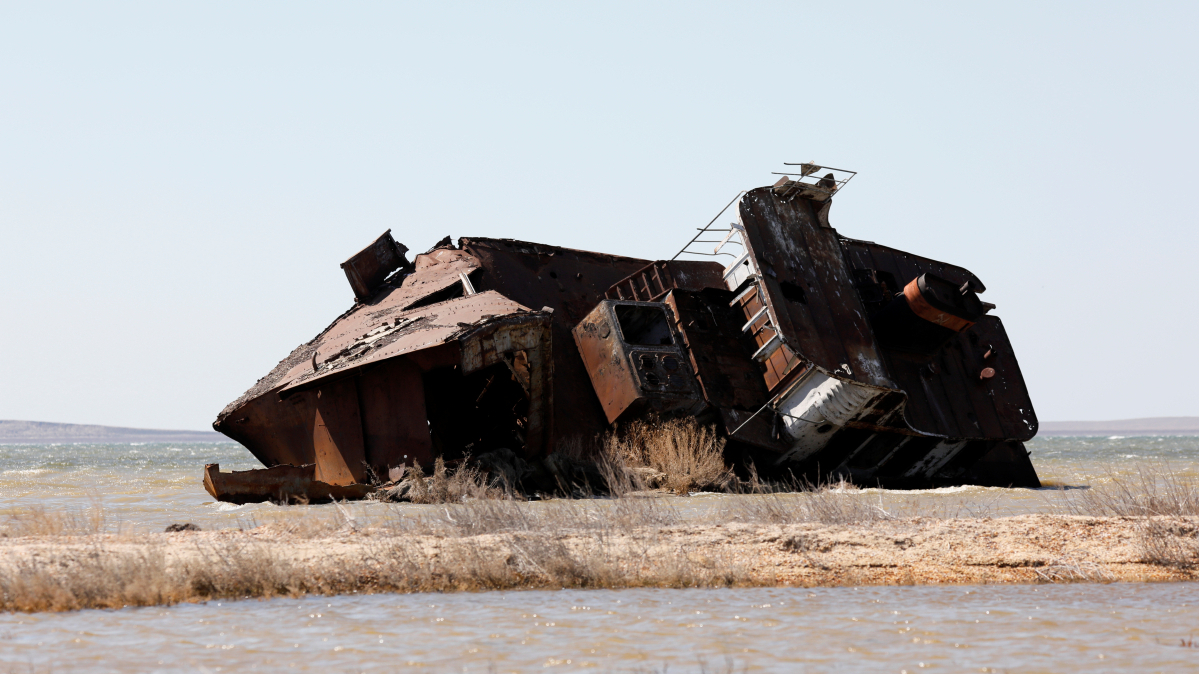
Despite these efforts, the drying of the Aral Sea remains one of the largest environmental disasters in the region. Since the 1960s, its surface area has shrunk nearly ninefold, water levels have fallen threefold and the total volume of water has decreased by roughly fifteen times.
Each year, an estimated 100 million tonnes of salty dust rise from the dried seabed and spread across vast parts of Central Asia, affecting both the environment and public health. Against this backdrop, the second phase of the restoration project is expected to play an important role in stabilising the Northern Aral Sea and improving conditions in the surrounding regions.













What is your opinion on this topic?
Leave the first comment