Agreements signed by the United States, Kazakhstan and Uzbekistan in Washington on 5 February show that the United States is changing how it secures access to strategic raw materials.
The memorandums signal Washington’s intention to move beyond ad hoc sourcing arrangements towards a more structured, partnership-based model for securing supplies of critical minerals.
Against the backdrop of rapidly growing demand for lithium, rare earth elements and other critical materials, Washington is moving away from fragmented sourcing towards long-term partnerships with new suppliers beyond traditional markets.
The main priority for the United States is the diversification of supply and the reduction of dependence on a single dominant player, above all China, which continues to hold near-monopolistic positions in global rare earth supply chains. In this context, Central Asia is increasingly viewed as a region with significant but underdeveloped resource potential and the capacity to expand mining and processing relatively quickly with the support of Western investment and technology.
Fragile supply chains
At the Washington conference, the U.S. administration made clear that diversification is not merely a commercial issue but a strategic one linked to economic and national security. Vice President JD Vance said that global supply chains for critical minerals “remain fragile” and stressed Washington’s intention to encourage closer coordination among partner countries. According to him, the United States is considering the introduction of price benchmarks and other coordination mechanisms aimed at reducing dependence on China’s dominance in rare earth and other strategic minerals markets.
It was within this framework that Uzbekistan and the United States signed a memorandum of understanding on cooperation in the extraction and processing of critical minerals and rare earth materials. The agreement focuses not only on resource development but also on building processing capacity.
Kazakhstan, for its part, signalled its readiness to assume a more systematic role in new supply arrangements. Speaking at the conference, Foreign Minister Ermek Kosherbayev said the country is capable of supplying 20 out of 60 critical minerals listed by the U.S. Geological Survey in forms suitable for use in strategic sectors of the global economy. He emphasised that Kazakhstan combines a substantial mineral resource base with developed industrial infrastructure and a predictable regulatory environment.
This approach is also reflected in national policy. Kazakhstan has approved a Comprehensive Plan for the Development of the Rare and Rare Earth Metals Industry for 2024 to 2028, which includes funding for geological exploration, research and pilot production of rare earth elements. At the same time, a memorandum on cooperation between Kazakhstan and the United States is being implemented following the Kazakh president’s visit to Washington in November 2025. The agreement was the first of its kind in Central Asia and is focused on processing capacity and technology transfer.
Cooperation is already moving into a practical phase. The United States is financing lithium and other rare metals exploration in the Aral Sea region and is involved in joint projects to explore neodymium, praseodymium, dysprosium and terbium in the Kostanay region. These projects are seen as building blocks for more resilient production chains.
Minerals are the 'new oil'
Washington’s interest in the region is also supported by geological assessments. Around 170 rare earth occurrences are known across Central Asia, ranging from explored deposits to early-stage prospects.
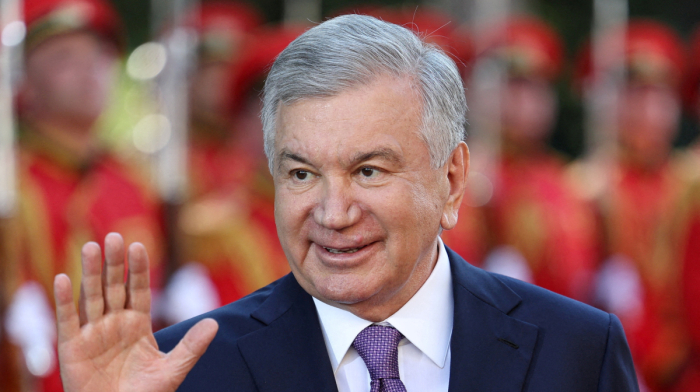
Regional leaders increasingly link the development of the sector to long-term economic strategy. Uzbekistan’s President Shavkat Mirziyoyev has announced plans to invest around $500 million in the development of rare earth deposits. Kazakhstan’s President Kassym Jomart Tokayev has described rare earth resources as the “new oil”, noting that demand for critical materials could double in the coming years.
In April, Kazakhstan also announced the discovery of a major rare earth deposit with declared reserves exceeding 20 million tonnes. Although these figures have yet to be confirmed by international companies, verification could place the country third globally in terms of rare earth reserves after China and Brazil.
The implementation of these plans is closely tied to logistics. Experts point to the Middle Corridor, also known as the Trans Caspian Transport Route, as a potential key artery for exporting Central Asia’s mineral resources and processed products to global markets.











What is your opinion on this topic?
Leave the first comment