The U.S. and China are locked in a growing struggle over critical minerals, the materials that power everything from electric vehicles and microchips to missiles and advanced radar systems, as both sides move to secure control over supply chains that underpin economic and military power.
Critical minerals have moved from a specialised industry issue to a core national security concern, because the same materials that power clean energy systems and digital economies are also embedded in modern weapons platforms, communications networks, and advanced manufacturing. They are used in microchips, batteries, permanent magnets, radar systems, satellites, electric vehicles (EV), wind turbines, and energy infrastructure. In practical terms, they underpin both economic competitiveness and military capability.
As governments push to electrify transport, expand renewable energy, and scale artificial intelligence (AI) and advanced computing, demand for these minerals is rising across multiple sectors at the same time. That surge is colliding with a global supply chain that is highly concentrated. While many countries possess mineral deposits, the world remains heavily dependent on China to process and refine these materials into usable forms.
That concentration has alarmed Washington and its allies, who increasingly view the current system as vulnerable to political pressure, supply disruption, and economic coercion. The result is a fast-developing geopolitical contest: the U.S. and its partners are trying to dilute China’s dominance by building alternative supply chains, while China is seeking to protect its central position in the global minerals economy.
What was once a technical discussion about mining capacity has become a strategic struggle over who controls the industrial foundations of the next era of economic and military power.
What makes a mineral ‘critical’ and why demand is surging
"Critical mineral" is a policy classification, not a geological one. Governments use the term for materials that are essential to their economies or national security, but whose supply chains are exposed to disruption or foreign control. Lists vary by country depending on domestic resources and industrial needs, but there is broad overlap on a core group of materials.
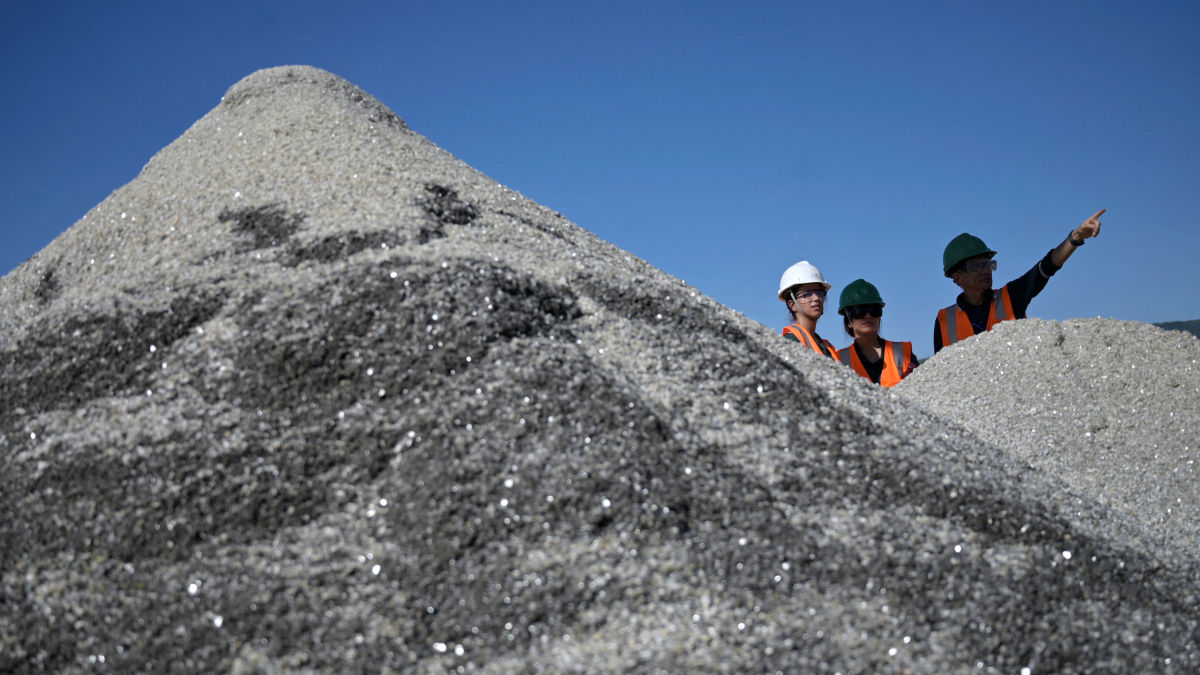
Widely recognised critical minerals include copper, lithium, cobalt, graphite, and rare earth elements. Copper is central to power grids, construction, and electronics. Lithium underpins energy storage and rechargeable batteries. Cobalt is used in batteries and high-strength alloys. Graphite is widely used in batteries, lubricants, and certain nuclear applications. Rare earth elements are essential for electronics, permanent magnets, lasers, and a wide range of defence systems.
Rare earth elements consist of 17 lanthanides plus scandium and yttrium. Their unique magnetic and electrical properties make them indispensable for high-performance electronics, medical equipment, and military technologies. Substitutes are limited and often involve major performance trade-offs.
Demand for these materials is rising sharply as EVs, renewable energy, robotics, and AI scale up simultaneously.
Unlike previous commodity booms driven by a single sector, today’s growth is being fuelled by several industries at once, intensifying competition for supply and raising long-term security concerns.
Real choke point: processing dominance and export controls
The strategic vulnerability does not lie only in where minerals are mined. It lies in where they are processed.
Mining extracts rock from the ground. Processing converts that material into high-purity metals, oxides, and chemicals that manufacturers can use. This step is technologically complex, environmentally challenging, and capital intensive. It requires specialised expertise, large-scale facilities, and years of sustained investment.
China dominates this stage of the supply chain. It processes large shares of the world’s lithium, cobalt, and graphite, and in rare earths it accounts for more than 90% of global processing in some categories. As a result, even minerals mined in Africa, Australia, or South America are often shipped to China for refining before entering global markets.
This gives Beijing leverage even when raw minerals originate elsewhere. From Washington’s perspective, it creates a structural risk: even diversified mining does not guarantee diversified supply if refining remains concentrated in one country.
Concerns have deepened as China has tightened export rules for certain critical minerals and related technologies in recent years. Beijing says these measures are lawful and necessary. U.S. and European officials argue they demonstrate how mineral dominance can be used as a bargaining chip in trade and diplomatic disputes. For governments that rely on steady access to these materials for defence production and advanced manufacturing, this is no longer viewed as a theoretical risk.
U.S. response: turning concern into a coordinated global push
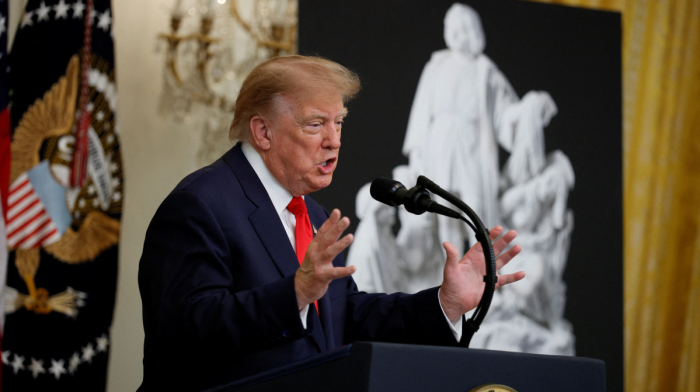
In early February 2026, the Trump administration moved from signalling concern to laying out a coordinated international strategy aimed at reshaping global critical mineral supply chains.
The U.S. State Department hosted the first Critical Minerals Ministerial in Washington, bringing together representatives from more than 50 countries and the European Commission. U.S. officials said critical minerals and rare earths are essential for advanced technologies and will become even more important as AI, robotics, batteries, and autonomous devices transform economies. They described the current market as highly concentrated and vulnerable to disruption, and said the goal is to create supply chains that are secure, diversified, and resilient from mine to finished product.
Ahead of the meeting on 4 February in Washington D.C., China’s foreign ministry said countries should follow market principles and international trade rules and called for more dialogue. U.S. officials, however, said the existing system leaves many economies exposed to pressure from a single dominant processor.
At the ministerial, Washington announced the creation of the Forum on Resource Geostrategic Engagement, or FORGE, which replaces the Minerals Security Partnership and is intended to coordinate policy and project-level cooperation among participating countries. The Republic of Korea is set to chair FORGE through June.
The U.S. also said it signed 11 new bilateral critical minerals frameworks or memorandums of understanding (MoU) on the same day with Argentina, the Cook Islands, Ecuador, Guinea, Morocco, Paraguay, Peru, the Philippines, the United Arab Emirates, the United Kingdom, and Uzbekistan. Officials said the U.S. has signed 10 similar agreements in the past five months and completed negotiations with 17 other countries.
Among those deals is a UK–U.S. MoU on securing supply in the mining and processing of critical minerals and rare earths. The agreement commits both sides to intensify cooperation to support defence and advanced manufacturing, encourage private investment, jointly identify priority projects, coordinate financing, streamline permitting, address unfair trade practices, review asset sales on national security grounds, support recycling and scrap management, cooperate on geological mapping, and convene a mining, minerals and metals investment ministerial within 180 days.
The memorandum is non-binding but signals close political alignment.
Alongside diplomacy, Washington is using state-backed financing to accelerate projects. The Trump administration has launched “Project Vault”, a domestic strategic reserve of critical minerals designed to shield manufacturers from supply shocks. The Export-Import Bank of the United States has approved a direct loan of up to $10 billion for the initiative, and Reuters has reported the overall reserve is valued at around $12 billion.
Another pillar of the strategy targets pricing. U.S. officials argue that foreign supply flooding global markets has kept prices too low for long periods, making it difficult for mining and processing projects outside China to secure financing. The administration is therefore exploring preferential trade arrangements that could include price floors and tariffs to make alternative supply chains commercially viable.
Even with strong political backing and large sums of money, reducing China’s dominance will take years. Processing plants take a long time to permit, build, and scale. Environmental standards, regulatory hurdles, and community opposition can delay projects. Most importantly, diversification must be end-to-end. Mining in new locations is not enough if refining and manufacturing remain concentrated elsewhere.
Critical minerals may be buried deep underground. But the struggle over who controls them is now firmly at the centre of global politics.


















What is your opinion on this topic?
Leave the first comment