The United States and Argentina have signed a framework agreement to strengthen cooperation on critical minerals on Thursday (4 February), reaffirming a shared commitment to building secure, resilient and competitive supply chains.
Argentina’s Foreign Ministry said the two countries agreed to deepen collaboration on the mining and processing of critical minerals, which are essential for electric vehicles (EV), renewable energy systems, defence technologies and advanced manufacturing.
The ministry said the agreement represents an opportunity for economic and productive growth in Argentina and reflects the strategic partnership between Buenos Aires and Washington.
Argentina’s mining exports reached $6.04 billion in 2025, underlining the sector’s growing importance to the national economy.
The deal comes as Washington seeks to diversify sources of critical minerals and reduce dependence on dominant global suppliers, while expanding strategic economic partnerships in Latin America.
Officials said the framework will support investment, improve access to key resources and help reduce vulnerabilities to supply disruptions across the value chain.
The agreement aligns with a broader U.S. strategy unveiled this week by JD Vance, who announced plans to form a preferential trade bloc for critical minerals with allied countries.
The proposal includes coordinated price floors and reference pricing mechanisms, backed by adjustable tariffs, aimed at preventing market undercutting and stabilising supply chains.
Critical minerals are no longer treated as ordinary commodities. They are now central to energy security, technological competitiveness and military capabilities.
EV batteries, wind turbines, solar panels and high-capacity energy storage all depend on steady access to minerals such as lithium and copper.
At the same time, geopolitical rivalries have exposed how vulnerable supply chains can be when production and processing are concentrated in a small number of countries.
The United States has been signing similar arrangements with selected partners to diversify supply sources, encourage responsible mining and support downstream processing outside dominant global hubs. The agreement with Argentina fits into that broader strategy.
Argentina is one of the world’s major holders of lithium resources and forms part of South America’s so-called “lithium triangle”. The country has also seen rising international interest in its copper and other base-metal potential.
Successive governments have promoted mining as a pillar of economic recovery, especially as Argentina seeks to boost exports and attract hard currency.
The country is also seeking to move beyond raw material exports by developing domestic processing capacity, a goal supported by the new framework with the United States.
Large-scale projects are under development, but many still require significant financing, infrastructure and long-term offtake agreements.
By formalising cooperation with the United States, Argentina strengthens its position as a preferred supplier for Western markets and improves its appeal to international investors seeking long-term stability.
Leaders of countries from the Commonwealth of Independent States (CIS) have agreed to hold coordinated population censuses around 2030. They took the decision at the CIS Council of Heads of State meeting in Awaza, Turkmenistan on Friday, media reported.
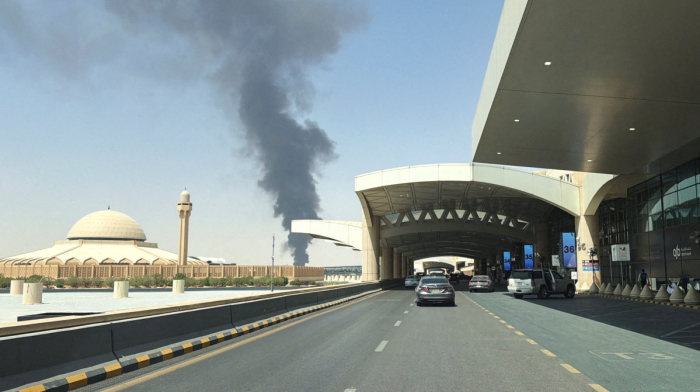
A powerful explosion has been reported at King Khalid International Airport in Riyadh, raising fresh concerns over aviation security in Saudi Arabia as tensions across the region continue to escalate.
Britain and Israel have reached a temporary compromise over the future of the British Consulate General in East Jerusalem, easing a diplomatic dispute that had threatened to further strain relations between the two countries.
South African judge Navanethem “Navi” Pillay won the Nobel Peace Prize on Friday “for her efforts to promote peace and international law,” the Norwegian Nobel Committee said.
The U.S. has imposed sanctions on the International Criminal Court (ICC) on Friday (9 October) escalating tensions with European allies and potentially targeting companies that provide services to the tribunal. The move came hours after former ICC judge Navi Pillay won the Nobel Peace Prize.
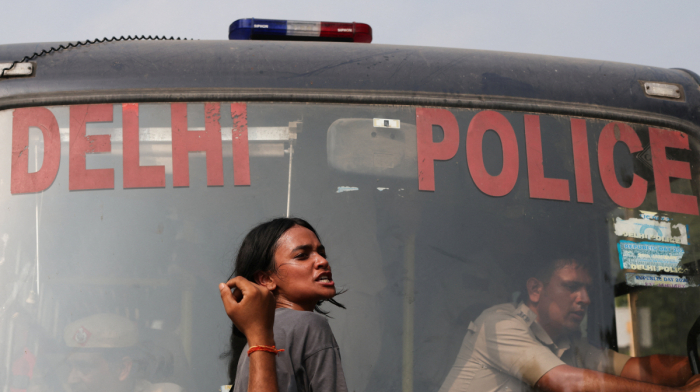
Indian police detained more than 2,000 protesters in Delhi on Saturday as authorities blocked a planned demonstration calling for the resignation of Chief Election Commissioner Gyanesh Kumar over disputed changes to voter lists.
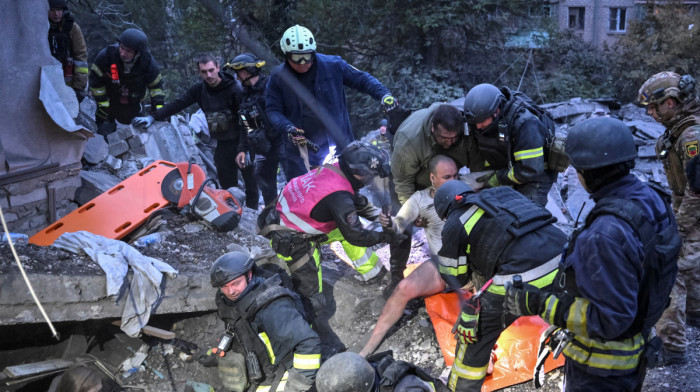
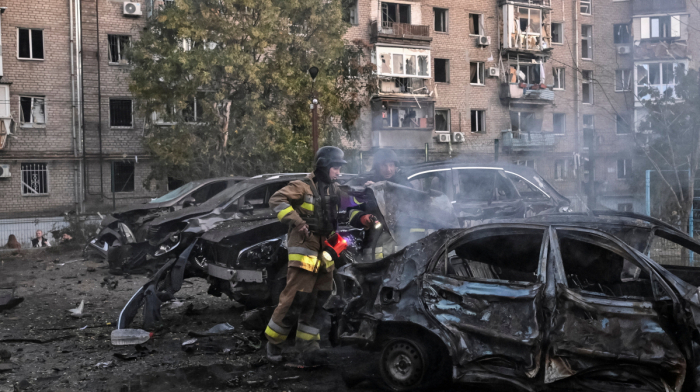
At least 12 people, including three children, have been killed in a Russian attack on the Ukrainian city of Zaporizhzhia, a day after U.S. President Donald Trump announced a deal to ease sanctions on Russian diesel.
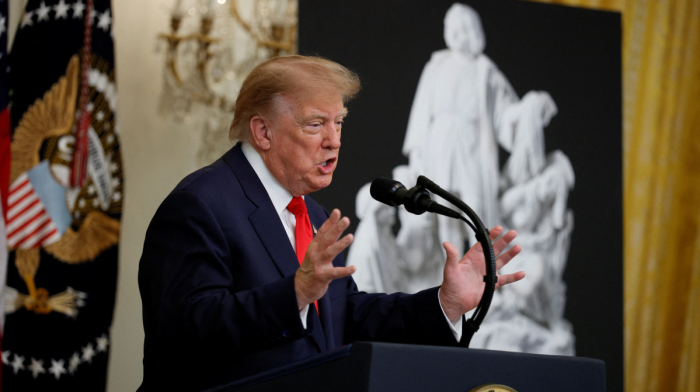
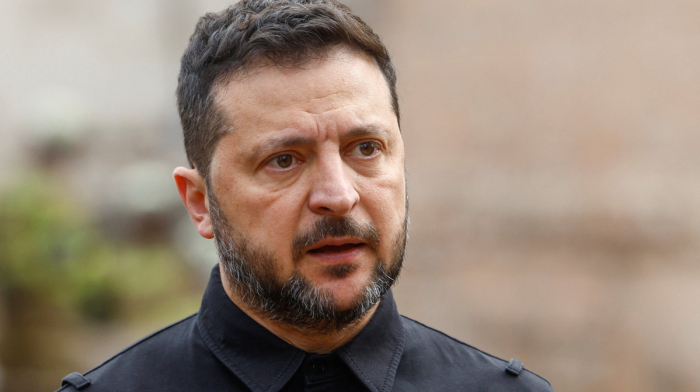
Ukrainian President Volodymyr Zelenskyy has criticised U.S. President Donald Trump’s decision to ease sanctions on Russian diesel exports, questioning why Moscow was granted an economic benefit without an apparent concession towards ending the war in Ukraine.
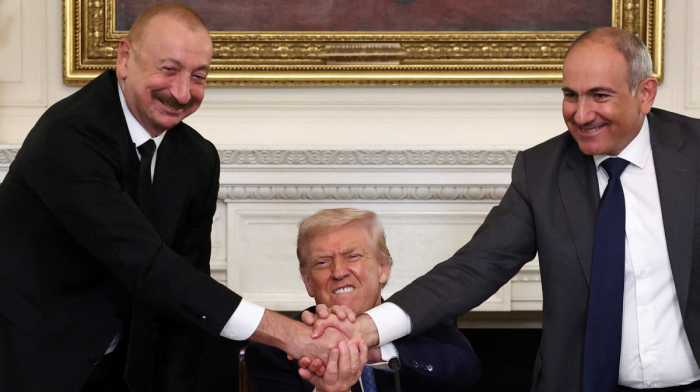
Russian President Vladimir Putin expressed surprise after Donald Trump mediated the Armenia-Azerbaijan peace agreement in 2025, the U.S. President said at a rally in New York state on Friday.
The United Nations has condemned a sharp rise in attacks on civilians in Ukraine, reporting that more than 100 people were killed and at least 429 injured in a single week as Russian strikes hit residential areas, passenger buses and critical infrastructure.
Download the AnewZ app
You can download the AnewZ application from Play Store and the App Store.











What is your opinion on this topic?
Leave the first comment